


Pre and Probiotic Capsules Uses: Benefits, Dosage and Side Effects
Quick answer: Pre and probiotic capsules (also called synbiotics) combine live beneficial bacteria (probiotics) with fibres that feed them (prebiotics). They are mainly used to restore gut balance after antibiotics, ease occasional bloating and irregular bowel movements, support digestion during travel or stress, and help maintain a healthy gut microbiome. Doctors in India often prescribe them alongside antibiotics to reduce the risk of antibiotic-associated diarrhoea.
If you have been prescribed a course of antibiotics in India, there is a good chance your doctor also wrote "pre and probiotic capsule" on the prescription. These capsules are among the most commonly used gut health products in the country. But what exactly do they do, and do you need them?
This guide explains the uses of pre and probiotic capsules in simple terms, what the research says, and how to pick a good one.
What Are Pre and Probiotic Capsules?
-
Probiotics are live microorganisms, such as Lactobacillus, Bifidobacterium or Saccharomyces boulardii, that offer a health benefit when taken in adequate amounts.
-
Prebiotics are fibres, such as fructooligosaccharides (FOS), inulin or galactooligosaccharides (GOS), that your good gut bacteria feed on.
-
Synbiotics combine both.
In 2020, an international expert panel defined a synbiotic as a mixture of live microorganisms and substrates selectively used by gut microbes that gives a health benefit. In simple words, the prebiotic acts as food to help the probiotic do its job.
For the full difference, read Probiotics vs Prebiotics: The Real Difference Explained.
Pre and Probiotic Capsules Uses
1. During and after antibiotics
This is the most common use in India. Antibiotics kill harmful bacteria, but they also wipe out good ones, which can cause loose motions. A large meta-analysis of 82 randomised trials in JAMA found that probiotics were associated with a reduction in antibiotic-associated diarrhoea. The most studied strains are Lactobacillus rhamnosus GG and Saccharomyces boulardii.
Tip: take the probiotic at least 2 hours apart from the antibiotic dose, and continue for 1 to 2 weeks after finishing the course.
2. Bloating, gas and irregular digestion
An imbalanced gut can lead to bloating and discomfort. Some probiotic strains may help with occasional bloating and regularity. See What Causes a Bloated Stomach? for other causes to rule out.
3. Travel and changes in routine
New food, water and time zones can upset digestion. Many people take probiotics before and during travel to support gut stability.
4. Supporting immunity
About 70% of the immune system is linked to the gut. A balanced microbiome helps train immune responses. Probiotics are not a cure for infections, but they support overall gut barrier health.
5. Gut-skin connection
Emerging research links gut health to skin conditions like acne and dullness. Learn more in our Gut-Skin Axis explainer.
6. Recovering from a poor diet
If your diet is low in fibre and fermented foods, a synbiotic can help fill the gap while you improve your eating habits. Our guide on how to improve gut health naturally covers food-first steps.
Capsule vs Sachet vs Stick: Which Format?
|
Format |
Pros |
Cons |
|
Capsule |
Easy to swallow, precise dose |
Some strains need cold storage |
|
Sachet / powder |
Can be mixed in water or curd |
Taste and mixing required |
|
Stick (no-water melts) |
Portable, no water needed, good for travel |
Usually costs a bit more |
|
Curd and fermented foods |
Natural, adds diversity |
Strain and count not standardised |
Compare in detail: Probiotic Sticks vs Capsules vs Powders.

How to Take Pre and Probiotic Capsules
-
Dose: follow the label. Most products provide 1 to 10 billion CFU per serving or more.
-
Timing: many people take them in the morning before breakfast, or with a light meal. Consistency matters more than exact timing.
-
With antibiotics: keep a 2-hour gap.
-
Duration: for general gut support, use for 4 to 8 weeks and assess. After antibiotics, continue for 1 to 2 weeks.
-
Storage: check if refrigeration is needed. Heat and moisture can kill live bacteria.
See our supplement timing guide for combining probiotics with other supplements.
Side Effects of Pre and Probiotic Capsules
Most healthy people tolerate probiotics well. The most common side effects are mild and usually settle in a few days:
- Gas and bloating, often from the prebiotic fibre
- Mild stomach discomfort
- Changes in stool frequency
Who should check with a doctor first:
- People with weakened immunity (chemotherapy, organ transplant, HIV)
- Critically ill or hospitalised patients
- People with a central line or catheter
- Premature infants
In these groups, live bacteria can rarely cause serious infections.
How to Choose a Good Pre and Probiotic Supplement
-
Named strains: look for the full name, for example Lactobacillus rhamnosus GG, not just "Lactobacillus".
-
CFU at expiry: the count should be guaranteed until the expiry date, not just at manufacture.
-
Prebiotic named: FOS, inulin or GOS listed on the label.
-
FSSAI licence printed on the pack.
-
Storage instructions that suit your lifestyle.
Our guide on how to read a supplement label in India explains CFU claims in detail.
Nutricult Probiotic Options
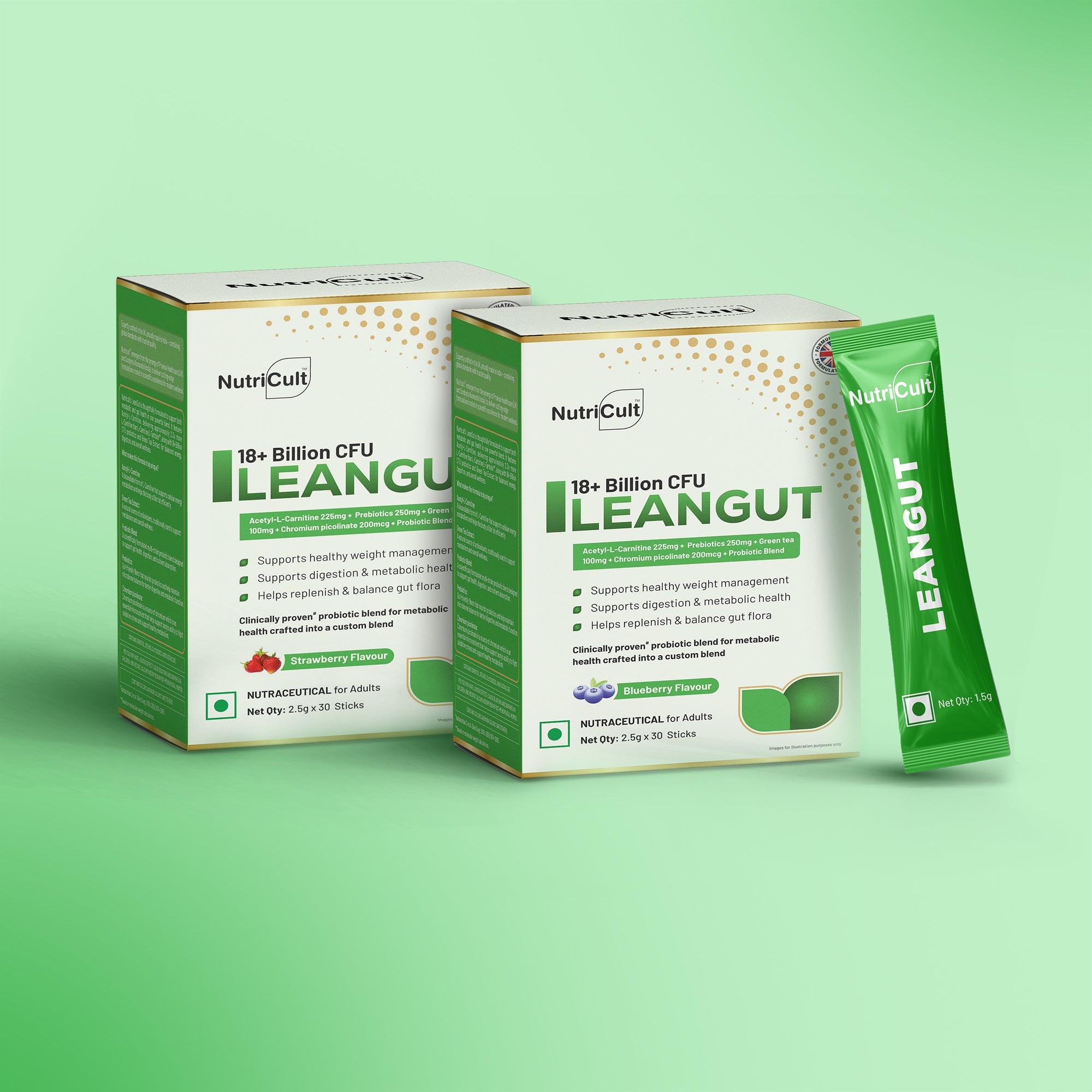
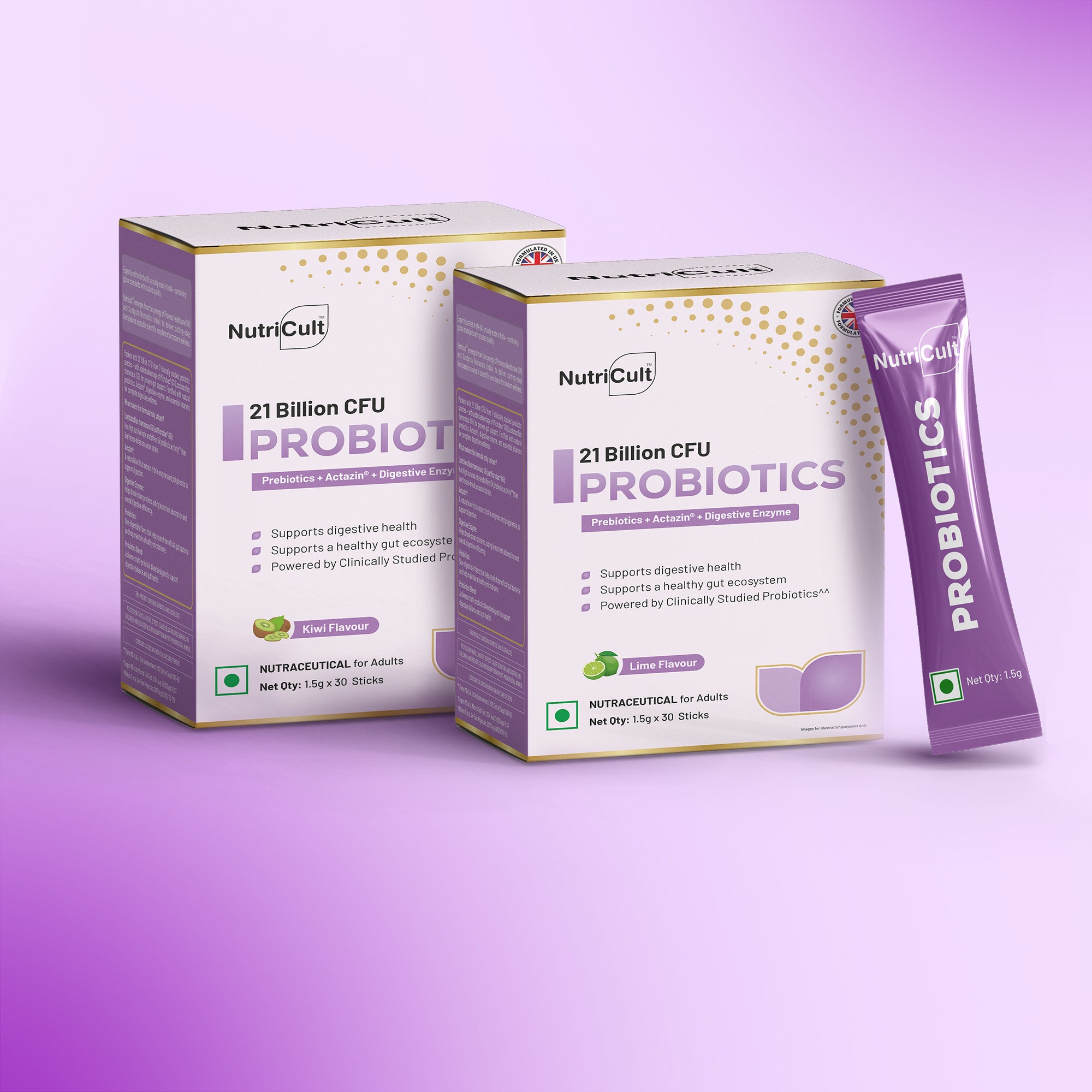
Nutricult Probiotic Sticks are a no-water format you can take anywhere, ideal if you forget capsules or travel often. For a fuller gut routine, the Gut Reset Kit pairs probiotics with LeanGut. Probiotics are food supplements and work best with a fibre-rich diet. For background, read our Probiotics for Gut Health: India Guide.
Frequently Asked Questions
Can I take pre and probiotic capsules daily?
Yes, most healthy adults can take them daily. Reassess after 2 to 3 months.
Should I take probiotics before or after food?
Either works for most products. Taking them with a light meal may help bacteria survive stomach acid.
Can pre and probiotic capsules cause gas?
Yes, especially in the first week as your gut adjusts to the prebiotic fibre. It usually settles.
Are probiotic capsules safe for children?
Children's probiotics exist, but use only products and doses advised by a paediatrician.
Do I need probiotics if I eat curd every day?
Curd is great for gut health, but strains and amounts vary. A supplement gives a standardised dose, which can be useful after antibiotics.


