


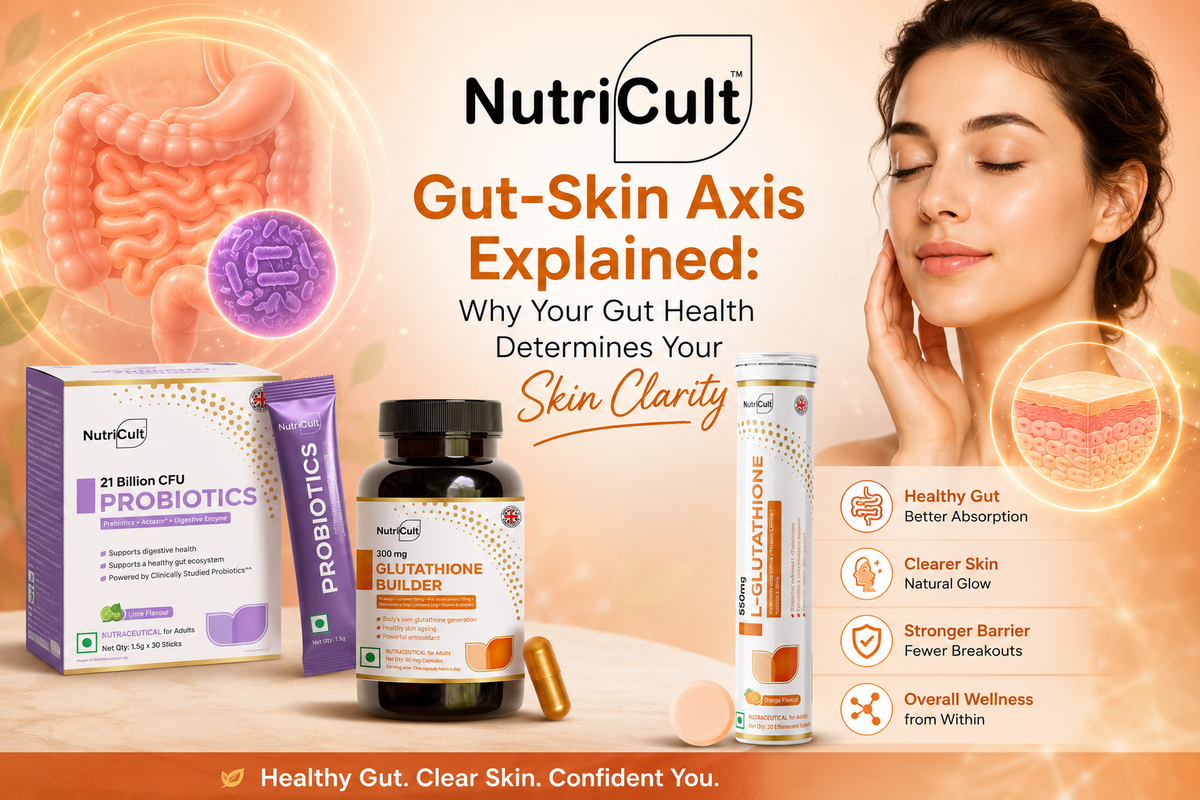
What Is the Gut-Skin Axis?
The gut-skin axis describes the bidirectional signalling relationship between the gastrointestinal tract and the skin. Both are the body's primary interface with the external environment — the skin faces the outside world physically, while the gut faces it internally through ingested material. Both surfaces are colonised by complex microbial communities, and research now confirms they communicate constantly through shared immune and hormonal pathways.
A 2025 systematic review published in MDPI Cosmetics (Unraveling the Gut-Skin Axis) and a 2025 paper in Spandidos Publications both confirm that 'significant association between the composition and functionality of the gut microbiome and various skin disorders, including psoriasis, atopic dermatitis, acne, and several dermatological conditions' has been established in peer-reviewed research.
The same inflammatory mediators that drive inflammatory bowel conditions — elevated TNF-alpha, IgE, and cytokines — migrate through circulation to the skin when the gut barrier is compromised. In 2025, a Mendelian randomization study (Long et al.) established a causal relationship between specific gut microbiota compositions and four inflammatory skin diseases. This is no longer theory — it is documented causation.
How Gut Dysbiosis Causes Acne, Dullness, and Hyperpigmentation
The Leaky Gut-Inflammation Pathway
When the gut microbiome is imbalanced — a state called dysbiosis — the tight junctions between intestinal cells become compromised. This 'leaky gut' allows bacterial fragments (specifically lipopolysaccharides, or LPS) to enter the bloodstream. LPS is one of the most potent triggers of systemic inflammation, activating immune cells that travel to the skin and trigger the inflammatory cascade behind acne, redness, and skin barrier breakdown.
The Hormonal Pathway
The gut microbiome metabolises oestrogens through a bacterial community called the estrobolome. When gut bacteria are imbalanced, oestrogen metabolism becomes erratic — producing excess circulating oestrogen that drives hormonal acne, particularly the deep cystic acne along the jaw, chin, and lower cheeks that topical treatments consistently fail to address.
The Oxidative Stress Pathway
Gut dysbiosis increases systemic oxidative stress through reduced short-chain fatty acid (SCFA) production and increased pro-inflammatory signalling. Elevated systemic oxidative stress reaches the skin through circulation, damaging melanocytes (melanin-producing cells), accelerating collagen breakdown, and contributing to uneven skin tone and premature skin ageing.
The Role of Probiotics in Skin Health
Clinical and preclinical studies have demonstrated that restoring gut microbial homeostasis through probiotics can reduce the severity of multiple skin conditions. The 2025 review in the International Journal of Molecular Medicine (From Gut Dysbiosis to Skin Inflammation in Atopic Dermatitis) found that multistrain Lactobacillus-dominant formulations combined with Bifidobacterium produced 'modest improvements in AD severity, pruritus, and inflammation-related biomarkers' in randomised controlled trials.
For skin conditions beyond atopic dermatitis, the evidence pathway is consistent: probiotics reduce intestinal permeability, normalise cytokine signalling, support estrobolome function, and produce SCFAs that exert systemic anti-inflammatory effects. Each of these mechanisms reduces the inflammatory load reaching skin — which is why long-term probiotic use produces visible improvements in skin clarity, acne frequency, and overall skin tone.
|
Probiotic Strain |
Skin Benefit Mechanism |
Clinical Evidence Level |
|
Lactobacillus acidophilus |
Reduces intestinal LPS translocation, lowers systemic inflammation |
Moderate — multiple RCTs |
|
Bifidobacterium longum |
Reduces skin sensitivity, improves barrier function, reduces inflammation markers |
Strong — multiple RCTs in atopic dermatitis |
|
Lactobacillus plantarum |
Reduces acne severity, improves skin moisture and elasticity |
Moderate — specific skin RCTs exist |
|
Lactobacillus rhamnosus |
Estrobolome support, hormonal acne reduction |
Emerging — mechanistic evidence strong |
The Role of Glutathione in Skin Brightening
Glutathione addresses the oxidative and pigmentation dimensions of gut-driven skin damage. While probiotics work on the inflammation pathway, glutathione works on two parallel tracks. First, as the body's master antioxidant, it directly neutralises the reactive oxygen species (ROS) that cause skin oxidative damage. Second, it inhibits tyrosinase — the rate-limiting enzyme in melanin biosynthesis.
A 2025 narrative review published in Cureus (Exploring the Safety and Efficacy of Glutathione Supplementation for Skin Lightening) examined oral, topical, and intravenous glutathione across multiple clinical trials and concluded that 'oral administration shows significant but variable decreases in melanin levels with limited side effects.' The tyrosinase inhibition mechanism shifts melanin production from darker eumelanin toward lighter pheomelanin — producing gradual brightening and reduction of hyperpigmented spots.
The Combined Protocol: Probiotics + Glutathione for Skin Glow
Addressing skin health through the gut-skin axis requires both pathways to be targeted simultaneously. Probiotics alone reduce inflammation but do not address melanin regulation. Glutathione alone reduces pigmentation but does not address the gut dysbiosis that drives ongoing inflammatory skin signals. Together, they cover both dimensions.
|
Protocol Component |
Target Pathway |
Expected Timeline |
|
Probiotic Sticks (daily) |
Gut dysbiosis → systemic inflammation → skin |
4–8 weeks for gut changes; 8–12 weeks for visible skin improvement |
|
Glutathione Effervescent (daily) |
Tyrosinase inhibition → melanin regulation → skin brightening |
6–12 weeks for visible brightening |
|
Gluta Builder Capsules (daily) |
Endogenous glutathione synthesis → sustained antioxidant protection |
8–12 weeks for sustained skin tone improvement |
FAQ
Q: How does gut health affect skin appearance?
A: Gut dysbiosis triggers systemic inflammation through the leaky gut pathway. Bacterial fragments (LPS) enter the bloodstream, activating inflammatory cytokines that manifest in the skin as acne, redness, and barrier breakdown. An imbalanced estrobolome also drives hormonal acne by disrupting oestrogen metabolism.
Q: Can taking probiotics improve acne?
A: Clinical evidence supports probiotics as an adjunct intervention for acne, particularly inflammatory acne driven by gut-immune dysfunction. The strongest evidence is for Bifidobacterium longum and Lactobacillus plantarum strains. Results require 8 to 12 weeks of consistent daily use.
Q: Which is better for skin — probiotics or glutathione?
A: Both address different mechanisms. Probiotics target the gut-inflammation root cause; glutathione targets the oxidative and pigmentation damage already accumulated. For comprehensive skin improvement, using both simultaneously produces the best results — which is the rationale for the Skin + Gut Glow Kit.
Q: How long does the gut-skin axis protocol take to show results?
A: Gut microbiome shifts become detectable within 2 to 4 weeks. Reduced skin inflammation typically follows within 4 to 8 weeks. Visible improvements in skin tone, brightness, and acne frequency generally require 8 to 12 weeks of consistent daily supplementation alongside a fibre-rich diet.

Buy the Skin + Gut Glow Kit (Gluta Builder + Glutathione Effervescent + Probiotic Sticks)


