


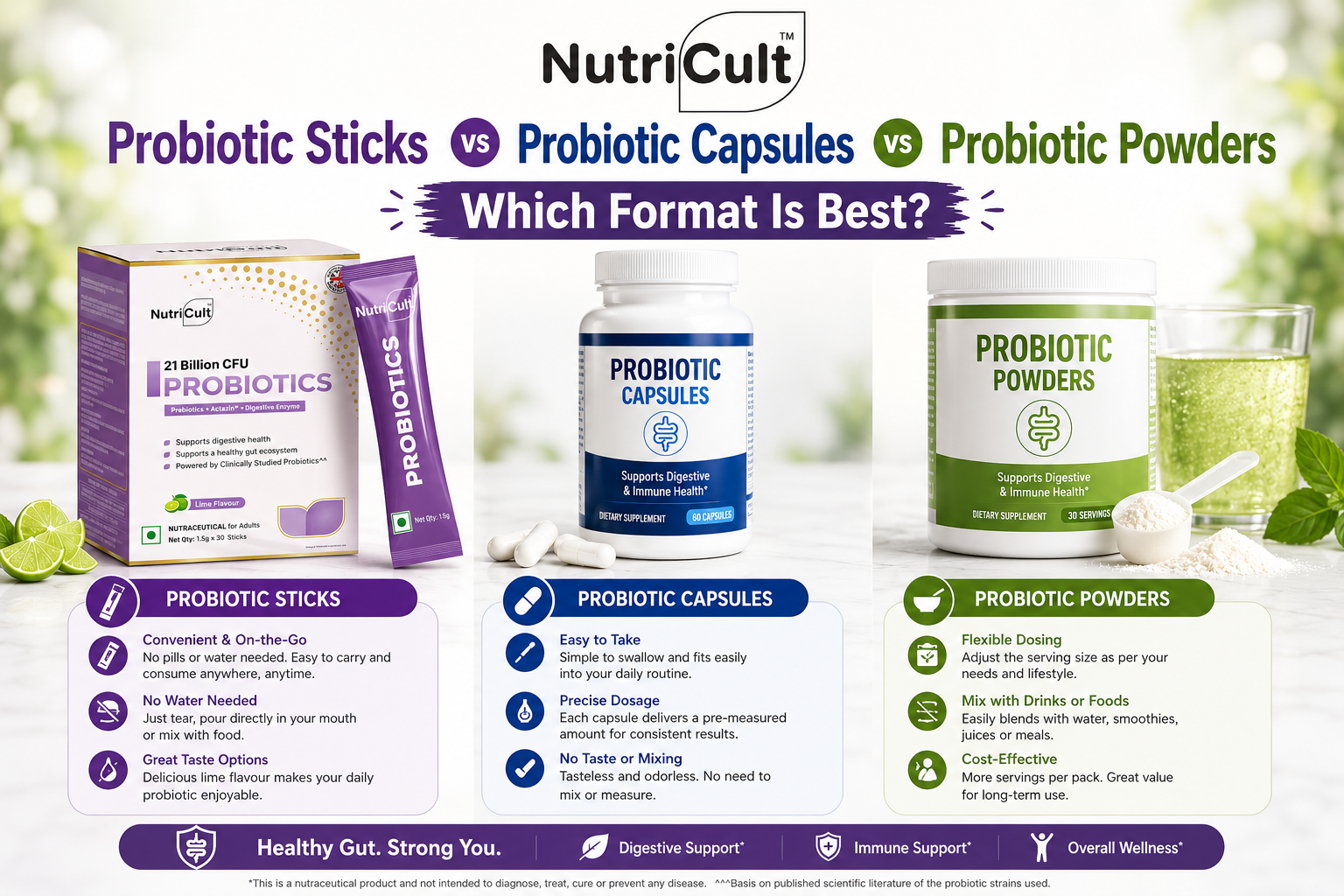
How Probiotic Format Affects Viability and Absorption
The gut is not a uniform environment. The stomach (pH 1.5 to 3.5) is aggressively acidic; the small intestine is mildly acidic to neutral (pH 5 to 7); the colon is slightly acidic (pH 5.5 to 7). Most beneficial bacteria are sensitive to the extreme acidity of the stomach — exposure kills a significant proportion of unprotected cultures. Format innovation in probiotics is entirely about solving this transit problem. Sticks deliver probiotic bacteria in a dry, anhydrous matrix — without moisture, bacteria enter a dormant state that is highly resistant to environmental stressors including acid. They rapidly rehydrate on contact with saliva and intestinal fluids, activating and reaching the colon in viable form.
Comparison Table — All Formats Explained
Probiotic format comparison covering sticks vs capsules vs powder vs liquid vs fermented foods across bacterial survival rate, convenience, dose consistency, and ideal user type.
Who Should Choose Each Format
Choose probiotic sticks if: you travel frequently and cannot manage refrigeration, you struggle with capsule compliance, or you want the most convenient daily protocol. Choose delayed-release capsules if: you need a very high CFU dose (50+ billion) for specific therapeutic use such as post-antibiotic microbiome restoration. Choose standard capsules if: budget is the primary constraint and general gut health maintenance (not microbiome restoration) is the goal. Avoid liquid probiotics unless they specify refrigeration requirements and have a short shelf life — shelf-stable liquid probiotics are typically pasteurised and contain no live cultures despite labelling.
The Format Advantage of Nutricult Probiotic Sticks in the Indian Context
In India's warm, humid climate, refrigeration requirements for probiotic products create a significant compliance barrier. Products requiring refrigeration lose potency when left at room temperature during transit, storage, or travel. Nutricult Probiotic Sticks are formulated for room-temperature stability — a critical practical advantage in India's climate. The single-use stick format also eliminates the dose inconsistency of powder formats and the capsule-swallowing barrier for users who find capsules inconvenient.
FAQ
Q: Are probiotic sticks as effective as capsules?
A: Yes — when both use appropriate bacterial protection for the delivery format. Sticks using a dry matrix achieve high bacterial survival rates comparable to quality delayed-release capsules. The stick format's advantage is convenience and compliance: consistent daily use matters more than marginal differences in viability between well-formulated formats.
Q: How many probiotic sticks should I take per day?
A: One stick per day is the standard protocol for most adults. Increasing to two sticks daily during antibiotic courses or post-gastrointestinal illness is appropriate and safe for healthy adults.
Q: Can children take probiotic sticks?
A: The stick format (no capsule to swallow, mild taste) makes it suitable for children under parental supervision. However, adult-formulation CFU counts may not be appropriate for young children. Consult a paediatrician for specific dosing recommendations for children under 12.
Q: Why does the first week of probiotics sometimes cause bloating?
A: Initial microbiome rebalancing can produce temporary gas and bloating as newly introduced bacteria establish and compete with existing populations. This is called the 'adaptation phase' and typically resolves within 5 to 10 days. Reducing the dose temporarily (every other day) and gradually increasing to daily can minimise this initial discomfort.

Buy Nutricult Probiotic Sticks — 21.6B CFU, Room Temperature Stable


