


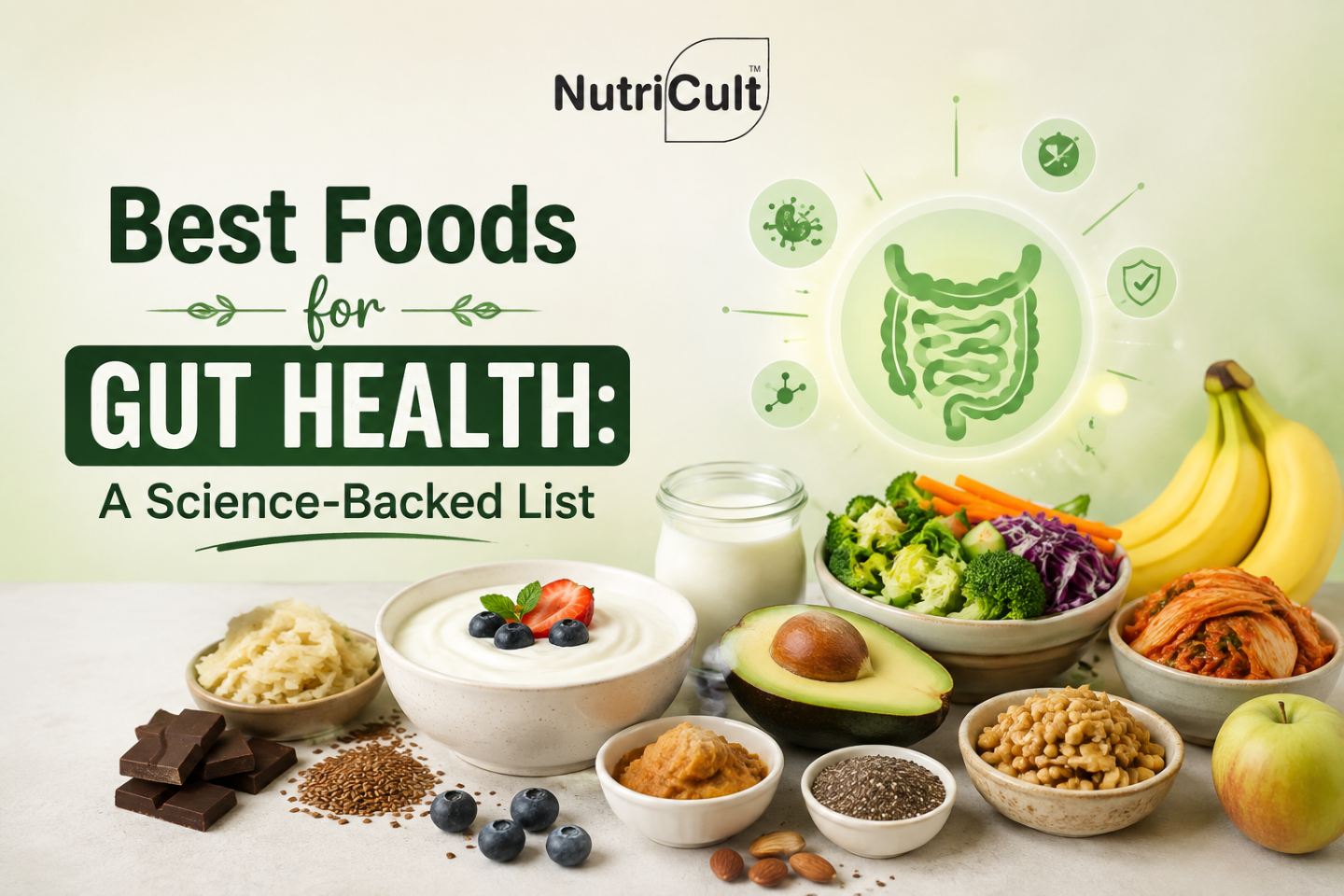
Your gut houses trillions of bacteria that influence digestion, immunity, and even mood. What you eat every day either feeds those bacteria well or starves them. This guide breaks down the foods for gut health with the strongest evidence behind them, how much of each you actually need, and where things can go wrong if you overdo it.
|
Quick Answer The best foods for gut health fall into two categories that work together. Prebiotic foods (garlic, onions, oats, bananas, apples) supply fiber that feeds beneficial bacteria already living in your colon. Probiotic foods (yogurt, kefir, curd, kimchi, sauerkraut) add live bacterial strains directly. Most adults need 25 to 40 grams of fiber daily, according to ICMR-NIN 2020 guidelines, yet the average Indian diet delivers closer to 15 grams. Combining both food groups, spread across meals rather than concentrated in one sitting, produces the most consistent results for digestion and bowel regularity. |
What Actually Makes a Food “Gut Healthy”
Gut health foods generally do one of two jobs. They either feed the bacteria you already have, or they introduce new bacterial strains into your digestive tract. A useful diet for the microbiome does both, and a third category, fermented and polyphenol-rich foods, supports the process indirectly.
Prebiotics: Fuel for Existing Bacteria
Prebiotics are fibers your body cannot digest on its own. They travel to the large intestine largely intact, where resident bacteria ferment them and produce short-chain fatty acids like butyrate. Butyrate feeds the cells lining your colon and plays a role in reducing inflammation. Garlic, onions, leeks, asparagus, oats, and slightly underripe bananas are among the richest natural sources of prebiotic fiber, according to the Harvard T.H. Chan School of Public Health.
Probiotics: Live Bacteria Delivered Directly
Probiotic foods contain live microorganisms that, in adequate amounts, can add beneficial strains to your existing microbiome. Fermentation produces these live cultures, so yogurt, kefir, curd, kimchi, and sauerkraut top the list. One caveat matters here: heat destroys live cultures. A cooked dish made with fermented ingredients, such as tempeh stir-fry, still offers protein and fiber benefits, but it no longer functions as a probiotic food once the microbes are killed by cooking.
Fiber Diversity Over Fiber Quantity
Recent research has shifted the conversation away from simply “eat more fiber” toward eating a wider variety of fiber types. Different bacterial species prefer different fibers, so a diet built around ten vegetables offers more microbial diversity than the same total fiber gram count eaten as five servings of the same grain.
The Best Foods for Gut Health, Food by Food
Yogurt and Curd
Plain, unsweetened yogurt with live active cultures remains one of the easiest probiotic foods to eat daily. It also supplies protein and calcium, which puts it ahead of sweetened “gut health” drinks that carry the probiotic label but little else nutritionally, per Harvard's Nutrition Source. Indian curd made at home with a live culture starter offers a comparable benefit.
Garlic, Onions, and Leeks
These alliums are rich in inulin, a prebiotic fiber that survives cooking reasonably well. Add them to dal, sabzi, or soup daily rather than treating them as a garnish; the quantity used in typical Indian cooking is already a meaningful contribution to prebiotic intake.
Oats
Oats supply beta-glucan fiber and resistant starch, both of which feed gut bacteria and have a documented cholesterol-lowering effect. A bowl of oats with fruit covers a solid share of your daily fiber target in one sitting.
Bananas (Slightly Underripe)
Green-tipped bananas contain more resistant starch than fully ripe ones. As bananas ripen, that resistant starch converts to sugar, so for gut benefits specifically, less ripe fruit performs better.
Apples
The pectin in apples increases butyrate production in the colon. Eating the skin matters here, since much of the pectin and fiber sits just beneath it.
Legumes and Pulses
Dals, rajma, and chickpeas are fiber and resistant-starch powerhouses that fit naturally into an Indian diet. They also deliver plant protein, which makes them one of the most efficient additions on this list per rupee spent.
Fermented Vegetables
Kimchi and sauerkraut bring live bacterial diversity along with polyphenols from the vegetables themselves. Start with small portions; a sudden large serving can cause gas in people unaccustomed to fermented foods.
Flaxseed
Ground flaxseed adds both soluble and insoluble fiber, along with omega-3 fats. Grinding matters, since whole flaxseed often passes through the digestive tract undigested.
Gut Health Foods Compared
|
Food |
Type |
Fiber per 100g (approx.) |
Key Compound |
Best Eaten |
|
Oats |
Prebiotic |
10g |
Beta-glucan |
Cooked, as porridge |
|
Garlic |
Prebiotic |
2.1g |
Inulin |
Raw or lightly cooked |
|
Apples (with skin) |
Prebiotic |
2.4g |
Pectin |
Raw, unpeeled |
|
Bananas (slightly green) |
Prebiotic |
2.6g |
Resistant starch |
Raw |
|
Yogurt (live culture) |
Probiotic |
0g |
Lactobacillus, Bifidobacterium |
Unheated, unsweetened |
|
Kimchi |
Probiotic |
2.4g |
Lactic acid bacteria |
Raw, small portions |
|
Chickpeas (cooked) |
Prebiotic |
7.6g |
Resistant starch, oligosaccharides |
Cooked, in dal or salad |
|
Flaxseed (ground) |
Prebiotic |
27g |
Soluble/insoluble fiber, lignans |
Ground, added to meals |
Fiber values are approximate and drawn from standard nutrient databases; actual content varies by variety, ripeness, and preparation.
How Much Fiber Do You Actually Need?
ICMR-NIN's 2020 Recommended Dietary Allowances set fiber intake based on a 2,000 kcal reference diet, and updated 2024 dietary guidelines for Indians push the broader target to a 30 to 40 gram range for adults. The FDA, by comparison, lists 25 grams per day as the Daily Value on US food labels. Despite these targets, most Indian adults consume only around 15 grams daily, largely because refined grains have replaced whole grains and millets in everyday meals. That gap explains why constipation, bloating, and irregular digestion show up so often in routine health complaints.
Closing the gap does not require a dramatic overhaul. Swapping white rice for a millet portion at one meal, keeping the skin on fruit, and adding a spoon of chia or flaxseed to breakfast can move daily intake several grams closer to target without restructuring an entire diet. If you want a broader look at how supplements fit around meal timing, our supplement timing guide covers when probiotics work best relative to food.
A Sample Day of Gut-Healthy Eating
Breakfast could combine live-culture curd with oats and a sliced banana. Lunch might include a lentil-based dal, a vegetable sabzi with onion and garlic, and a small side of kimchi or pickled vegetables if available. Dinner could feature a chickpea or rajma curry with a millet roti. That single day covers multiple prebiotic fiber sources and at least one probiotic food, without requiring specialty ingredients. Rotating vegetables and fruits across the week, rather than repeating the same three or four, is what actually builds microbial diversity over time.
If your daily meals fall short of covering both prebiotic and probiotic bases, especially on busy weeks, a probiotic supplement formulated with multiple clinically studied strains can help fill the gap alongside food, not instead of it.
Precautions and Possible Side Effects
Increasing fiber and fermented food intake too quickly is the most common mistake. A sudden jump from 15 grams of daily fiber to 40 grams can cause bloating, gas, and cramping even though the foods themselves are healthy. Increase intake gradually over two to three weeks and drink enough water alongside it, since fiber without adequate fluid can worsen constipation rather than relieve it.
People with irritable bowel syndrome, inflammatory bowel disease, or diagnosed food intolerances should introduce high-FODMAP foods like garlic, onions, and certain legumes cautiously, as these can trigger symptoms in sensitive individuals. Fermented foods are generally safe for most healthy adults, but anyone on blood pressure medication should watch sodium content in items like kimchi and sauerkraut, since these can be salt-heavy. This article is not a substitute for personalized medical advice, and anyone with a diagnosed digestive condition should check with a doctor or registered dietitian before making significant changes.
FAQ: Foods for Gut Health
What are the best foods for gut health?
Yogurt with live cultures, garlic, onions, oats, bananas, apples, legumes, and fermented vegetables like kimchi make up the core list. Combining prebiotic fiber sources with probiotic fermented foods gives the most complete support.
What foods are good for gut health if I have a sensitive stomach?
Start with cooked, low-FODMAP options such as oats, ripe (not green) bananas in small amounts, and plain yogurt. Introduce garlic, onions, and raw fermented vegetables gradually to gauge tolerance.
Are gut healthy foods the same as probiotic supplements?
No. Food sources provide fiber, nutrients, and bacteria together, while supplements deliver concentrated, specific bacterial strains. Many people use both, treating food as the daily foundation and supplements as backup on days when meals fall short.
How quickly do gut health foods work?
Some people notice softer, more regular bowel movements within a few days of increasing fiber intake. Meaningful shifts in microbial diversity typically take several weeks of consistent eating, based on gut microbiome research summarized by Harvard's Nutrition Source.
Can I get enough gut health foods from an Indian vegetarian diet?
Yes. Dals, curd, millets, and a wide range of vegetables already common in Indian cooking cover both prebiotic and probiotic needs well. The main adjustment for most people is portion consistency and choosing whole grains over refined ones more often.
Related Reads
• Supplement Timing Guide: When to Take Probiotics, Shilajit, and CoQ10
• LeanGut Review: Can a Gut Health Supplement Help with Weight Management?
• Chikoo Benefits: Nutrition, Fiber, and Side Effects
• How to Read Your Blood Test Report: Nutritional Deficiency Markers
• Shop Nutricult Probiotic Sticks
• Shop the Gut Reset Kit
This article is intended for general nutrition information and does not replace individualized medical or dietary advice. Consult a doctor or registered dietitian before making significant dietary changes, particularly if you have a diagnosed digestive condition, are on medication, or are pregnant or breastfeeding.


