


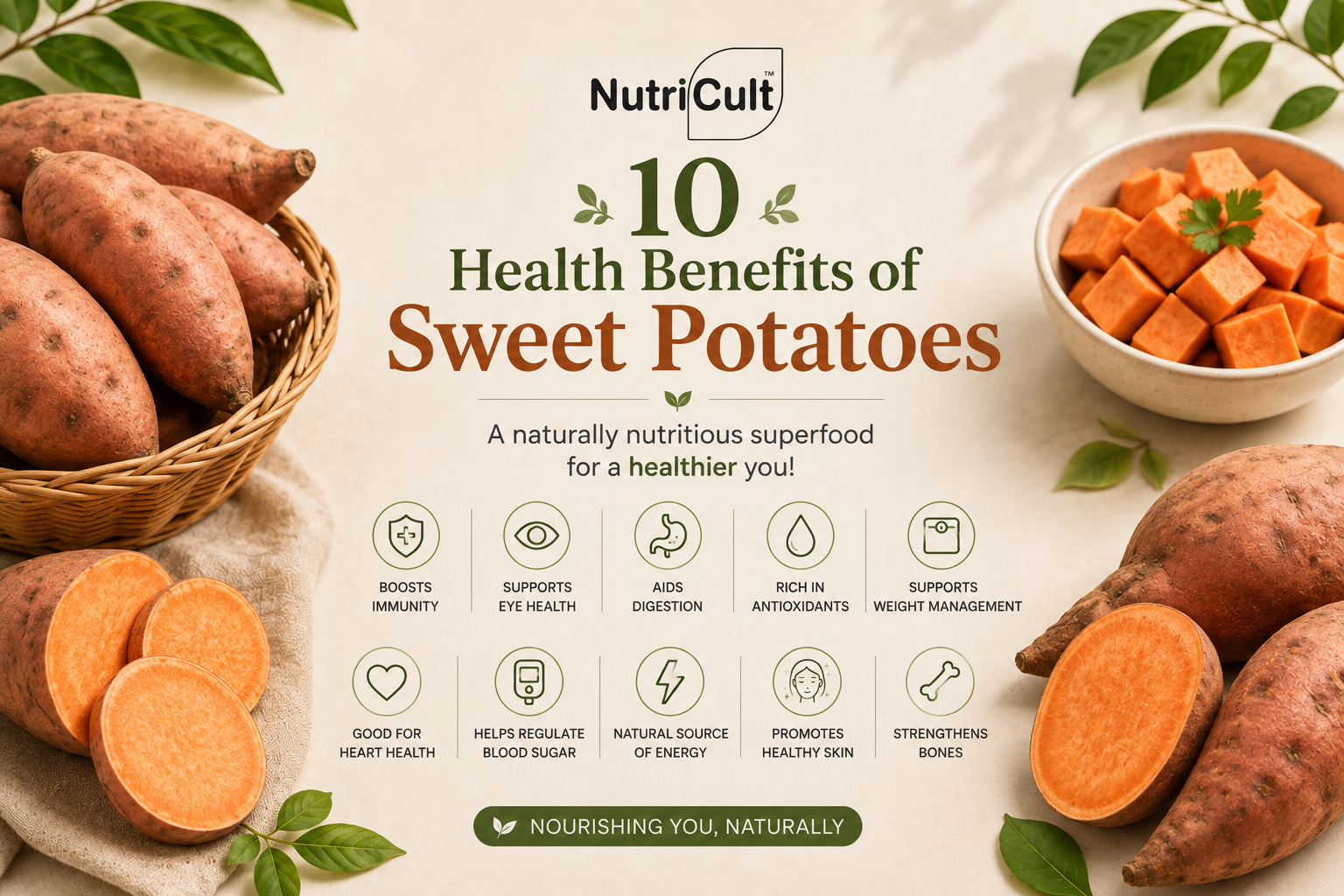
Sweet potato, known across India as shakarkandi or sakarkand, is one of the few root vegetables that delivers genuine nutrient density alongside natural sweetness. A single 100-gram serving covers nearly 80 percent of the daily vitamin A requirement, which is a large part of why this humble winter tuber shows up so consistently in immunity, skin, and eye health advice. It is not, however, without a few caveats worth knowing before making it a daily habit.
Quick Answer: Sweet potato supports eye health, immunity, digestion, and blood sugar management through its vitamin A, fibre, and antioxidant content. A 100-gram serving provides roughly 86 calories, 3g of fibre, and 709mcg of vitamin A. Side effects are uncommon but can include kidney stone risk with excess oxalate intake and blood sugar spikes when the vegetable is fried or heavily sweetened.
What Makes Sweet Potato Different From a Regular Potato?
Despite the shared name, sweet potato and the common potato are not botanically related. Sweet potato belongs to the morning glory family, while the everyday potato belongs to the nightshade family. This distinction matters nutritionally too: sweet potato carries meaningfully more fibre, vitamin A, and antioxidants than a standard potato of the same size, along with a naturally sweeter flavour that comes from higher natural sugar content.
Grown widely across India and popular during the winter months as a roasted street food, sweet potato is also a staple in Ayurvedic cooking traditions, prized for its grounding, easily digestible qualities.
Sweet Potato Nutrition Facts (Per 100g Raw)
| Nutrient | Amount | % Daily Value (approx.) |
|---|---|---|
| Calories | 86 kcal | — |
| Carbohydrates | 20.1g | — |
| Dietary Fibre | 3g | 11% |
| Protein | 1.6g | — |
| Vitamin A | 709mcg | 79% |
| Vitamin C | 2.4mg | 3% |
| Potassium | 337mg | 7% |
| Calcium | 30mg | 2% |
| Iron | 0.6mg | 3% |
Source: USDA FoodData Central.
10 Health Benefits of Sweet Potatoes
1. Supports Eye Health and Vision
Sweet potato is exceptionally rich in beta-carotene, which the body converts into vitamin A. A single 100-gram serving covers close to 79 percent of the daily vitamin A requirement, a nutrient essential for maintaining healthy vision, particularly in low light conditions.
2. Strengthens Immune Function
The combined vitamin A and vitamin C content supports several layers of immune defence, from maintaining healthy mucous membranes to supporting white blood cell activity. Regular intake of vitamin-rich vegetables like sweet potato is commonly recommended as part of a broader strategy for reducing the frequency of common infections.
3. Supports Digestive Health
With 3g of fibre per 100 grams, sweet potato adds meaningful bulk to the diet, helping food move through the digestive tract more efficiently and supporting regular bowel movements. Its starch content is also relatively gentle on the stomach compared to more processed carbohydrate sources.
4. May Support Healthy Blood Sugar Levels
Sweet potato has a lower glycemic load than a regular potato, largely due to its fibre content slowing the rate at which sugar enters the bloodstream. Some research has associated regular sweet potato consumption with improved insulin sensitivity, though preparation method matters considerably here, since frying or adding sugar to the vegetable can offset much of this benefit. Anyone managing diabetes should confirm appropriate portion sizes with a doctor or dietitian.
5. Supports Heart Health
Potassium plays a central role in regulating blood pressure by balancing sodium levels in the body, and sweet potato provides a useful 337mg per 100 grams. Its fibre content adds a second layer of cardiovascular support by helping maintain healthier cholesterol levels over time.
6. Aids Weight Management
Sweet potato is low in fat and calorie-dense enough to feel satisfying without the calorie load of more processed carbohydrate options. Its fibre content extends feelings of fullness, which can help reduce overall snacking when the vegetable replaces less filling refined carbs in a meal.
7. Supports Skin Health
The antioxidant and vitamin C content in sweet potato helps counter oxidative stress on skin cells, one of the underlying drivers of dullness and premature ageing. This kind of internal, food-based support works best alongside targeted skin nutrition rather than as a replacement for a full skincare routine.
8. Offers Anti-Inflammatory, Antioxidant Protection
Beta-carotene and, in purple-fleshed varieties, anthocyanins give sweet potato meaningful antioxidant activity. These compounds help neutralise free radicals, unstable molecules linked to cellular ageing and, over long periods, elevated disease risk. This is supportive evidence rather than a treatment claim, and it works best as part of a generally antioxidant-rich diet.
9. Supports a Healthy Pregnancy
Sweet potato contributes folate, a B vitamin essential for DNA synthesis and cell division during pregnancy, alongside vitamin A for maternal and foetal immune support. Pregnant women should still follow their doctor's specific dietary guidance, particularly around vitamin A intake from all sources combined, since excess preformed vitamin A carries separate risks distinct from the beta-carotene form found in sweet potato.
10. Provides Sustained, Natural Energy
The complex carbohydrates in sweet potato digest more slowly than refined sugar, offering a steadier energy release rather than a sharp spike and crash. This makes it a commonly recommended pre-activity food for anyone needing longer-lasting fuel through the day.
Side Effects and Who Should Be Cautious
Sweet potato is safe for most people in normal dietary amounts, but a few groups should moderate their intake. The vegetable contains oxalates, which in large quantities can contribute to kidney stone formation in people already prone to them; those with a history of kidney stones should discuss appropriate portions with a doctor. People managing kidney disease more broadly should also be cautious, since sweet potato's potassium content can be difficult for compromised kidneys to process.
Preparation method matters as much as the vegetable itself. Frying sweet potato or pairing it with large amounts of added sugar, as in many dessert preparations, meaningfully raises its glycemic impact and reduces the blood-sugar benefits described above. Boiling, steaming, or roasting without added sugar preserves the nutritional profile far better. Eating unusually large quantities over time has also been associated in some cases with excess vitamin A intake, which is generally more of a concern with supplements than with whole-food beta-carotene, but portion awareness still matters for anyone eating sweet potato daily in large amounts.
How to Add Sweet Potato to Your Diet
Boiled or steamed sweet potato retains the most nutritional value and works well mashed, cubed into salads, or as a side dish. Roasting brings out natural sweetness without needing added sugar, making it a popular winter street food across India. It also blends into soups, curries, and even baked goods as a natural sweetener and moisture source. Pairing a fibre-rich vegetable like sweet potato with a balanced gut health routine is a common approach for anyone focused on digestive wellness as a whole.
Frequently Asked Questions
What are the main health benefits of sweet potato?
Sweet potato supports eye health through vitamin A, strengthens immunity, aids digestion through fibre, supports heart health through potassium, and provides antioxidant protection through beta-carotene and, in purple varieties, anthocyanins.
Is sweet potato good for weight loss?
Yes, in moderate portions. Its fibre content supports fullness and its fat content is minimal, though preparation method matters: boiled or roasted sweet potato supports weight goals far better than fried versions.
Can diabetics eat sweet potato?
Sweet potato has a lower glycemic load than regular potato, but people managing diabetes should still monitor portion size and avoid fried or heavily sweetened preparations, and should confirm appropriate amounts with a doctor.
What are the side effects of eating too much sweet potato?
Excess intake can contribute to kidney stone risk in people prone to them, due to its oxalate content, and very high, sustained intake may raise vitamin A levels beyond what is needed. People with kidney disease should moderate intake due to the vegetable's potassium content.
Is sweet potato safe during pregnancy?
Generally yes, and it offers useful folate and vitamin A for maternal health. Pregnant women should still discuss overall vitamin A intake from all dietary sources with their doctor.
What is the best way to cook sweet potato for maximum health benefit?
Boiling, steaming, or roasting without added sugar preserves the most nutritional value. Frying or pairing it with large amounts of sugar reduces its blood-sugar benefits considerably.
Related Reads
- The 15 Best Foods for Healthy Skin
- Ragi (Finger Millet): Health Benefits, Malt, and Atta
- Chikoo Benefits: Sapota Fruit Health Benefits and Nutrition
Explore more nutrition-backed wellness guides on the Nutricult blog, or browse digestion-focused formulations that pair well with a fibre-rich diet.
This article is intended for general nutrition information and does not replace individualised medical or dietary advice. Consult a doctor or registered dietitian before making significant dietary changes, particularly if you are managing diabetes, kidney disease, or are pregnant.


