


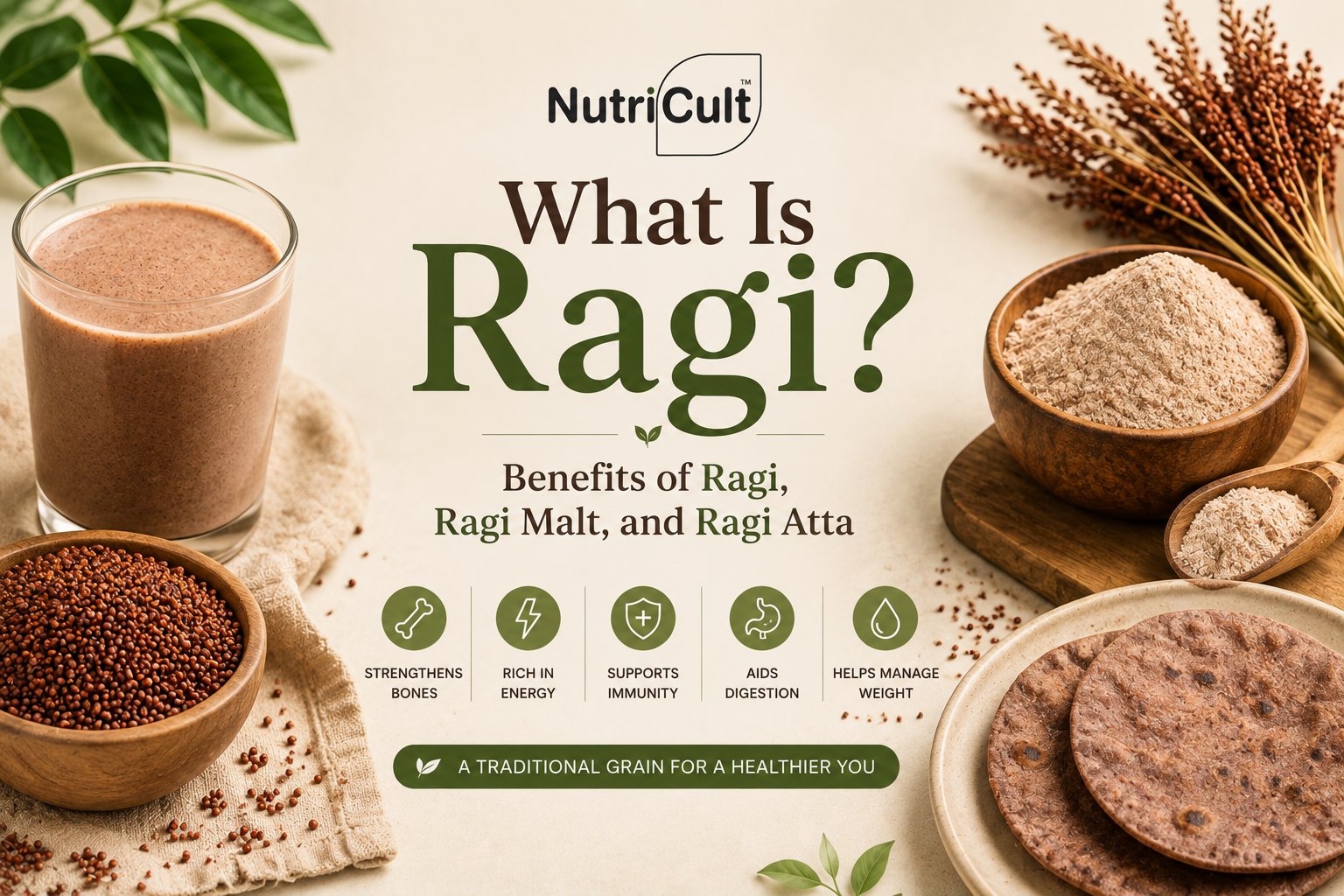
Ragi has fed generations of South Indian households for over three thousand years, yet it spent decades sidelined once polished rice and refined wheat became cheaper and more convenient. Nutrition science is now catching up to what traditional kitchens in Karnataka, Tamil Nadu, and Andhra Pradesh never stopped knowing: this small reddish-brown grain carries more calcium than any other commonly eaten cereal, a low to moderate glycemic index, and a nutrient profile that supports everything from bone strength to blood sugar control.
Quick Answer: Ragi, also called finger millet or nachni, is a gluten-free cereal grain rich in calcium, fibre, and iron. A 100-gram serving provides roughly 336 calories, 344mg of calcium, 7.3g of protein, and 11.2g of dietary fibre, according to ICMR Indian Food Composition Tables. Its benefits include supporting bone health, aiding blood sugar management, and providing sustained energy through ragi malt or ragi atta.
What Is Ragi?
Ragi is the Hindi name for finger millet, botanically known as Eleusine coracana. It is also called nachni in Marathi, keppai in Tamil, and mandua in parts of North India. The grain gets its English name from the finger-like clusters the seed heads form as they mature on the plant.
Cultivated in India and parts of Africa for thousands of years, ragi thrives in dry, high-altitude conditions where rice and wheat struggle. It is typically sold as whole grain, ground into flour for rotis and porridge, or malted into a lightly sweetened drink often given to infants and convalescing patients for its ease of digestion.
Ragi Nutrition Facts (Per 100g Raw Grain)
| Nutrient | Amount | Comparison |
|---|---|---|
| Calories | 336 kcal | Similar to wheat and rice |
| Protein | 7.3g | Comparable to rice, slightly below wheat |
| Carbohydrates | 72g | — |
| Dietary Fibre | 11.2g | Roughly 3x higher than white rice |
| Fat | 1.5g | — |
| Calcium | 344mg | Highest among common cereals; wheat has 29mg, rice has 28mg |
| Glycemic Index | ~54 | Lower than white rice (72) and white bread (75) |
Source: ICMR Indian Food Composition Tables, 2017.
Ragi also contains meaningful amounts of iron, phosphorus, and amino acids including methionine, tryptophan, and lecithin, along with phenolic antioxidant compounds concentrated mostly in the grain's outer bran layer.
Health Benefits of Ragi
1. Exceptional Source of Plant-Based Calcium
No commonly consumed cereal grain comes close to ragi on calcium content. At 344mg per 100 grams, it delivers roughly ten times the calcium found in an equivalent amount of rice, making it a genuinely useful plant-based option for people building bone density or managing dairy-free diets. A single ragi roti made from about 30g of flour delivers close to 109mg of calcium on its own, comparable to a small glass of milk.
2. Supports Healthy Blood Sugar Management
Ragi's glycemic index sits around 54, meaningfully lower than white rice or white bread, which means it releases glucose into the bloodstream more gradually. Research on ragi-based diets has shown improvements in fasting blood glucose and HbA1c levels among people managing type 2 diabetes over time. Anyone managing diabetes should still work with a doctor or dietitian before making dietary changes, but replacing refined grains with ragi is among the more evidence-backed swaps available in an Indian diet.
3. Aids Weight Management
The amino acid tryptophan in ragi has an appetite-moderating effect, and its 11.2g of fibre per 100g adds to that by slowing digestion and extending satiety. Together, these two factors are why ragi shows up so often in weight management diet plans, not as a magic fix, but as a grain that supports fuller meals without the calorie density of refined alternatives.
4. Supports Digestive Health
High fibre content makes ragi genuinely effective for regular bowel movements, and unlike some high-fibre foods, it rarely causes the digestive discomfort associated with sudden fibre increases. Fermented preparations, such as ragi dosa batter or ragi java, take this further by reducing phytic acid, which improves how much of the grain's fibre and minerals the body can actually absorb.
5. Helps Address Iron Deficiency and Anaemia
Ragi contributes a useful amount of iron to the diet, and sprouted or malted ragi carries additional vitamin C that improves how efficiently the body absorbs that iron. This combination is part of why ragi malt is traditionally recommended for people managing mild anaemia, alongside other iron-rich foods and medical guidance where needed.
6. Supports Heart Health
The amino acids lecithin and methionine in ragi assist the liver in processing and clearing excess fat, while threonine helps limit fat accumulation in liver tissue. Combined with negligible cholesterol and low sodium content, ragi fits comfortably into a heart-conscious diet alongside regular exercise and medical monitoring where relevant.
7. A Genuinely Gluten-Free Grain Alternative
Ragi contains no gluten, which makes it a reliable substitute for wheat in rotis, porridge, and baked goods for anyone managing coeliac disease or non-coeliac gluten sensitivity. Its complex carbohydrate structure also means it digests more slowly than refined wheat flour, which many people find easier on the stomach.
8. Contributes to Skin and Hair Health
The antioxidant compounds and vitamin content in ragi support the body's defence against oxidative stress, one of the underlying drivers of dull skin and hair thinning. This internal support works best alongside, not instead of, targeted skin and hair nutrition, since diet alone rarely resolves specific skin or hair concerns on its own.
Ragi Malt Benefits
Ragi malt, made by cooking ragi flour with water or milk and lightly sweetening it, has been a staple weaning food and recovery drink in Indian households for generations, and for good reason. The malting or sprouting process partially breaks down the grain's starches, which makes the resulting porridge easier to digest than unprocessed ragi flour, particularly for infants, elderly family members, or anyone recovering from illness.
Malted ragi also carries more bioavailable iron than raw ragi flour, since sprouting naturally increases the grain's vitamin C content, and vitamin C is what helps the body actually absorb non-heme iron from plant sources. A warm glass of ragi malt in the morning is also a common traditional remedy for sustained energy through a long day, thanks to its complex carbohydrate and fibre combination.
Ragi Atta Benefits
Ragi atta, the flour ground from whole ragi grain, is most commonly used for rotis, dosas, idlis, and porridge across South Indian cooking, and increasingly in weight-conscious kitchens elsewhere. Compared to regular wheat atta, ragi atta carries meaningfully more calcium, iron, and fibre, though its protein content runs slightly lower than wheat's.
Rotis made from ragi atta tend to be more filling than their wheat counterparts at a similar serving size, a direct result of the higher fibre content slowing digestion. For households managing diabetes, coeliac disease, or simply looking to diversify beyond wheat-based staples, swapping in ragi atta for one or two meals a week is a straightforward way to add nutritional variety without overhauling an entire diet.
How to Include Ragi in Your Daily Diet
Ragi adapts easily into both traditional and modern meals. Morning options include ragi porridge, ragi dosa, or a warm cup of ragi malt sweetened lightly with jaggery. For lunch or dinner, ragi rotis or ragi mudde pair naturally with dal and vegetable curry, a combination that also improves the meal's overall amino acid profile. Ragi flour can additionally be folded into cookies, laddus, and pancakes for a calcium boost that does not sacrifice taste.
Anyone building a broader fibre-and-mineral-focused diet often pairs a grain like ragi with a daily gut health routine, since fibre-rich foods and a balanced gut microbiome tend to support each other.
Who Should Be Cautious With Ragi?
Ragi is generally very safe for most people, but a few groups should moderate their intake. The grain contains oxalates, which in very high quantities can contribute to kidney stone formation in people already prone to them. Excessive raw ragi consumption has also been associated with mild goitrogenic activity in some studies, which is relevant primarily for people with existing thyroid conditions; cooking and fermentation reduce this effect considerably. As with any dietary change, anyone managing a chronic condition should check with a doctor before making ragi a daily staple.
Frequently Asked Questions
What is ragi?
Ragi is the Hindi name for finger millet (Eleusine coracana), a gluten-free cereal grain known for its exceptionally high calcium content and traditional use across South Indian cuisine.
What are the main benefits of ragi?
Ragi supports bone health through its calcium content, helps manage blood sugar due to its low to moderate glycemic index, aids digestion and weight management through fibre, and supports iron levels, particularly in malted or sprouted form.
What are ragi malt benefits specifically?
Ragi malt is easier to digest than raw ragi flour, delivers more bioavailable iron due to its vitamin C content from sprouting, and is traditionally used as a weaning food, recovery drink, and morning energy source.
What are ragi atta benefits compared to wheat atta?
Ragi atta carries significantly more calcium, iron, and fibre than wheat atta, though slightly less protein. It is also naturally gluten-free, making it suitable for people managing coeliac disease or gluten sensitivity.
Can ragi help with weight loss?
Ragi's fibre content and appetite-moderating amino acid tryptophan can support satiety and reduce overall calorie intake, which is why it is commonly included in weight management diet plans, though it works best alongside overall calorie awareness rather than as a standalone solution.
Is ragi suitable for daily consumption?
For most healthy adults, yes. People managing kidney stone risk or thyroid conditions should discuss appropriate portion sizes with a doctor before making ragi a daily staple.
Related Reads
- The 15 Best Foods for Healthy Skin
- 9 Benefits and Uses of Lemon Peel
- Should You Eat Almonds With the Skin On?
Explore more nutrition-backed wellness guides on the Nutricult blog, or browse digestion-focused formulations that pair well with a fibre-rich, millet-based diet.
This article is intended for general nutrition information and does not replace individualised medical or dietary advice. Consult a doctor or registered dietitian before making significant dietary changes, particularly if you are managing diabetes, thyroid conditions, or kidney stone risk.


