


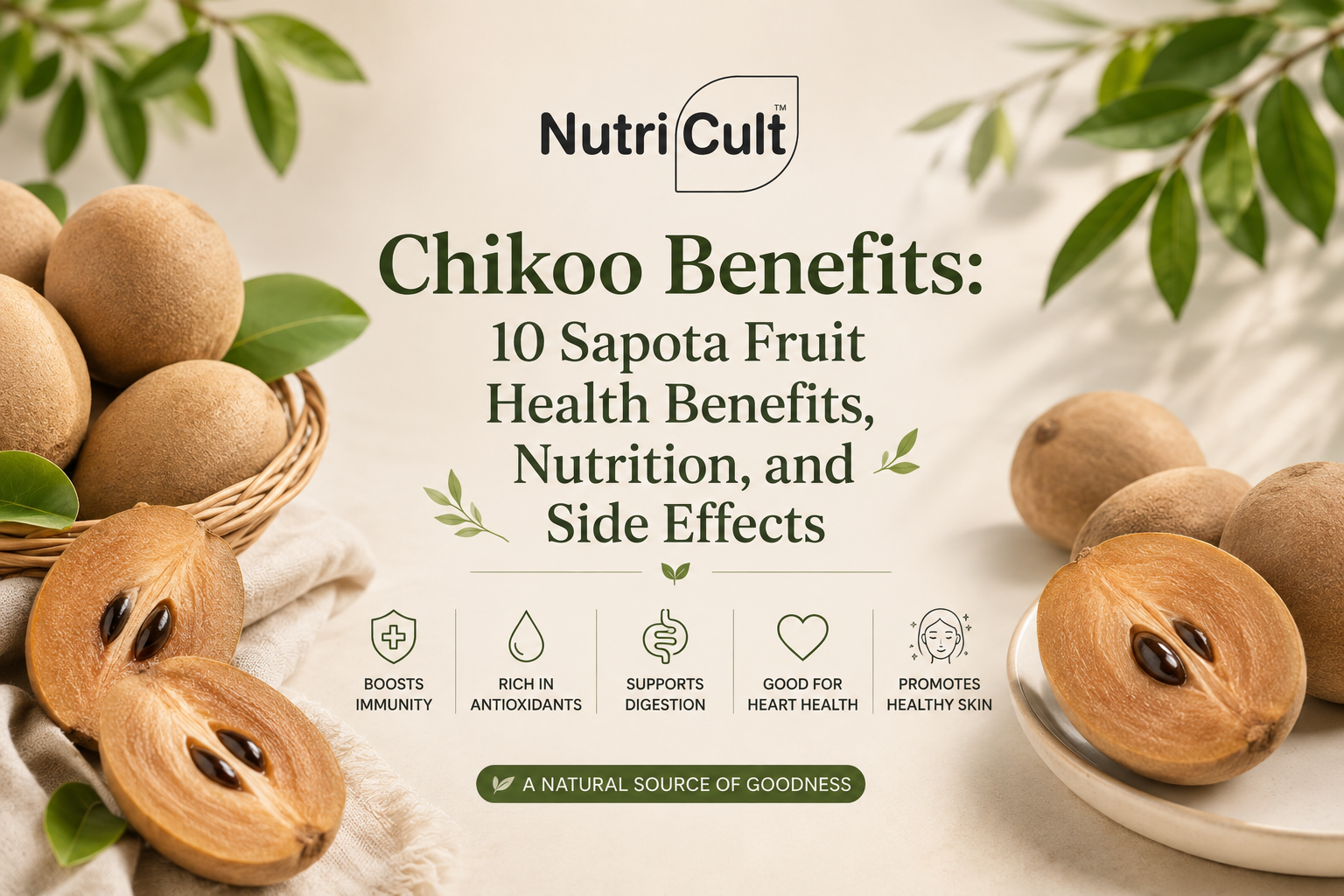
Chikoo rarely gets the attention that mango or pomegranate does, yet a single 100-gram serving covers nearly a quarter of your daily vitamin C requirement and comes loaded with fibre, potassium, and plant compounds that support digestion, skin, and heart health. Known across India as chikoo, and internationally as sapota, sapodilla, or naseberry, this brown-skinned tropical fruit has quietly earned its place as one of the more nutrient-dense everyday fruits available.
Quick Answer: Sapota (chikoo) benefits include improved digestion from its high fibre content, immune support from vitamin C, sustained energy from natural sugars, and skin and heart health support from its antioxidants and potassium. A 100-gram serving provides roughly 83 calories, 5.3g of fibre, and 24.5mg of vitamin C.
What Is Chikoo (Sapota)?
Chikoo is the common Indian name for what is botanically called sapodilla, and often labelled sapota, chiku, or naseberry in other regions. The fruit is oval to round, roughly the size of an egg, with rough brown skin covering soft, grainy, caramel-sweet flesh. It grows widely across India and Mexico, and its flavour is frequently compared to a blend of pear, brown sugar, and caramel.
Unlike citrus fruits or berries, chikoo is eaten only when fully ripe, since unripe fruit contains latex compounds that make it astringent and difficult to digest. Once ripe, the flesh softens considerably and the natural sugars intensify, which is part of why the fruit works so well blended into smoothies, milkshakes, and desserts.
Sapota Nutrition Facts (Per 100g Serving)
| Nutrient | Amount | % Daily Value (approx.) |
|---|---|---|
| Calories | 83 kcal | — |
| Carbohydrates | 19.9g | — |
| Dietary Fibre | 5.3g | 19% |
| Protein | 0.4g | — |
| Vitamin C | 24.5mg | 27% |
| Potassium | 193mg | 4% |
| Sodium | 12mg | 1% |
| Magnesium | small amount | 3% |
| Vitamin A | trace | 1% |
Chikoo also contains smaller amounts of copper, iron, calcium, and phosphorus, along with tannins, a group of polyphenol compounds credited with much of the fruit's anti-inflammatory and antioxidant activity.
10 Health Benefits of Chikoo (Sapota)
1. Supports Digestive Health
The 5.3g of fibre in every 100-gram serving is the main reason chikoo shows up so often in digestion-focused diet advice. That fibre adds bulk to stool and encourages regular bowel movements, which helps prevent constipation. The fruit's tannin content plays a secondary role here too, helping calm excess acid secretion in the gut and easing symptoms tied to mild hyperacidity.
2. Strengthens Immune Function
A single serving covers close to a quarter of the daily vitamin C requirement, a nutrient central to white blood cell production and general immune resilience. Regular intake of vitamin C-rich fruit is commonly recommended as part of a broader strategy to reduce the frequency and severity of common infections, alongside adequate sleep and hydration.
3. Provides Natural, Sustained Energy
Fructose and sucrose make up most of chikoo's carbohydrate content, giving it a reputation as a natural energy fruit rather than a quick sugar spike alone. Because it also carries fibre, the sugar releases somewhat more gradually than it would from refined sweeteners, which is why the fruit is often recommended for children, pregnant women, and anyone with elevated daily energy needs.
4. Contributes to Heart Health
Potassium plays a direct role in regulating blood pressure by balancing sodium levels in the body, and chikoo delivers a meaningful 193mg per 100 grams. Its fibre content also supports healthy LDL cholesterol levels over time. Neither effect replaces medication or a cardiologist's guidance, but as part of a fibre-rich, potassium-adequate diet, chikoo fits comfortably into a heart-conscious eating pattern.
5. Supports Skin Health and a Natural Glow
Vitamin E and antioxidant compounds in chikoo help counter oxidative stress on skin cells, one of the primary drivers of premature ageing and dullness. This is one of the reasons skin-focused nutrition so often emphasises antioxidant-rich whole foods rather than skincare alone. The polyphenols in chikoo work toward the same goal internally, supporting collagen integrity and reducing free radical damage from the inside.
6. Has Anti-Inflammatory Properties
Tannins are a well-documented anti-inflammatory compound, and chikoo carries them in useful concentration. Anti-inflammatory support from whole foods is generally associated with better outcomes for conditions like mild gastritis and general gut irritation, though anyone managing a diagnosed inflammatory condition should still follow their doctor's dietary guidance rather than relying on any single fruit.
7. May Support Bone Health
Chikoo contributes small but useful amounts of calcium, phosphorus, and iron, three minerals that work together to support bone density and structural strength. On its own, the fruit is not a substitute for calcium-rich dairy or leafy greens, but it adds incremental value when eaten as part of a varied, mineral-diverse diet.
8. Aids Healthy Vision
The trace vitamin A content in chikoo, though modest, adds to overall daily intake of a nutrient essential for maintaining the eye's mucus membranes and supporting low-light vision. Pairing it with other vitamin A sources, such as carrots or leafy vegetables, is a more reliable way to meet the full daily requirement.
9. Offers Antioxidant Protection Linked to Long-Term Cellular Health
The polyphenols and flavonoids in chikoo neutralise free radicals, unstable molecules associated with cellular ageing and, over long stretches of time, elevated disease risk. Some preliminary research has explored antioxidant-rich fruit compounds in relation to cancer cell behaviour, though this research does not establish that eating chikoo prevents or treats cancer, and it should never be treated as a substitute for medical screening or treatment.
10. A Naturally Sweet, Lower-Guilt Dessert Substitute
Because chikoo's sweetness comes from fructose and sucrose rather than added or refined sugar, it works well as a swap for processed desserts. Blended into a smoothie, mashed into a milkshake, or eaten fresh, it delivers genuine sweetness alongside fibre and micronutrients that refined sugar simply does not provide.
Who Should Be Cautious With Chikoo?
Chikoo is high in natural sugar and calories relative to many other fruits, so portion size matters for anyone managing blood sugar or working toward a calorie deficit. People with diabetes should discuss appropriate serving sizes with a doctor or dietitian rather than assuming any fruit is automatically diabetes-friendly. The fruit also contains latex, which can trigger a reaction in people with a known latex allergy, and unripe chikoo should be avoided altogether due to its astringency and digestive discomfort.
How to Add Chikoo to Your Daily Diet
Fresh, ripe chikoo needs no preparation beyond peeling and slicing, making it an easy addition to breakfast bowls or a standalone snack. It also blends smoothly into shakes and smoothies, pairs well with yoghurt for a fibre-and-protein combination, and works as a natural sweetener in homemade desserts like chikoo kheer. For anyone building a broader gut-friendly diet, pairing a fibre-rich fruit like chikoo with a daily probiotic is a common combination for supporting regular digestion.
Frequently Asked Questions
What are the main benefits of chikoo?
Chikoo supports digestion through its fibre content, strengthens immunity through vitamin C, provides sustained natural energy, and contributes to heart, skin, and bone health through its potassium, antioxidants, and mineral content.
Is sapota fruit good for daily consumption?
In moderate portions, yes. A single 100-gram serving fits comfortably into most daily diets, though its calorie and sugar content mean portion control matters for people managing weight or blood sugar.
What is the difference between chikoo and sapota?
None. Chikoo and sapota are the same fruit, known by different names depending on region. It is also called sapodilla, chiku, or naseberry in various parts of the world.
Can diabetics eat chiku fruit?
Chikoo has a moderate to high sugar content, so people with diabetes should consult a doctor or dietitian about appropriate portion sizes rather than eating it freely.
Does chikoo help with weight loss?
Chikoo is relatively high in calories for a fruit, so it is not typically recommended as a weight-loss food on its own. Its fibre content can support satiety, but portion control still matters within a calorie-conscious diet.
How many chikoo can I eat in a day?
One to two medium chikoo fruits, roughly 150 to 200 grams total, is a commonly recommended daily portion for most healthy adults, though individual calorie and sugar needs vary.
Related Reads
- The 15 Best Foods for Healthy Skin
- 9 Benefits and Uses of Lemon Peel
- Should You Eat Almonds With the Skin On?
Explore more nutrition-backed wellness guides on the Nutricult blog, or browse gut health formulations that pair well with a fibre-rich diet.
This article is intended for general nutrition information and does not replace individualised medical or dietary advice. Consult a doctor or registered dietitian before making significant dietary changes, particularly if you are managing diabetes, a latex allergy, or another diagnosed health condition.


