


Probiotics vs Prebiotics: What Is the Real Difference?
Gut health conversations throw around the words probiotic and prebiotic like they mean the same thing. They do not. One is a living organism. The other is food for that organism. Mixing them up is a bit like confusing a plant with fertiliser, and getting the balance wrong can quietly undo your digestion goals.
This guide breaks down the prebiotic vs probiotic debate in plain terms, backed by data from the USDA, ICMR-National Institute of Nutrition, and clinical nutrition sources, so you can build a gut-health routine that actually works.
Quick Answer: Probiotics vs Prebiotics in 30 Seconds
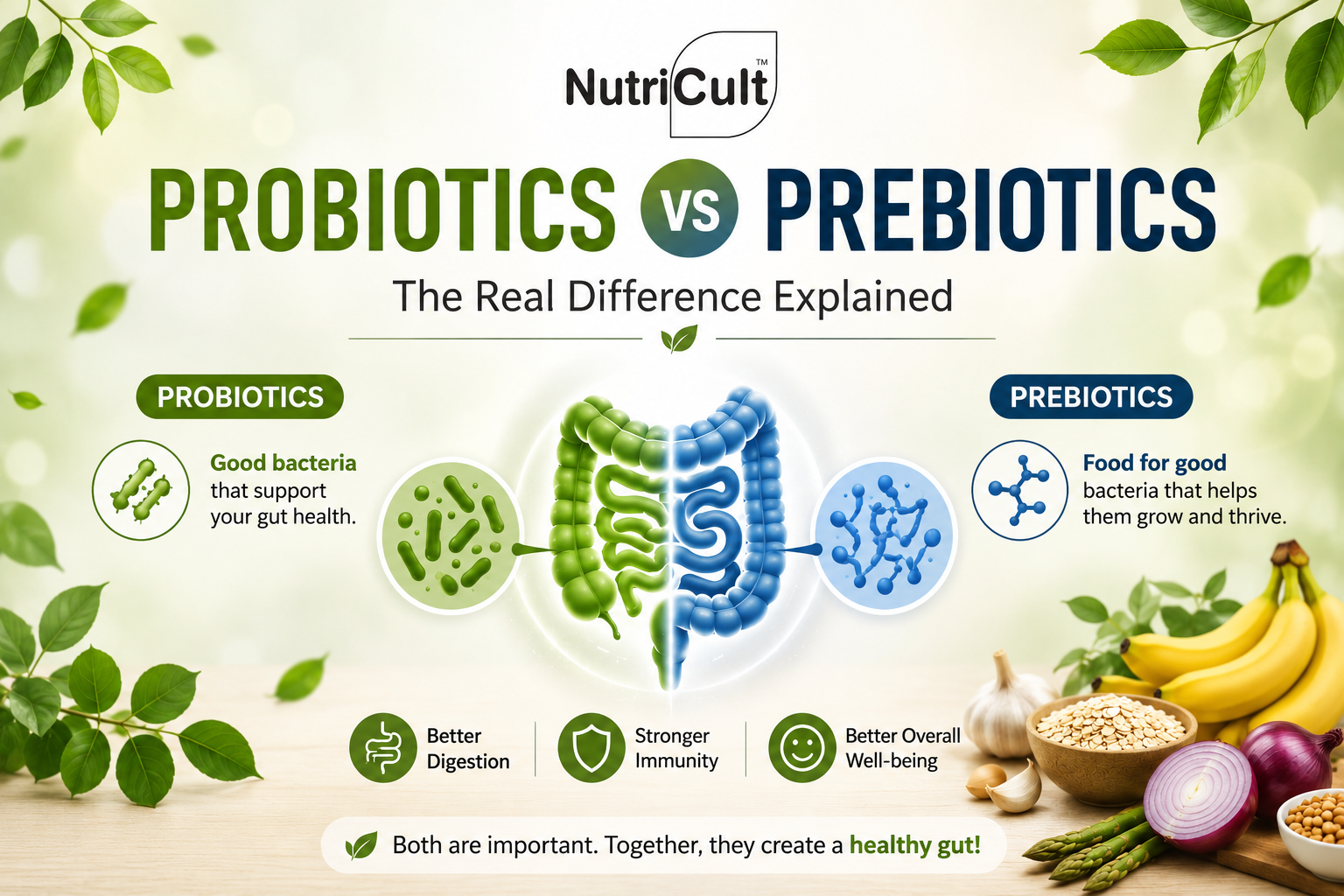
Probiotics are live, beneficial bacteria and yeasts found in fermented foods like curd, kimchi, and kefir, or taken as supplements. Prebiotics are types of fiber that the human body cannot digest, which travel to the colon and feed those beneficial bacteria. Put simply: probiotics are the bacteria, prebiotics are their fuel. Most gut-health experts recommend consuming both together, a combination often called synbiotic nutrition, because prebiotics help probiotics survive and multiply once they reach the gut.
What Are Probiotics?
Probiotics are live microorganisms that, when consumed in adequate amounts, add beneficial bacteria to your digestive tract. Common strains include Lactobacillus and Bifidobacterium, which support digestion, help maintain the balance of gut flora, and play a role in immune function.
You already encounter probiotics more often than you might think. Dahi (curd), idli, dosa batter, and pickled vegetables are all naturally fermented, and ICMR-National Institute of Nutrition's Dietary Guidelines for Indians recognise fermentation as a traditional Indian cooking method that improves digestibility and nutrient bioavailability. Outside India, yogurt, kefir, miso, and kimchi serve the same role.
Common Probiotic Sources
● Dahi or plain yogurt with live cultures
● Idli and dosa batter
● Kanji (fermented carrot or beet drink)
● Kimchi and sauerkraut
● Kefir and buttermilk (chaas)
● Miso and tempeh
Not every fermented food guarantees a clinically meaningful dose of live bacteria. Pasteurised or heat-processed products often lose their active cultures, which is one reason many people turn to a formulated probiotic supplement for a measured, consistent CFU (colony-forming unit) count. Nutricult's Probiotic Sticks are built around this exact gap, delivering a standardised multi-strain dose in a travel-friendly format.
What Are Prebiotics?
Prebiotics are non-digestible carbohydrates, mostly fiber, that pass through the small intestine intact and reach the colon, where gut bacteria ferment them. That fermentation process feeds beneficial microbes and produces short-chain fatty acids, compounds linked to better gut lining integrity and lower inflammation.
Fructooligosaccharides (FOS), inulin, and resistant starch are among the most studied prebiotic fibers. ICMR's dietary guidelines specifically note that prebiotics present in fruits and vegetables support gut flora and overall digestive health.
Common Prebiotic Sources
● Onion, garlic, and leeks
● Banana (especially slightly underripe)
● Oats and barley
● Legumes such as chana, rajma, and dal
● Asparagus and chicory root
● Whole grains like ragi and millets
Millets are a particularly strong prebiotic source for Indian diets. If you want to go deeper on one specific grain, our post on what ragi is and its health benefits covers its fiber profile in detail. Fruits like sweet potato and chikoo also contribute meaningfully to daily fiber intake; see our breakdowns of sweet potato health benefits and chikoo nutrition and benefits for specifics.
Probiotic vs Prebiotic: Side-by-Side Comparison
|
Factor |
Probiotics |
Prebiotics |
|
What it is |
Live beneficial bacteria and yeasts |
Non-digestible fiber that feeds bacteria |
|
Main job |
Adds good bacteria to the gut |
Feeds and multiplies existing good bacteria |
|
Common sources |
Curd, kimchi, kefir, miso, fermented idli batter |
Onion, garlic, banana, oats, legumes, whole grains |
|
Digested by the body |
No, bacteria survive passage to the colon |
No, fiber is fermented by gut bacteria in the colon |
|
Heat sensitivity |
Cooking or pasteurisation can kill live cultures |
Heat-stable; fiber survives cooking |
|
Best paired with |
Prebiotic fiber, for the bacteria to feed on |
Probiotic foods, so the fiber has bacteria to feed |
|
Typical daily target |
Varies by strain and CFU count on the label |
25 to 38 grams total fiber per day per USDA guidance |
Why the Combination Matters More Than Either Alone
Taking a probiotic without enough fiber in your diet is like introducing new employees to an empty office with no supplies. The bacteria arrive, but they have nothing to work with and often fail to establish themselves. This is why nutritionists increasingly recommend synbiotic formulations, products that pair a probiotic strain with a matched prebiotic fiber in the same dose.
Nutricult's LeanGut Sticks reflect this approach directly. Each sachet combines a seven-strain probiotic blend delivering 18.95 billion CFU with fructooligosaccharides, a targeted prebiotic fiber, alongside digestive enzymes. For those who want a combined starting point rather than two separate products, the Gut Reset Kit bundles both approaches together, and our Digestion collection rounds up every gut-focused product on the site in one place.
How Much Fiber and Probiotic Bacteria Do You Actually Need?
According to USDA Dietary Guidelines, adult women need roughly 25 grams of fiber per day and adult men need about 38 grams, figures that drop slightly after age 50. The same guidelines note that the average American adult consumes only around 15 grams a day, less than half the target. India-specific intake data is less consistently tracked, but ICMR-NIN's Dietary Guidelines for Indians push the same direction: generous vegetables, whole grains, and pulses at every meal, precisely the food groups richest in prebiotic fiber.
There is no single universal probiotic dose. Effective CFU counts vary by strain and by the health outcome being targeted, which is why supplement labels list both the specific bacterial strains and the CFU count rather than a generic "probiotic" claim. Look for products that disclose both.
Signs You Might Need More of Each
A few practical signals can help you figure out where your gut routine is lacking.
You may need more prebiotic fiber if meals leave you constipated, if your diet is heavy on refined grains and light on vegetables, or if you rarely eat legumes. You may need more probiotic support if you have recently finished a course of antibiotics, travel frequently and experience digestive upset, or notice bloating that does not track back to any specific food. Many people need both at once, which is exactly the gap combination formulas are designed to close.
Caution and Side Effects
Prebiotic fiber, when increased too quickly, can cause gas, bloating, and cramping. The standard advice from dietitians is to raise fiber intake gradually, by around 3 to 5 grams a week, while increasing water intake alongside it.
Probiotic supplements are generally considered safe for healthy adults, but people with compromised immune systems, those recovering from major surgery, or anyone managing a serious underlying illness should consult a doctor before starting a new strain. Mild, temporary bloating or gas in the first week of probiotic use is common and usually settles as the gut adjusts.
This article is for general information and does not replace individualised medical or dietetic advice. If you have a chronic digestive condition, are pregnant, or are on medication that affects gut flora, speak with a healthcare provider before adding a new supplement.
Frequently Asked Questions
What is the main difference between prebiotics and probiotics?
Probiotics are live bacteria that populate your gut. Prebiotics are the fiber those bacteria feed on. Neither is digested by the human body directly; one survives to colonise the colon, the other is fermented there.
Prebiotic vs probiotic, which should I take first?
There is no strict order. Many nutritionists suggest starting with prebiotic-rich foods like vegetables, legumes, and whole grains to build a fiber base, then layering in a probiotic source such as curd or a supplement once your fiber intake is consistent.
Probiotics vs prebiotics, can I take both together?
Yes, and most gut-health experts recommend it. Combination or synbiotic products, which pair a specific probiotic strain with a matched prebiotic fiber, are formulated for exactly this purpose.
Pre vs probiotic, which one helps with bloating?
It depends on the cause. Bloating from low fiber intake usually improves with gradual prebiotic fiber increases. Bloating linked to an imbalanced microbiome, such as after antibiotic use, often responds better to a probiotic strain. If bloating persists beyond a few weeks, see a doctor.
Are prebiotics and probiotics safe for daily use?
For most healthy adults, yes. Introduce fiber increases gradually to avoid digestive discomfort, and choose probiotic supplements that disclose specific strains and CFU counts. People with underlying health conditions should check with a healthcare provider first.
Do I need a supplement, or can food alone cover both?
Food can cover both if your diet is consistently rich in vegetables, legumes, whole grains, and traditionally fermented foods. Supplements become useful when dietary intake falls short, when you need a measured CFU dose, or when convenience makes daily consistency easier to maintain.
Related Reads
What Is Ragi? Benefits of Ragi, Ragi Malt, and Ragi Atta Explained
10 Health Benefits of Sweet Potatoes, Plus Side Effects to Know
Chikoo Benefits: 10 Sapota Fruit Health Benefits, Nutrition, and Side Effects
Nutricult LeanGut Sticks: Probiotics + Prebiotics in One Sachet
Gut Reset Kit: LeanGut + Probiotics
Disclaimer: This content is for educational purposes only and is not a substitute for professional medical advice, diagnosis, or treatment. Always consult a qualified doctor or registered dietitian before starting any new supplement, especially if you are pregnant, nursing, managing a chronic condition, or taking medication.


