


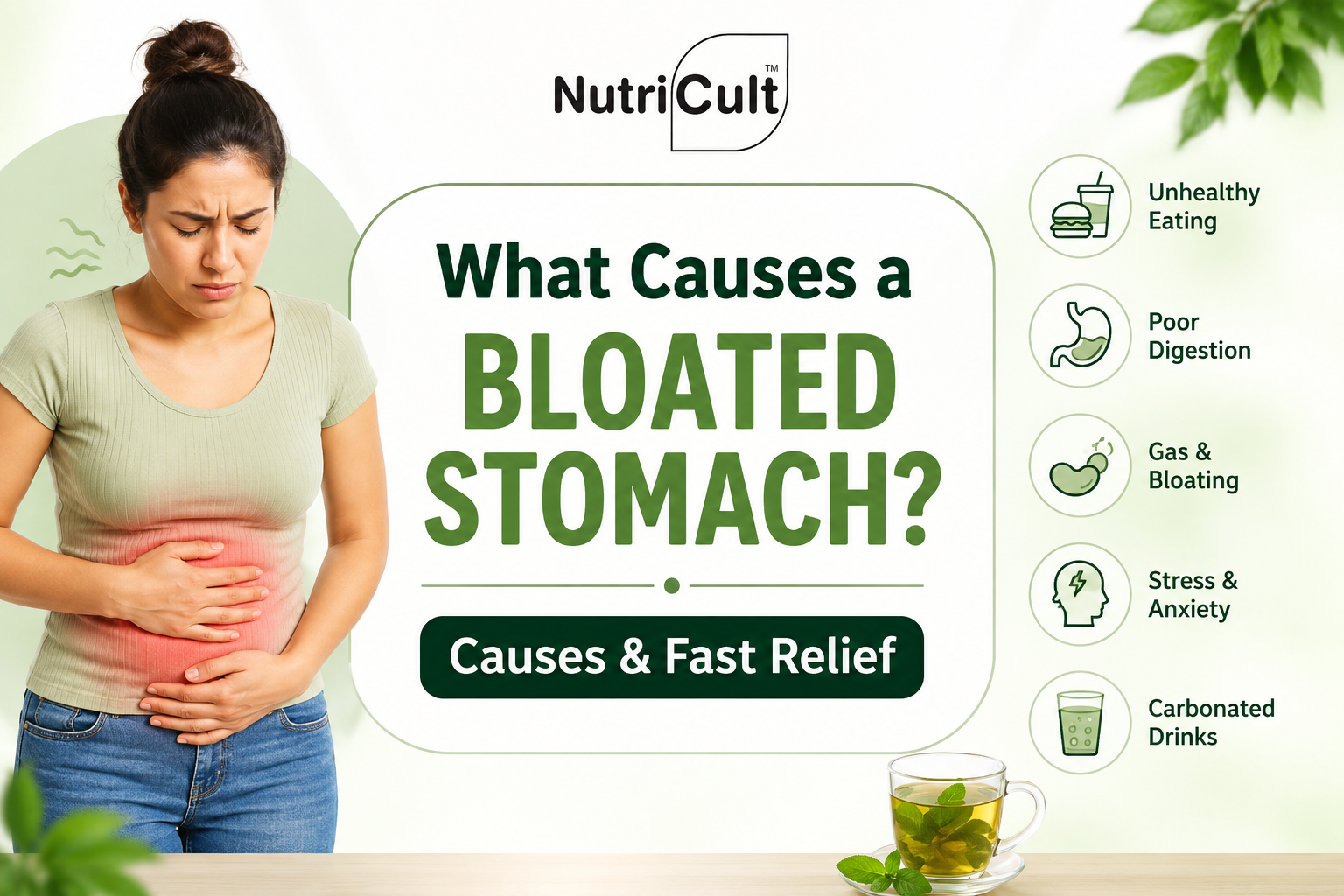
That tight, swollen feeling after a meal isn't in your head. Bloating is one of the most common digestive complaints worldwide, and in India, studies estimate that irritable bowel syndrome alone affects roughly 4% to 20% of the adult population depending on the region and diagnostic criteria used, with bloating as one of its most reported symptoms.
Quick Answer
Bloating happens when your gastrointestinal tract fills with excess air or gas, or when digestion slows down enough that food, gas, and fluid build up in your gut. The most common triggers are swallowed air, gas-producing foods, constipation, food intolerances (like lactose or FODMAPs), and hormonal shifts. For most people, bloating is temporary and improves with movement, hydration, peppermint tea, or a short walk after meals. Bloating that is frequent, painful, or paired with weight loss or blood in stool needs a doctor's evaluation, not a home remedy.
What Is Bloating?
Bloating is the sensation of fullness, tightness, or pressure in the abdomen. Doctors sometimes call it meteorism. It can happen with or without visible swelling, though many people also notice their stomach looking rounder or their clothes fitting tighter by the end of the day.
It is different from simple weight gain. Bloating tends to build over hours, often gets worse after eating, and usually eases after passing gas, having a bowel movement, or sleeping it off. According to the Cleveland Clinic, the most frequent cause is excess intestinal gas produced when gut bacteria ferment undigested carbohydrates, a normal process that becomes uncomfortable when there's too much of it happening at once.
What Causes a Bloated Stomach?
Several everyday habits and a handful of medical conditions can be behind that swollen, uncomfortable feeling.
Swallowed Air and Gas Buildup
Every time you eat quickly, chew gum, sip through a straw, or drink carbonated beverages, you swallow small amounts of air. Most of it escapes through burping, but the rest travels into the intestines, where it adds to the gas already being produced by digestion. Smoking and talking while eating add to this too, according to FamilyDoctor.org.
Constipation
When stool sits in the colon longer than it should, gut bacteria have more time to ferment it, which produces extra gas and pressure. Johns Hopkins Medicine notes that the longer waste stays in the colon, the more bloating tends to build, which is why bloating and irregular bowel movements so often show up together.
Food Intolerances
Lactose intolerance, fructose malabsorption, and gluten sensitivity are common culprits. A 2024 Indian cohort study of adults with IBS found that lactose intolerance was present in 38% of participants, and it was especially linked to diarrhea-predominant IBS. If bloating consistently follows dairy, wheat, or certain fruits, an intolerance is worth investigating.
High-FODMAP Foods
FODMAPs are short-chain carbohydrates that some people absorb poorly. Beans, lentils, onions, garlic, wheat, apples, and cruciferous vegetables like cabbage and cauliflower are common triggers because they ferment readily in the gut.
IBS and SIBO
Irritable bowel syndrome (IBS) is one of the most consistent causes of chronic bloating. A study on IBS across South Asia found bloating rates as high as 74.7% among diagnosed patients in the region. Small intestinal bacterial overgrowth (SIBO), where bacteria multiply excessively in the small intestine, produces a similar fermentation-driven bloat and often needs a breath test to diagnose.
Hormonal Changes
Many women notice more bloating in the days before their period. Rising progesterone slows gut motility and encourages the body to retain water, which adds to that puffy, heavy feeling.
Eating Too Fast or Overeating
Large meals stretch the stomach and slow gastric emptying. Fatty, fried, and heavily processed foods take longer to digest, which extends that "stuffed" sensation well past mealtime.
Underlying Medical Conditions
Less commonly, bloating can point to celiac disease, gastroparesis, inflammatory bowel disease, or, rarely, ovarian or abdominal masses. Persistent bloating that doesn't follow a predictable food or bowel pattern deserves a medical check rather than repeated home treatment.
High-Gas vs. Low-Gas Foods
|
Food Category |
Higher Gas Potential |
Gentler on the Gut |
|
Legumes |
Rajma, chana, lentils in large portions |
Well-soaked, well-cooked moong dal |
|
Vegetables |
Cabbage, cauliflower, onion, garlic |
Carrots, spinach, cucumber, zucchini |
|
Dairy |
Full-fat milk, cream (if lactose-sensitive) |
Lactose-free milk, hard cheeses, yogurt with live cultures |
|
Grains |
Wheat-heavy meals (for gluten-sensitive individuals) |
Rice, oats, quinoa |
|
Fruits |
Apples, pears, watermelon in large amounts |
Bananas, papaya, berries |
|
Drinks |
Carbonated sodas, beer |
Water, herbal tea, buttermilk (chaas) |
This isn't a strict elimination list. Most of these "higher gas" foods are nutritious and gut-friendly in moderate portions; they just tend to ferment more if your gut is already sensitive or your fiber intake jumped quickly.
What Relieves Bloating Fast
When bloating strikes and you need relief now, a few approaches consistently help:
- Walk it off. A 10 to 15 minute walk after eating helps move gas through the intestines faster than sitting or lying down.
- Try peppermint or ajwain (carom seed) tea. Peppermint oil is known to relax gastrointestinal muscles, and ajwain water is a traditional Indian remedy for gas that many people find effective.
- Apply gentle heat. A warm compress or hot water bottle on the abdomen can ease cramping and help gas pass.
- Avoid carbonated drinks and straws for the rest of the day, since both add more swallowed air.
- Loosen tight clothing around the waist to reduce pressure on an already distended abdomen.
- Consider a digestive enzyme or probiotic if bloating is a recurring pattern rather than a one-off. Supporting a balanced gut microbiome with a daily probiotic stick can help reduce the frequency of fermentation-driven bloating over time, though it isn't a substitute for identifying the trigger food.
For bloating tied to sluggish digestion and slow fat metabolism, some people also find a structured approach like the Gut Reset Kit useful, since it pairs probiotics with digestive support rather than treating bloating in isolation.
Bloating Prevention: Habits That Help
Long-term relief usually comes down to a few repeatable habits rather than a single fix:
- Eat slowly and chew thoroughly to reduce swallowed air.
- Increase fiber gradually, not all at once, and drink enough water alongside it.
- Identify and moderate your personal trigger foods instead of cutting entire food groups.
- Move your body daily, even light walking supports regular bowel movements.
- Manage stress, since the gut-brain connection means anxiety can slow or speed up digestion unpredictably.
If low fiber intake and inconsistent digestion are part of your pattern, a naturally fiber-rich fruit like chikoo can be a gentler way to support regularity than jumping straight to supplements.
Caution and Possible Side Effects
Most bloating remedies are low-risk, but a few points are worth knowing:
- Adding fiber too quickly can worsen bloating before it improves it. Increase intake over one to two weeks.
- Peppermint oil and tea can worsen symptoms in people with acid reflux, since it relaxes the same muscle that keeps stomach acid down.
- Over-the-counter gas relief tablets (simethicone) are generally safe but shouldn't be used daily without medical guidance if bloating is persistent.
- Probiotics are well-tolerated for most healthy adults, but people who are immunocompromised or critically ill should consult a doctor before starting one.
When to See a Doctor
Occasional bloating after a heavy meal is normal. See a doctor if bloating is accompanied by unexplained weight loss, blood in stool, persistent vomiting, fever, or if it lasts for more than a few weeks without an obvious dietary cause. These aren't signs to self-treat.
Frequently Asked Questions
What is bloating?
Bloating is a feeling of fullness, tightness, or swelling in the abdomen, usually caused by excess gas or slowed digestion in the gastrointestinal tract.
What causes stomach bloating?
Stomach bloating is most often caused by swallowed air, gas-producing foods, constipation, food intolerances, hormonal changes, or, less commonly, conditions like IBS and SIBO.
What relieves bloating fast?
Walking after meals, drinking peppermint or ajwain tea, applying gentle heat to the abdomen, and avoiding carbonated drinks tend to bring the fastest relief for occasional bloating.
Is stomach bloating the same as weight gain?
No. Bloating builds up over hours and typically eases after a bowel movement or overnight, while weight gain from fat accumulates gradually and doesn't fluctuate day to day.
Can probiotics help with bloating?
For bloating linked to an imbalanced gut microbiome or slow digestion, daily probiotics may reduce frequency over several weeks, though they work best alongside dietary changes rather than as a standalone fix.
Related Reads
• LeanGut Review: Can a Gut Health Supplement Actually Help with Weight Management?
• Supplement Timing Guide: When to Take Probiotics, Shilajit, and CoQ10
• Chikoo Benefits: 10 Sapota Fruit Health Benefits, Nutrition, and Side Effects
This article is intended for general nutrition and wellness information only and does not replace individualized medical advice. If bloating is frequent, severe, or accompanied by other symptoms, please consult a doctor or registered dietitian before starting any new supplement or making significant dietary changes.


