


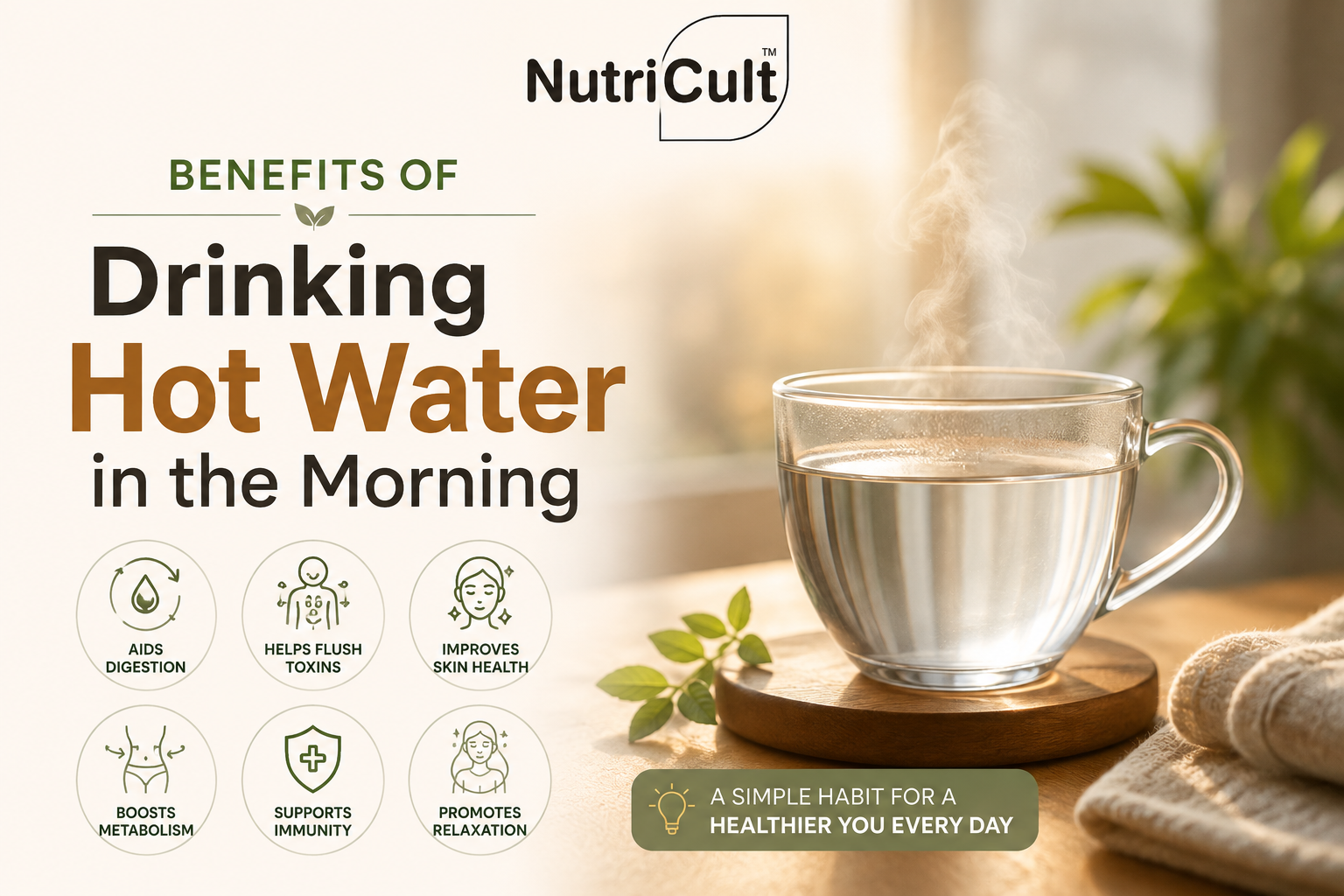
A glass of warm water first thing in the morning has become one of those habits everyone recommends, from grandmothers to wellness influencers. Some of the claims behind it hold up under scrutiny. Others stretch well past what the evidence supports. This guide separates the two, drawing on research from gastroenterology journals, registered dietitians, and India's own ICMR-NIN hydration guidelines.
Quick Answer
Drinking hot water in the morning does not burn fat or flush toxins from your organs on its own. It does support hydration, bowel regularity, and sinus comfort in ways researchers have measured directly. A 2025 study on postoperative patients found that warm water intake lowered constipation severity scores. A separate 1978 study in the journal Rhinology showed hot fluids improve nasal airflow through steam inhalation alone. Water reaching the stomach cools within minutes, so temperature does little for metabolism or circulation. The real advantage is practical: a warm glass is easy to finish on an empty stomach, and that habit supports your daily fluid target. ICMR-NIN sets that target at roughly 2 litres, or about 8 glasses, for the average Indian adult.
What Happens When You Drink Hot Water First Thing in the Morning
Overnight, the body goes six to eight hours without fluids, and cortisol, the primary stress hormone, sits at its highest point right after waking. Registered dietitians note that this combination makes morning hydration more important than the specific temperature of the water. Warm liquid entering an empty stomach sends a signal along the gut-brain axis that food and fluid have arrived. That signal can trigger the gastrocolic reflex and prompt a bowel movement in some people, according to nutrition researchers cited by Popular Science.
By the time water, hot or cold, reaches the stomach, it has already cooled closer to body temperature. Mary Lou Perry, a registered dietitian at UVA Health, explains that the internal warming effect people credit to hot water is largely a myth: there is not enough residual heat left to meaningfully widen blood vessels or shift circulation. What warm water does offer is comfort, easier intake on a sensitive stomach, and a psychological cue that helps the habit stick. That advantage compounds if you are also building a broader gut health routine, rather than relying on water temperature alone.
Benefits of Drinking Hot Water Backed by Research
1. Supports Digestion and Bowel Regularity
This benefit carries the strongest clinical support of the group. A small 2025 study on patients recovering from orthopedic surgery found that warm water intake significantly reduced constipation severity scores compared with standard care, a result researchers linked to increased gastrointestinal motility. Warm water is also thought to relax the lower esophageal sphincter. Research published in the Journal of Neurogastroenterology and Motility found it eased swallowing difficulty in people with achalasia. Consistent hydration paired with a fiber-rich diet and a probiotic supplement tends to move the needle further than water temperature alone, especially for anyone dealing with recurring sluggish digestion.
2. Eases Nasal Congestion and Soothes a Sore Throat
The steam itself does most of the work here. A well-known 1978 study published in Rhinology found that inhaling vapor from hot water or soup improved nasal airflow and helped loosen mucus, while cold water produced no such effect. Slow sips from a hot cup can also soothe throat irritation during a cold, particularly with a little honey or lemon added.
3. Helps You Meet Your Daily Hydration Target
Eight glasses a day is a rough guide, not a precise scientific figure. ICMR-NIN still uses roughly 2 litres a day as a practical baseline for a healthy Indian adult, with higher needs during hot weather, physical activity, or an active lifestyle. Starting the day with a full glass, warm or otherwise, moves you closer to that target before you even leave the house.
4. May Support Mood and Focus
Dehydration, even mild dehydration, has been linked to lower feelings of calm and reduced positive mood in a widely cited 2014 study. Warm water tends to be easier to drink in larger amounts first thing in the morning for many people, compared with cold water. That makes it a simple lever for staying ahead of dehydration-linked irritability and brain fog through the day.
5. Offers Comfort During Menstrual Cramps
Warmth applied internally and externally is a long-used remedy for period pain. Large-scale clinical trials on drinking warm water specifically for cramps remain limited, but the muscle-relaxing effect of warmth itself is well documented. Many people report real relief when they pair warm fluids with a heating pad during their cycle.
Hot Water vs Cold Water vs Lemon Water vs Coffee: A Quick Comparison
|
Drink |
Best For |
What the Evidence Shows |
Caffeine |
|
Hot water |
Digestion, sinus relief, easy morning hydration |
Warm water intake linked to lower constipation severity in a 2025 clinical study; steam aids nasal airflow (Rhinology, 1978) |
None |
|
Cold water |
Post-workout cooling, faster intake |
No meaningful difference in hydration quality versus hot water; may briefly raise calorie burn through thermogenesis |
None |
|
Warm lemon water |
Vitamin C boost, flavor variety |
Adds a small amount of vitamin C and polyphenols; no proven fat-burning effect |
None |
|
Coffee |
Alertness, short-term energy |
Improves alertness through caffeine; ICMR-NIN advises keeping total caffeine under 300 mg/day and spacing it from meals to protect iron absorption |
High |
|
Tea (unsweetened) |
Antioxidants, gentle warmth |
Polyphenol content supports general antioxidant intake; caffeine content varies by type |
Low to moderate |
Myths vs Facts About Drinking Hot Water
Myth: Hot water melts fat and speeds up metabolism.
Fact: Water intake causes a small, temporary rise in metabolic rate through a process called water-induced thermogenesis, documented in the Journal of Clinical Endocrinology & Metabolism. That applies to water at any temperature, and the effect is modest, peaking within 30 to 40 minutes. It is not a standalone weight-loss method. A structured approach combining diet, activity, and gut-friendly nutrition works far better than any temperature trick for readers with a genuine weight goal.
Myth: Hot water flushes toxins out of your body.
Fact: The liver and kidneys already handle detoxification continuously. Adequate hydration supports those organs in doing their job, but hot water carries no additional detoxifying property beyond water at any other safe temperature.
Myth: Warm water widens blood vessels and improves circulation.
Fact: Water cools to near body temperature by the time it reaches the stomach, as UVA Health dietitian Mary Lou Perry explains, so little residual warmth remains to affect vessel width. Exercise, a balanced diet, and avoiding smoking do far more for circulation and heart health.
Myth: Warm water is essential for digestion, and cold water damages Agni, the digestive fire in Ayurvedic tradition.
Fact: This idea originates in Ayurveda, where digestion is described as a fire that ice water is thought to dampen. Modern research does not support cold water impairing digestion in healthy people, though some individuals find warm water gentler on a sensitive stomach. That personal preference is reason enough to keep the habit if it works.
How Much and How Hot: Following ICMR-NIN Guidelines
ICMR-NIN recommends around 2 litres of total fluid a day for a healthy adult in India, adjusted upward for hot weather, physical activity, pregnancy, and breastfeeding. There is no separate rule for hot water specifically. A single glass, roughly 200 to 250 ml, in the morning is a reasonable starting point, followed by consistent sips through the day rather than an attempt to drink most of the daily quota in one sitting.
On temperature, general food safety research recommends keeping hot drinks between 54°C and 71°C (130°F to 160°F). Anything hotter raises the risk of burns to the mouth and throat, and repeated exposure to very hot beverages has been associated with greater esophageal irritation over time. Warm, not scalding, is the safer target.
How to Build the Habit
- Boil or heat water and let it cool to a comfortable, sippable warmth before drinking.
- Drink it slowly on an empty stomach, ideally 20 to 30 minutes before the first meal.
- Add a slice of lemon or a few mint leaves for flavor variety, not because it changes the water's core benefits.
- Pair the habit with a gut-supportive routine if bloating or irregularity is a recurring concern, since hydration alone rarely resolves chronic digestive issues.
- Keep a consistent time each morning. Habits stick more reliably when tied to an existing routine, such as right after brushing your teeth.
Side Effects and Precautions
Hot water is safe for most healthy adults, but a few precautions are worth knowing.
- Burn risk: Water above 71°C (160°F) can scald the mouth, throat, and esophagus. Test the temperature before drinking.
- Esophageal irritation: Regularly drinking very hot beverages over long periods has been linked in observational research to a higher risk of esophageal changes, so moderate warmth is preferable to near-boiling water.
- Not a substitute for medical care: A fever above 101.3°F (38.5°C) lasting more than three days, persistent digestive symptoms, or chronic constipation calls for a doctor's evaluation rather than a home remedy.
-
Tooth sensitivity: Very hot liquids can occasionally aggravate sensitive teeth or recent dental work.
FAQ
What are the benefits of drinking hot water?
The benefits with the clearest evidence are easier digestion and bowel regularity, temporary relief from nasal congestion through steam inhalation, and simply making it easier to hit your daily hydration target. Claims about detoxing organs or dramatically boosting metabolism go beyond what the research supports.
Is drinking hot water in the morning better than cold water?
Not according to the science. Drinking hot water in the morning is not proven to be superior to cold water for hydration or overall health. It may feel gentler on the stomach, and it's easier for some people to finish a full glass right after waking, which is where the real advantage lies.
How much hot water should I drink in a day?
There's no separate target for hot water alone. Follow ICMR-NIN's general fluid guidance of around 2 litres a day for a healthy adult, adjusted for climate, activity level, and any medical conditions, and count hot water toward that total.
Can drinking hot water help with weight loss?
Drinking hot water benefits digestion and hydration, but it doesn't directly cause fat loss. Any metabolic bump from water intake is small and temporary regardless of temperature, and it works best alongside a balanced diet and regular activity.
Is it safe to drink hot water every day?
Yes, for most healthy adults. Keep the temperature in a comfortable, non-scalding range, roughly 54°C to 71°C. People with esophageal conditions or very sensitive teeth should stay on the cooler side of warm.
Related Reads
● What Is Leaky Gut? Symptoms, Causes & Treatment
● Best Foods for Gut Health: A Science-Backed List
● Probiotics vs Prebiotics: The Real Difference Explained
● Best Time to Take Vitamin D3: Morning or Night?
This article is for general informational purposes and does not substitute for professional medical or nutritional advice. Speak with a doctor or registered dietitian before making significant changes to a hydration or health routine, especially with an existing medical condition.


