


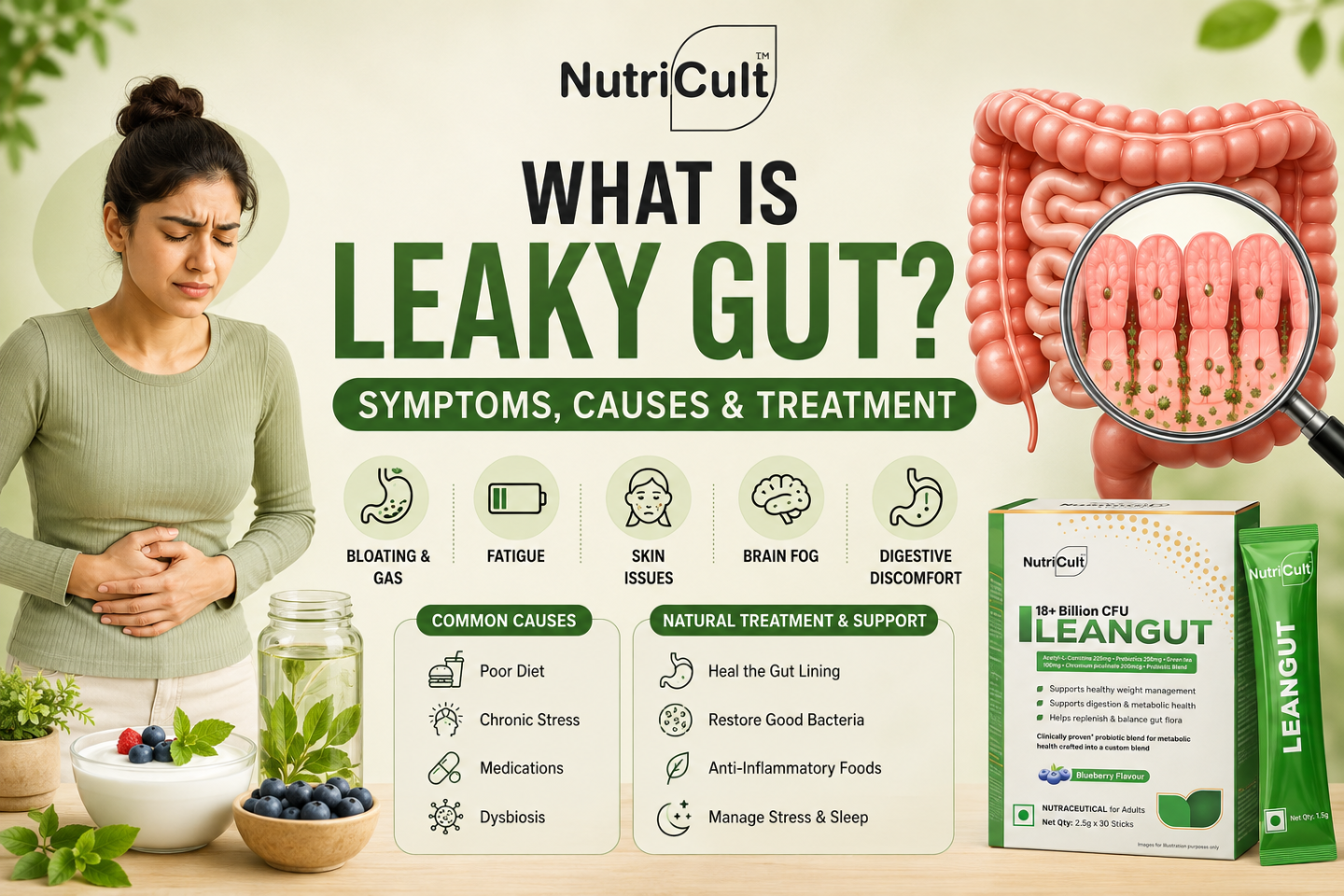
What Is Leaky Gut? Symptoms, Causes, and Treatment Explained
Quick Answer
Leaky gut, known clinically as increased intestinal permeability, describes a state in which the tight junctions between cells lining the small intestine loosen more than normal. This may allow partially digested food particles, bacteria, and toxins to pass into the bloodstream. Common leaky gut symptoms include bloating, gas, fatigue, food sensitivities, and joint discomfort. Increased intestinal permeability is a recognized finding in conditions such as celiac disease and inflammatory bowel disease, according to Cleveland Clinic. However, "leaky gut syndrome" as a standalone diagnosis is not currently recognized by mainstream medicine. Leaky gut treatment typically focuses on diet changes, stress reduction, and addressing any underlying digestive condition, since no drug is approved to treat it directly.
What Is Leaky Gut, Exactly?
Your intestinal lining works as a selective barrier. It absorbs water, vitamins, and nutrients while keeping larger, unwanted particles inside the gut where they belong. That barrier depends on structures called tight junctions, which are proteins that hold intestinal cells together like the seams of a fabric.
When those seams loosen, gaps form. Substances that should stay in the digestive tract can then move into surrounding tissue and the bloodstream. Cleveland Clinic describes this condition as hyperpermeability, and confirms that increased intestinal permeability is a real, measurable phenomenon, since the mucous lining of our intestines is designed to absorb water and nutrients from our food into our bloodstream, but some people have increased intestinal permeability or hyperpermeability.
The word "syndrome" is where things get contested. Mainstream medicine does not currently recognize leaky gut syndrome as a standalone condition, and much more research is needed before scientists can draw firm conclusions about the wider health claims attached to it. Put simply: the physical mechanism is real. The idea that it independently causes dozens of unrelated diseases is not yet proven.
Leaky Gut vs. Leaky Gut Syndrome: Why the Distinction Matters
Increased intestinal permeability is a physiological finding doctors can measure. Leaky gut syndrome is a broader theory that this permeability is the root cause, not just a symptom, of conditions ranging from autoimmune disease to chronic fatigue. Many doctors and healthcare professionals do not recognize leaky gut syndrome as a diagnosable condition, though further research may help clarify the mechanisms involved. A responsible approach treats permeability as one piece of a larger digestive picture rather than a catch-all explanation.
Leaky Gut Symptoms
Reported leaky gut symptoms vary widely between individuals, which is part of why the condition is difficult to pin down clinically. According to WebMD, leaky gut syndrome is said to involve symptoms including bloating, gas, cramps, food sensitivities, and aches and pains, though gastroenterologists describe the underlying science as a gray area.
Commonly reported signs include the following.
- Persistent bloating or gas after meals
- Diarrhea or irregular bowel movements
- Food sensitivities that seem to appear or worsen over time
- Fatigue that does not improve with rest
- Joint pain without a clear injury
- Skin issues such as breakouts or rashes
- Headaches that coincide with digestive flare-ups
None of these symptoms is unique to intestinal permeability. Each one overlaps with dozens of other conditions, from thyroid disorders to iron deficiency. That overlap is exactly why self-diagnosis is unreliable and why a proper workup with a gastroenterologist matters more than an online symptom checklist.
What Causes Leaky Gut?
Researchers have not identified a single cause. Instead, several factors appear to disrupt the gut lining and its tight junctions over time.
Dysbiosis
An imbalance between beneficial and harmful bacteria in the gut microbiome is considered a leading contributor to increased permeability. When harmful species outnumber beneficial ones, the intestinal lining loses some of the protective signaling that keeps tight junctions functioning normally.
Diet Patterns
Diets heavy in refined sugar, ultra-processed foods, and alcohol are linked to changes in gut bacteria and barrier function. UCLA Health notes that the exact cause of leaky gut syndrome is not fully understood, but poor diet, excessive alcohol intake, smoking, stress, and exposure to environmental contaminants are all suspected contributors.
Chronic Stress
Ongoing psychological stress affects gut motility, immune signaling, and the composition of the microbiome. Clinicians increasingly treat stress management as a legitimate part of any gut health plan rather than an afterthought.
Medications and Underlying Conditions
Certain drug classes and existing digestive diseases can weaken the intestinal barrier directly. Cleveland Clinic points out that increased permeability is established in known conditions such as celiac disease, inflammatory bowel disease, some cases of irritable bowel syndrome, and after NSAID use or alcohol intake. This is one of the clearest, most evidence-backed links in the entire leaky gut conversation.
Leaky Gut Treatment: What Actually Helps
There is no approved medication that specifically targets intestinal permeability. Leaky gut treatment instead centers on lifestyle and dietary adjustments, alongside management of any diagnosed underlying condition. A WebMD-cited gastroenterologist frames it directly: lifestyle modifications that reduce stress and improve diet may be among the best ways to address leaky gut, particularly when no underlying condition is identified, since chronic health problems are so often tied to how people live and eat.
Diet Strategies Worth Prioritizing
|
Food Group |
Examples |
Why It May Help |
|
Fermented foods |
Curd, kefir, kanji, idli batter |
Supplies live bacterial cultures that support microbiome diversity |
|
Fiber-rich vegetables |
Bottle gourd, spinach, carrots, pumpkin |
Feeds beneficial bacteria and supports regular motility |
|
Prebiotic foods |
Bananas, onions, garlic, oats |
Provides fuel for short-chain fatty acid production, which supports the gut lining |
|
Omega-3 sources |
Fatty fish, flaxseeds, walnuts |
Associated with reduced inflammatory markers |
|
Low-processed proteins |
Lentils, eggs, paneer, fish |
Easier on digestion than heavily processed protein sources |
|
Foods to limit |
Refined sugar, deep-fried snacks, excess alcohol |
Linked with dysbiosis and inflammatory changes in the gut lining |
Sprouted grains and gluten-free options such as ragi and brown rice are also frequently recommended in gut-focused diet plans, since they tend to be gentler on a sensitive digestive tract. If you want a deeper dive into one specific gut-friendly grain, our guide on what ragi is and its benefits covers how it fits into a fiber-forward diet.
Probiotics and Prebiotics
Probiotic supplementation has been studied extensively for its role in supporting gut bacterial balance. In India, the Indian Council of Medical Research, together with the Department of Biotechnology, published formal guidelines for evaluating probiotic strains before they can be marketed as probiotics, precisely because claims in this space have historically outpaced the evidence. That regulatory scrutiny is worth knowing before choosing a product. If you are exploring supplementation, our probiotic sticks and LeanGut sticks are formulated around this kind of strain-level evidence.
Stress and Sleep
Chronic stress alters gut motility and immune activity in ways that can compound digestive symptoms. Prioritizing consistent sleep, movement, and stress-reduction practices is not a soft recommendation. It is one of the few interventions with reasonably consistent support across the sources reviewed for this article.
When Diet Alone Is Not Enough
If symptoms persist beyond two weeks, worsen, or include unexplained weight loss, blood in stool, or severe pain, a gastroenterologist visit is the right next step, not a longer trial of home remedies. Testing can rule out celiac disease, IBD, and other conditions that mimic leaky gut symptoms but require specific medical treatment.
Caution and Possible Side Effects
Leaky gut remains a debated area of medicine, and that uncertainty carries real implications for anyone changing their diet or starting supplements.
- Restrictive elimination diets marketed as leaky gut cures can lead to nutrient gaps if followed long term without guidance.
- Some over-the-counter "gut healing" supplements make claims that go beyond current evidence. Read labels carefully and favor products backed by published research on the specific strain or ingredient.
- Probiotics are generally well tolerated, but some people experience temporary bloating or gas when first introducing them.
- Anyone with a diagnosed autoimmune condition, IBD, or celiac disease should coordinate dietary changes with their treating physician rather than self-managing based on general articles.
- Persistent or severe symptoms should always be evaluated by a doctor. Leaky gut related content is for general education and does not replace individualized medical advice.
Related Reads
10 Health Benefits of Sweet Potatoes, Plus Side Effects to Know
What Is Ragi? Benefits of Ragi, Ragi Malt, and Ragi Atta Explained
Chikoo Benefits: 10 Sapota Fruit Health Benefits, Nutrition, and Side Effects
Shop the Gut Reset Kit (LeanGut + Probiotics)
Browse Digestion Support Products
FAQ
What is leaky gut?
Leaky gut is a common term for increased intestinal permeability, a state where the tight junctions in the intestinal lining loosen and allow substances to pass into the bloodstream that would normally stay in the digestive tract.
Is leaky gut syndrome a real medical diagnosis?
Increased intestinal permeability is a measurable, real phenomenon. Leaky gut syndrome, as a broader theory that it independently causes conditions like autoimmune disease or chronic fatigue, is not currently recognized as a formal diagnosis by mainstream medicine.
What are the most common leaky gut symptoms?
Reported leaky gut symptoms include bloating, gas, diarrhea, food sensitivities, fatigue, joint discomfort, and skin flare-ups. These symptoms overlap with many other conditions, so a proper medical evaluation matters.
What is the best leaky gut treatment?
There is no approved medication specifically for leaky gut. Leaky gut treatment generally involves dietary changes, probiotic and prebiotic foods, stress reduction, and addressing any diagnosed underlying digestive condition.
Can diet alone fix leaky gut?
Diet plays a meaningful role, particularly increasing fiber, fermented foods, and reducing ultra-processed items and alcohol. However, if an underlying condition such as celiac disease or IBD is driving the permeability, diet changes alone will not resolve it.
This article is for general informational purposes and is not a substitute for professional medical advice, diagnosis, or treatment. Consult a qualified physician or gastroenterologist before making significant dietary changes or starting new supplements, especially if you have an existing digestive or autoimmune condition.


