


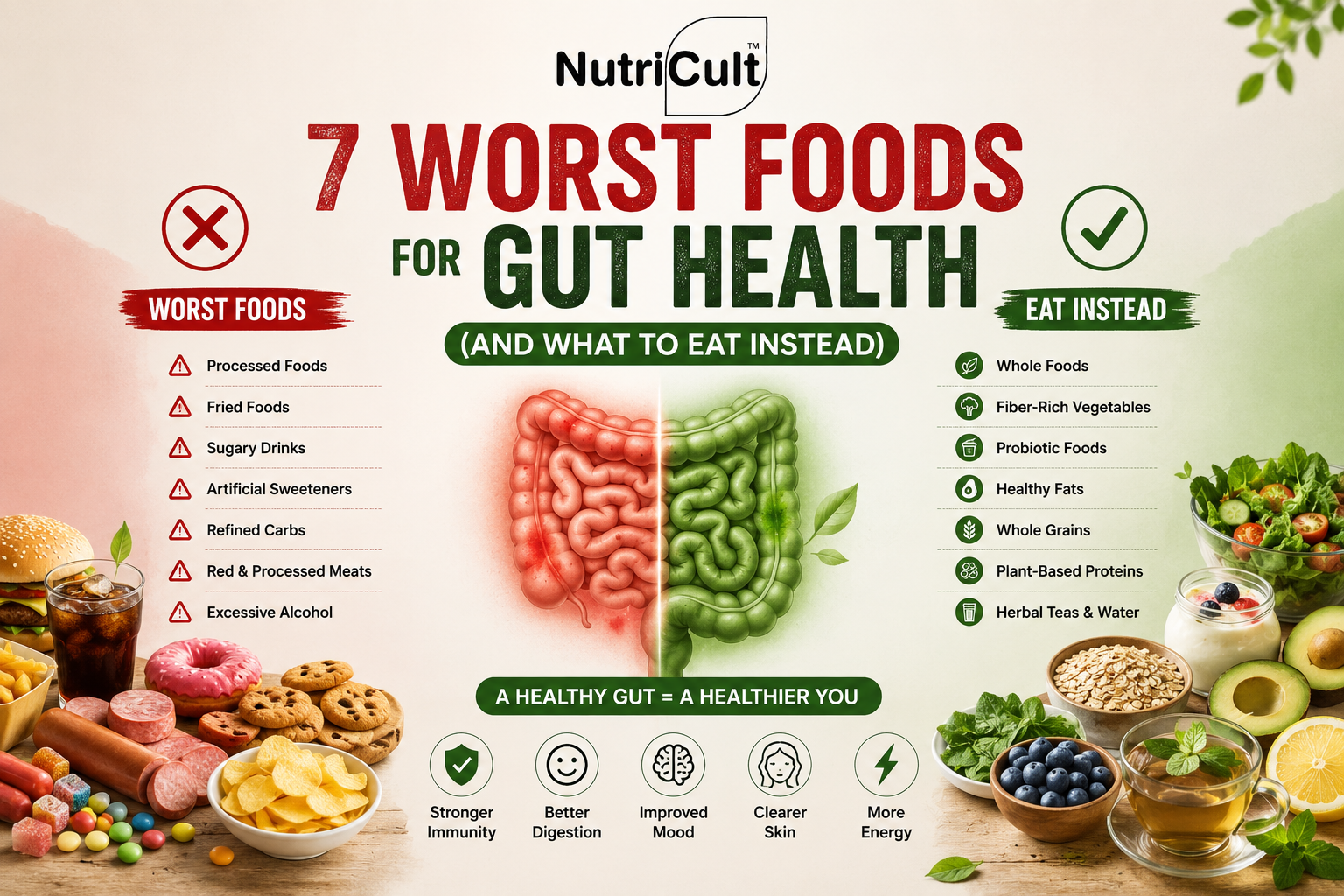
7 Worst Foods for Gut Health (And What to Eat Instead)
Your gut is home to trillions of bacteria that influence everything from digestion and immunity to mood and skin clarity. What you eat every day either feeds the beneficial strains in that ecosystem or starves them out and lets the troublemakers take over. Some of the most common items in an average Indian kitchen and dinner plate fall firmly into the second category.
This guide breaks down the foods bad for gut health that research keeps flagging, explains the mechanism behind each one, and covers what naturally kills bad bacteria in the gut so you can rebuild a healthier microbiome from the plate up.
Quick Answer
The worst foods for gut health are ultra-processed snacks, foods high in added sugar, artificial sweeteners, fried and trans-fat-heavy items, processed and red meats, refined grains, and alcohol. Each of these lowers microbial diversity, feeds inflammatory bacteria, or damages the gut lining. On the flip side, garlic, fermented foods, high-fibre vegetables, and polyphenol-rich foods like green tea and berries naturally suppress harmful bacteria while feeding the beneficial strains that keep your gut barrier strong.
Why Gut Health Deserves Your Attention
The gut microbiome is not a passive digestive helper. It produces short-chain fatty acids (SCFAs) that feed the cells lining your colon, trains your immune system, and helps regulate inflammation throughout the body. According to the ICMR-National Institute of Nutrition, more than half of India's disease burden is directly linked to diet, and a growing share of that link runs through the gut. When the microbiome tips out of balance, a state researchers call dysbiosis, it shows up as bloating, irregular digestion, skin flare-ups, low energy, and a weaker immune response over time.
Diet is the single biggest lever you have over this ecosystem, day to day, meal to meal. That makes it worth knowing exactly which foods to avoid for gut health and why.
7 Worst Foods for Gut Health
1. Ultra-Processed Foods
Packaged snacks, instant noodles, sugary cereals, and ready-to-eat meals dominate this category. A 2025 review in the journal Nutrients found that ultra-processed foods, characterized by synthetic additives, emulsifiers, and low fiber content, are associated with decreased microbial diversity, lower levels of beneficial bacteria such as Akkermansia muciniphila and Faecalibacterium prausnitzii, and an increase in pro-inflammatory microorganisms. These shifts feed into chronic disorders including metabolic syndrome, irritable bowel syndrome, type 2 diabetes, and colorectal cancer. A separate cohort study found similar disruption in children, where high intake of ultra-processed foods was linked to a poorer-quality diet and measurable changes in gut microbiome composition.
2. Foods High in Added Sugar
Sugar-heavy foods feed opportunistic and pro-inflammatory bacteria while starving out the fibre-loving strains that produce SCFAs. This is exactly why ICMR-NIN's updated Dietary Guidelines for Indians recommend restricting added sugar to 20-25 grams a day for adults, alongside advice to avoid ultra-processed foods and items high in fat, sugar, and salt. Sweetened beverages, packaged desserts, and flavoured yoghurts are the biggest hidden contributors.
3. Artificial Sweeteners
Swapping sugar for a "diet" alternative does not necessarily protect your gut. Research on non-nutritive sweeteners has found that some, including sucralose, can disrupt the human gut microbiome and induce glucose intolerance. A separate microbiome study found that sucralose, along with several other food additives, shifted overall microbiome community structure in testing.
4. Dietary Emulsifiers
Emulsifiers like carboxymethylcellulose (CMC) and polysorbate 80 (P80) keep sauces, ice creams, and packaged bakery items smooth and shelf-stable, but they come at a cost to your gut lining. A controlled feeding study published in Gastroenterology found these compounds can induce damage to the intestinal mucosa and initiate metabolic syndrome and chronic inflammation, and a follow-up study confirmed detrimental impacts of emulsifier consumption on gut microbiota include depletion of the health-associated, mucus-fortifying bacteria Akkermansia muciniphila.
5. Fried Foods and Trans Fats
Deep-fried snacks are typically low in fibre and high in oxidized fats, a combination that reduces the substrate beneficial bacteria need to thrive while promoting inflammatory pathways in the gut lining. Repeated exposure to reused cooking oil, common in street food and some restaurant kitchens, compounds the problem by introducing additional oxidized compounds the microbiome has to contend with.
6. Processed and Red Meat
Bacon, sausages, salami, and other processed meats are typically high in saturated fat and preservatives, and low in the fibre that feeds a diverse microbiome. Diets heavy in red and processed meat have been linked in multiple studies to higher levels of trimethylamine-N-oxide (TMAO), a gut-bacteria-derived compound associated with cardiovascular risk. Occasional consumption is unlikely to cause harm, but a diet built around these meats crowds out the plant diversity your gut bacteria depend on.
7. Alcohol
Regular or heavy alcohol intake disrupts the gut lining and reduces beneficial bacterial populations, which is part of why hangovers often come with digestive symptoms. Alcohol also increases intestinal permeability, sometimes called "leaky gut," allowing bacterial byproducts to cross into the bloodstream and trigger low-grade inflammation.
Foods Bad for Gut Health at a Glance
|
Food Category |
Common Examples |
Main Mechanism of Harm |
|
Ultra-processed foods |
Instant noodles, packaged snacks, sugary cereal |
Lowers microbial diversity, raises inflammatory bacteria |
|
Added sugar |
Sodas, desserts, sweetened yoghurt |
Feeds harmful strains, starves fibre-fermenting bacteria |
|
Artificial sweeteners |
Diet sodas, sugar-free packaged foods |
Alters microbiome composition, may affect glucose tolerance |
|
Emulsifiers |
Ice cream, sauces, packaged baked goods |
Thins protective mucus layer, depletes Akkermansia |
|
Fried foods/trans fats |
Deep-fried snacks, reused cooking oil items |
Promotes inflammation, low in fibre |
|
Processed/red meat |
Bacon, sausages, salami |
Raises TMAO-producing bacteria, displaces plant fibre |
|
Alcohol |
Beer, spirits, wine (regular intake) |
Damages gut lining, increases intestinal permeability |
What Naturally Kills Bad Bacteria in the Gut
The encouraging half of this story is that specific whole foods can actively work against harmful bacteria while feeding the beneficial ones.
Garlic is one of the best-studied examples. Its active compound, allicin, has documented anti-microbial, anti-inflammatory, and anti-oxidative properties, and human research found that raw garlic juice reduced TMAO production and modulated the gut microbiota by enriching beneficial gut bacteria.
Fermented foods such as curd, kefir, kimchi, and unpasteurised sauerkraut introduce live beneficial strains directly. According to a clinical review of gut health evidence, yoghurt and kefir are the most widely consumed fermented foods and are supported by the greatest volume of research on health outcomes, while kimchi and sauerkraut are rich in beneficial bacteria but must remain unpasteurised to retain their live cultures.
High-fibre plant foods, including legumes, vegetables, and fruit, act as prebiotics that feed the bacteria already living in your colon. If you have been told fibre causes bloating, the clinical guidance is the opposite: gradually increasing fibre intake allows the gut microbiota to adjust and produce adequate enzymes, which prevents excessive gas production over time rather than causing it. Fruits like chikoo are a good example of an everyday, fibre-dense option worth adding to your rotation.
Polyphenol-rich foods like green tea, berries, and extra virgin olive oil have been shown to encourage the growth of Akkermansia muciniphila, the same beneficial strain that ultra-processed foods and emulsifiers tend to deplete.
If your diet is already leaning heavily on the foods in the "avoid" list above, a targeted probiotic alongside dietary changes can help reintroduce beneficial strains while you work on crowding out the harmful ones. Pairing that with prebiotic fibre, similar to what's included in a gut reset approach, tends to produce better results than probiotics alone, since the fibre gives the new bacteria something to feed on.
Caution: What to Know Before Making Big Changes
Cutting several food groups out at once, especially sugar, alcohol, and processed foods together, can cause temporary digestive discomfort as your microbiome recalibrates. Increase fibre gradually rather than all at once, and drink enough water alongside it, since a fast jump in fibre without adequate fluid can cause constipation instead of relief. People with diagnosed digestive conditions such as IBS, IBD, or SIBO should work with a gastroenterologist or registered dietitian before making major dietary shifts, since some high-fibre or fermented foods that help most people can worsen symptoms for specific conditions.
If you are taking probiotic supplements, review the correct timing with meals, since taking them at the wrong point in your digestive cycle reduces how many live strains actually survive stomach acid.
FAQs
What are the 7 worst foods for gut health?
The seven worst foods for gut health are ultra-processed foods, foods high in added sugar, artificial sweeteners, dietary emulsifiers found in packaged items, fried foods and trans fats, processed and red meat, and alcohol. Each disrupts the microbiome through a different mechanism, from feeding inflammatory bacteria to thinning the protective gut lining.
What foods to avoid for gut health if I have frequent bloating?
Start by cutting back on carbonated drinks, fried foods, artificial sweeteners, and ultra-processed snacks, since these are the most consistently linked to bloating and digestive discomfort. Introduce fibre gradually rather than removing it, since fibre itself is not the enemy for most people.
What naturally kills bad bacteria in the gut?
Garlic, particularly its allicin compound, has documented antimicrobial activity against harmful bacteria. Fermented foods like curd and kefir introduce competing beneficial strains, and polyphenol-rich foods such as green tea and berries create conditions that favour beneficial bacteria like Akkermansia muciniphila over harmful ones.
Are all foods bad for gut health processed foods?
Not entirely. Fresh red meat, alcohol, and some naturally occurring sugars in excess can also disrupt gut bacteria even without heavy processing. That said, ultra-processed foods carry the most consistent evidence of harm because they combine several disruptive factors, low fibre, added sugar, and synthetic additives, in a single product.
Related Reads
• LeanGut Review: Can a Gut Health Supplement Actually Help with Weight Management?
• Supplement Timing Guide: When to Take Probiotics, Shilajit, and CoQ10
• Chikoo Benefits: 10 Sapota Fruit Health Benefits, Nutrition, and Side Effects
This article is intended for general nutrition information and does not replace individualised medical or dietary advice. Consult a doctor, gastroenterologist, or registered dietitian before making significant changes to your diet, particularly if you have a diagnosed digestive condition, are pregnant, or are managing a chronic illness.


