


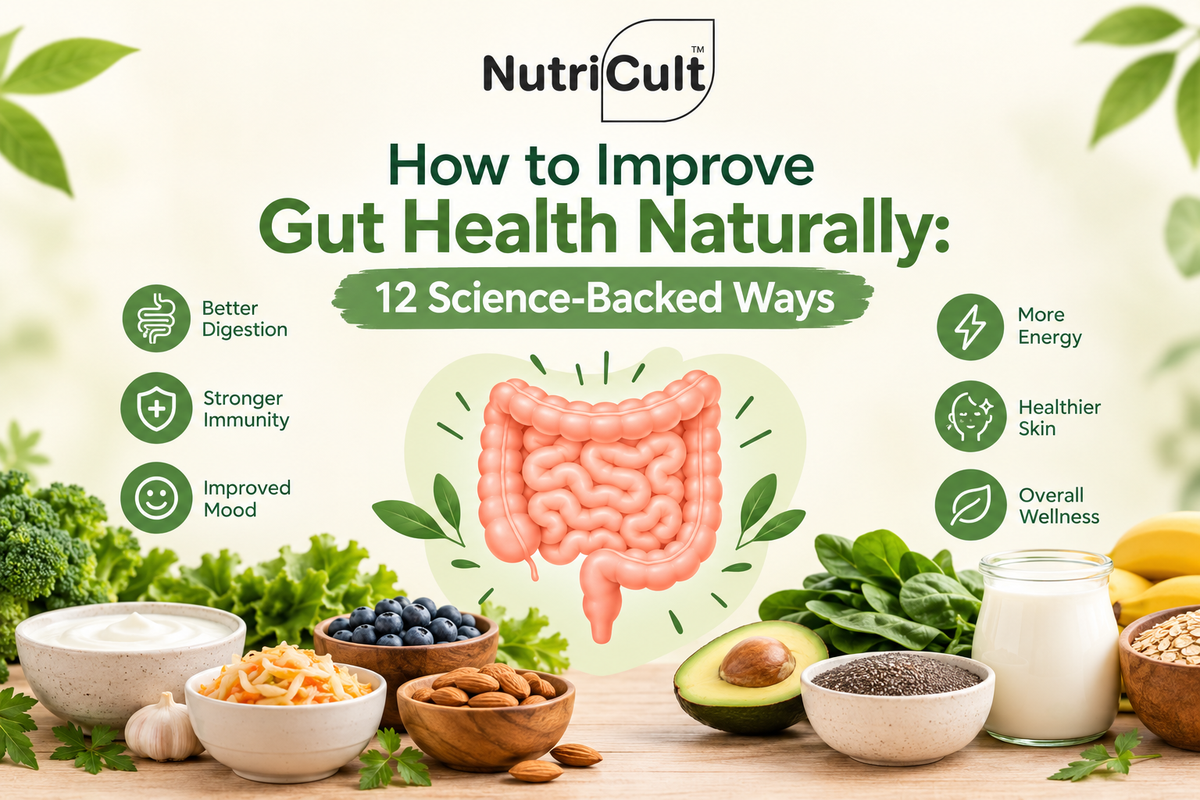
How to Improve Gut Health Naturally: 12 Science-Backed Ways
Quick answer: To improve gut health, eat a wide variety of plant foods (aim for 30 different plants a week), add fermented foods like curd and kanji daily, eat more fibre, cut down on ultra-processed food and sugar, sleep 7 to 9 hours, manage stress, move every day, and avoid unnecessary antibiotics. A probiotic supplement can help when diet alone falls short.
Your gut is home to trillions of bacteria, fungi and other microbes, together called the gut microbiome. These microbes help you digest food, make certain vitamins, train your immune system, and even talk to your brain. When the balance is off, you may notice bloating, irregular bowel movements, low energy, or skin flare-ups.
The good news is that your gut microbiome responds quickly to what you eat and how you live. Below are 12 practical, research-backed ways to improve it, with a focus on foods that are easy to find in India.
What Does "Good Gut Health" Mean?
Good gut health means your digestive system breaks down food comfortably, absorbs nutrients well, and hosts a diverse, balanced community of microbes. Diversity matters. A gut with many different types of bacteria is more resilient. To understand the basics, read our explainer on what the gut microbiome is and why it matters.
Signs Your Gut Health Needs Attention
- Frequent bloating, gas, or a heavy feeling after meals
- Constipation, loose stools, or irregular bowel habits
- Acidity or heartburn
- Fatigue or poor sleep
- Skin issues like acne or dullness
- Strong sugar cravings
If bloating is your main concern, see what causes a bloated stomach. If skin is flaring too, our guide to 5 signs your gut is affecting your skin explains the connection.
12 Ways to Improve Gut Health Naturally
1. Eat 30 different plant foods every week
This is one of the most useful targets. Data from the American Gut Project showed that people eating more than 30 plant types a week had more diverse gut microbiomes than those eating 10 or fewer. Every vegetable, fruit, dal, grain, nut, seed, herb and spice counts. An Indian thali with dal, sabzi, roti, salad, and a sprinkle of jeera and coriander can cover 8 to 10 in one meal.
2. Add fermented foods every day
A 10-week Stanford trial published in Cell found that a diet high in fermented foods steadily increased microbiome diversity and lowered inflammation markers. Participants worked up to about six servings a day. Indian options include:
- Homemade curd (dahi) and buttermilk (chaas)
- Idli, dosa and dhokla batter
- Kanji (fermented carrot or beetroot drink)
- Homemade pickles fermented in brine, not just oil and vinegar
3. Eat more fibre
Fibre feeds your good bacteria. They ferment it into short-chain fatty acids, which nourish the cells lining your gut. Good sources are whole grains, millets like ragi, rajma, chana, oats, vegetables and fruit. Increase fibre slowly and drink enough water to avoid gas.
4. Include prebiotic foods
Prebiotics are specific fibres that act as food for beneficial bacteria. Onions, garlic, bananas (slightly green), oats, barley and apples are all good sources. Learn the difference in probiotics vs prebiotics.
5. Cut back on ultra-processed food and added sugar
Packaged snacks, sugary drinks and refined flour products are low in fibre and high in additives. Diets heavy in these foods are linked to lower microbial diversity. See the 7 worst foods for gut health and what to eat instead.
6. Eat polyphenol-rich foods
Polyphenols are plant compounds that gut bacteria break down into beneficial substances. Find them in green tea, amla, berries, pomegranate, dark chocolate, haldi, and colourful vegetables.
7. Sleep 7 to 9 hours
Your gut microbes follow a daily rhythm, just like you do. Irregular sleep and late-night eating can disrupt it. Try to eat dinner 2 to 3 hours before bed and keep consistent sleep times.
8. Manage stress
The gut and brain are connected through the vagus nerve and chemical messengers, often called the gut-brain axis. Chronic stress can slow digestion, worsen bloating and alter gut bacteria. Daily walks, deep breathing, yoga and time outdoors all help.
9. Move every day
Regular exercise supports healthy bowel movements and is linked with a more diverse microbiome. Even a 20 to 30-minute walk after meals helps digestion and blood sugar.
10. Avoid unnecessary antibiotics
Antibiotics save lives, but they also wipe out good bacteria. The same American Gut data found people who had taken antibiotics in the past month had less gut diversity. Only take them when prescribed, and never for viral colds.
11. Stay hydrated and eat slowly
Water helps fibre move through your gut and prevents constipation. Chewing well and eating without screens reduces swallowed air and bloating.
12. Consider a probiotic supplement
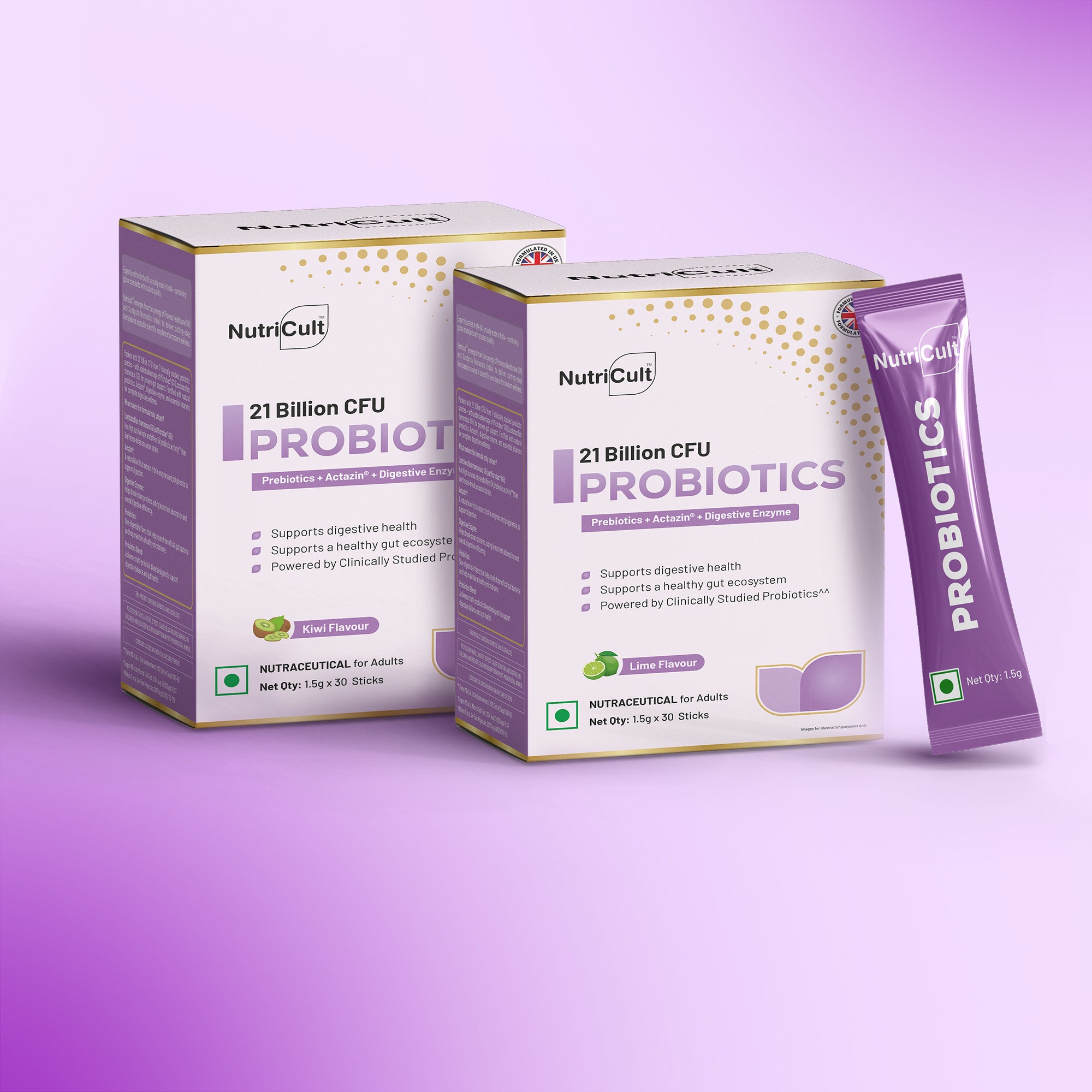
When diet, travel, stress or a course of antibiotics knocks your gut off balance, a probiotic can help restore beneficial bacteria. Look for named strains, a clear CFU count, and an FSSAI licence. Our comprehensive probiotics guide explains what to look for, and probiotic sticks vs capsules vs powders compares formats.
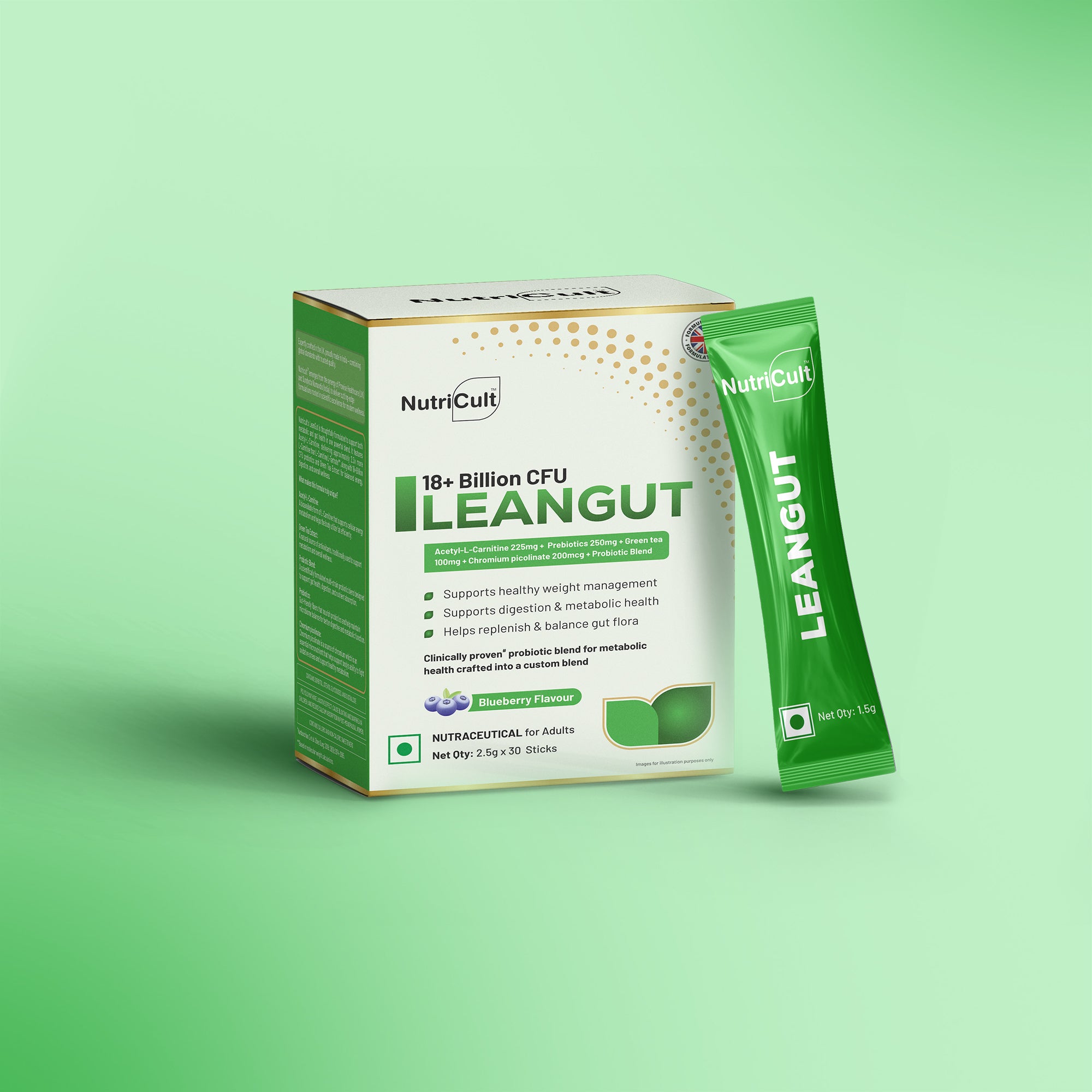
Nutricult Probiotic Sticks come in a no-water, easy-to-carry format. For a combined approach, the Gut Reset Kit pairs probiotics with LeanGut.
Best Foods for Gut Health: Quick Indian List
|
Food group |
Examples |
Why it helps |
|
Fermented |
Dahi, chaas, idli, dosa, kanji |
Live bacteria and diversity |
|
Prebiotic |
Onion, garlic, banana, oats |
Feeds good bacteria |
|
High-fibre |
Rajma, chana, millets, whole wheat |
Short-chain fatty acids |
|
Polyphenol-rich |
Amla, green tea, pomegranate, haldi |
Supports beneficial microbes |
|
Healthy fats |
Nuts, seeds, ghee in moderation |
Reduces inflammation |
For the full list, see best foods for gut health.
How Long Does It Take to Improve Gut Health?
Your microbiome can start shifting within days of a diet change. Noticeable improvements in bloating or regularity often appear in 2 to 4 weeks. Lasting change in diversity takes consistent habits over several months. In the Stanford trial, diversity kept rising across the 10-week high-fermented-food period.
Why Gut Health Matters Beyond Digestion
A healthy gut supports immunity, mood, weight management and skin. City lifestyles, with long commutes, takeaway food and poor sleep, put extra strain on it. Read the urban Indian gut crisis and our explainer on the gut-skin axis to learn more.
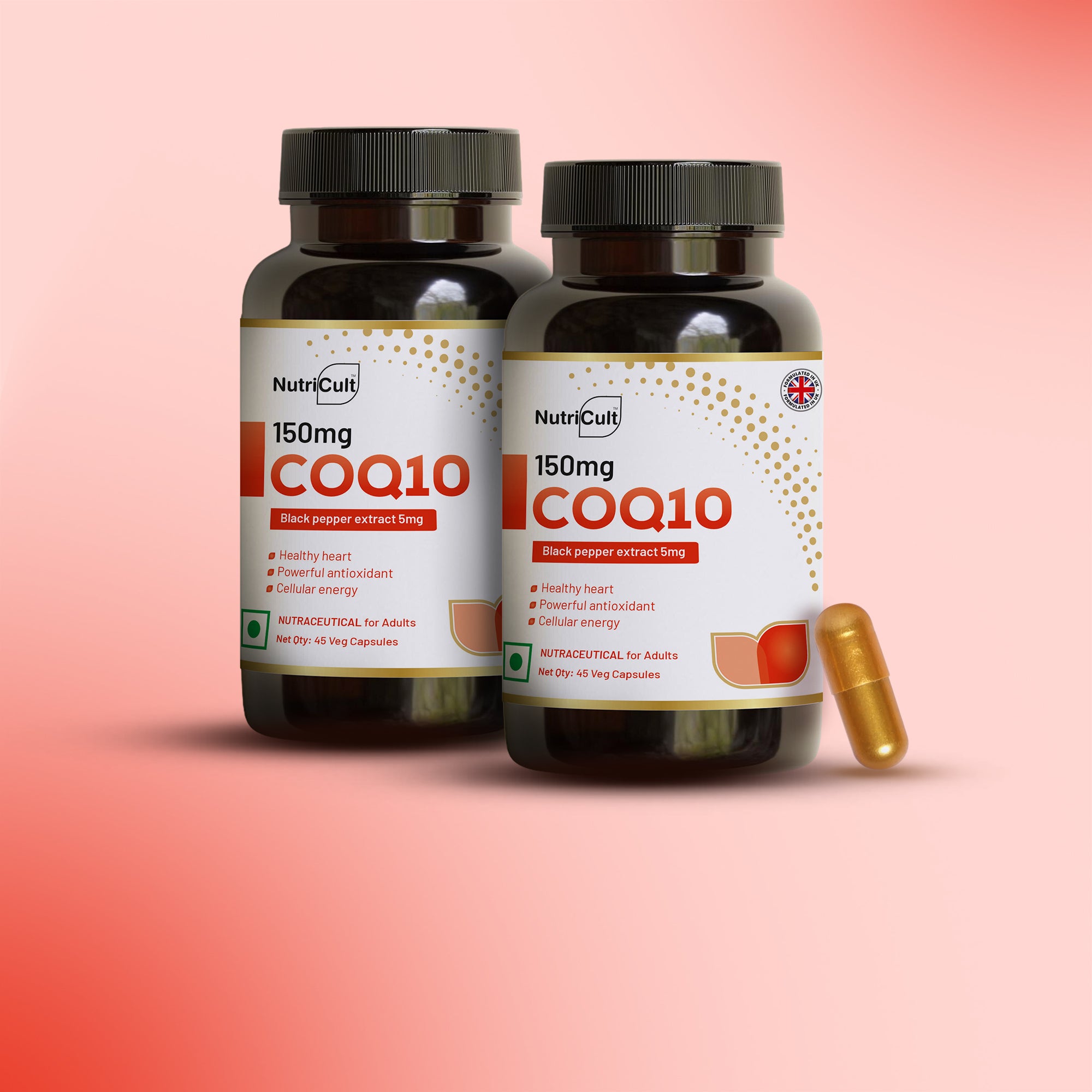
Explore Nutricult's wellness essentials, including gut health support and CoQ10 capsules, to complement your daily wellness routine.
When to See a Doctor
See a doctor if you have blood in your stool, unexplained weight loss, severe or persistent abdominal pain, difficulty swallowing, ongoing diarrhoea, or symptoms that wake you at night. These need proper medical evaluation, not just diet changes. You can also read about leaky gut symptoms and causes.
Frequently Asked Questions
What is the fastest way to improve gut health?
Add one fermented food and two extra plant foods to your day, cut sugary drinks, and walk after meals. Many people notice less bloating within 2 weeks.
What drink is good for gut health?
Buttermilk, kanji, green tea and plenty of water are all good choices. Avoid sugary sodas and packaged juices.
Is curd good for gut health?
Yes. Homemade curd contains live bacteria. Eat it fresh, at room temperature, and without added sugar.
Can probiotics improve gut health?
They can help, especially after antibiotics or during periods of stress or travel. They work best alongside a fibre-rich diet.
How do I know if my gut is healthy?
Regular, comfortable bowel movements, little bloating, steady energy and good appetite are good signs.


