


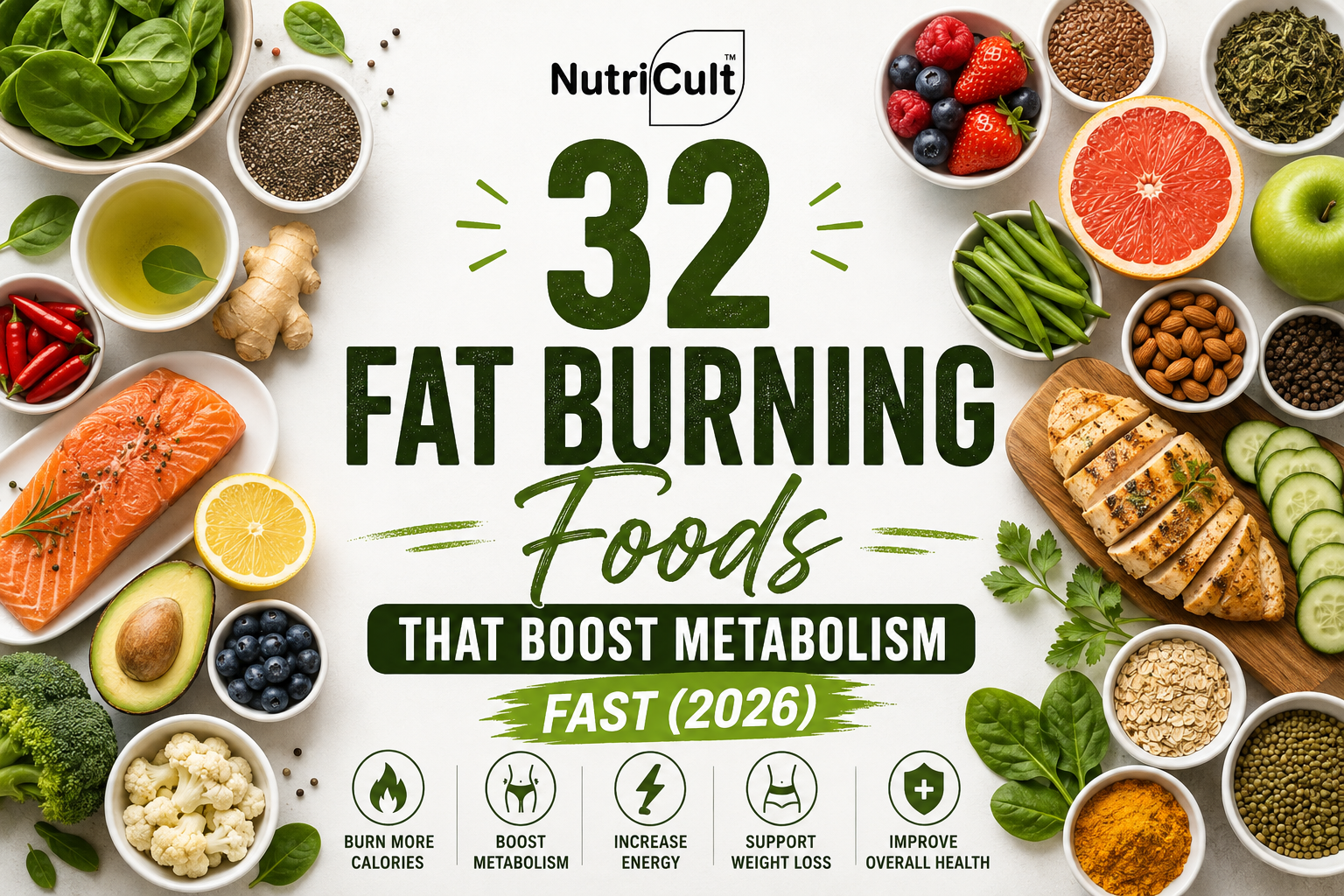
Belly fat does not respond to any single miracle food. It responds to a calorie deficit, enough protein, enough fiber, decent sleep, and a body that is not fighting inflammation or blood sugar spikes all day. Some foods still tip the scales in your favor. They fill you up on fewer calories, cost more energy to digest, or nudge your body toward burning stored fat instead of hoarding it.
This guide rounds up 32 fat burning foods with real research behind them, explains how to increase metabolism through diet, and gives you a practical way to fit these foods into an Indian kitchen.
Quick Answer
There is no food that melts belly fat on its own. But eating more protein, fiber-rich vegetables, and thermogenic spices like chili and ginger, while cutting back on refined carbs and sugary drinks, creates the conditions your body needs to burn fat. Protein has the highest thermic effect of any macronutrient, burning through 20 to 30% of its own calories during digestion, compared to just 5 to 10% for carbohydrates and 0 to 3% for fat. Pairing high-protein foods (eggs, paneer, dal, fish) with fiber-rich vegetables, green tea, and moderate spice intake is the most evidence-backed way to increase metabolism and reduce belly fat over time.
How Metabolism and Fat Burning Actually Work
Your metabolism is the sum of every calorie your body burns in a day: resting functions like breathing and circulation, physical activity, and the energy spent digesting food, known as the thermic effect of food (TEF). Of these three, digestion is the one you can influence most directly through food choices.
Protein has the highest thermic effect at 20 to 30 percent, meaning roughly a quarter of protein calories go toward digesting the protein itself. Carbohydrates sit at 5 to 15 percent, with fibre-rich complex carbs at the higher end, while dietary fats have the lowest thermic effect at 0 to 5 percent, which is part of why fat is stored so efficiently. One controlled study found that swapping refined grains for whole grains alone increased participants' daily calorie burn by more than 92 calories, purely from the extra digestive effort of whole grains.
This is the real mechanism behind "metabolism boosting foods." They are not magic. They are foods that either cost more energy to digest, help you eat fewer total calories by keeping you full, or contain compounds that mildly raise energy expenditure, such as capsaicin in chili peppers or caffeine and catechins in tea and coffee.
32 Fat Burning Foods That Support a Faster Metabolism
High-Protein Foods (Highest Thermic Effect)
- Eggs. A complete protein source with all nine essential amino acids, eggs keep you full for hours and cost more energy to digest than most breakfast carbs.
- Greek yogurt. Higher in protein and lower in sugar than regular yogurt, it also supplies gut-friendly probiotics that support digestion and metabolic health.
- Paneer and cottage cheese. A staple in Indian kitchens, paneer delivers a dense protein hit that works well in place of refined-carb sides like naan or white rice.
- Skinless chicken breast. Lean and low in fat, it delivers roughly 31g of protein per 100g, making it an efficient choice for anyone building muscle, which itself raises resting metabolism.
- Fatty fish (salmon, mackerel, sardines). Beyond protein, these fish supply omega-3 fatty acids linked to reduced inflammation and improved insulin sensitivity, both of which affect how the body stores fat.
- Lentils and dal. A vegetarian protein and fiber combination in one bowl, lentils slow digestion and blunt the blood sugar spikes that promote fat storage.
- Chickpeas (chana). High in both protein and resistant starch, chickpeas support gut bacteria that produce short-chain fatty acids linked to better fat metabolism.
- Tofu and soy foods. A complete plant protein that works as a direct swap for paneer or chicken in stir-fries and curries.
- Almonds. A small handful supplies protein, fiber, and healthy fat together, which is why nut eaters tend to snack less on refined carbs later in the day.
-
Peanuts and peanut butter. Budget-friendly and protein-dense, though portion control matters since they are calorie-heavy.
Fiber-Rich Vegetables and Fruits
- Broccoli. Low in calories and high in fiber and water, broccoli takes real digestive effort and fills the stomach without the calorie load of processed sides.
- Spinach and other leafy greens. Nutrient-dense and almost calorie-free, leafy greens let you eat larger portions while staying in a calorie deficit.
- Cauliflower. A popular rice and flour substitute in weight-loss cooking, cauliflower delivers volume and fiber for a fraction of the calories of grains.
- Cucumbers. Mostly water, cucumbers add crunch and volume to meals without meaningfully raising calorie intake.
- Bell peppers (capsicum). Rich in vitamin C and fiber, bell peppers also contain small amounts of capsaicin-related compounds that support the thermogenic effect chili peppers are known for.
- Sweet potatoes. A fiber-rich carbohydrate that digests more slowly than white potatoes or rice, keeping blood sugar and hunger steadier through the day. Read more in our guide to the health benefits of sweet potatoes.
- Berries (blueberries, strawberries). Naturally sweet but low in calories and high in fiber and antioxidants, berries are one of the easiest swaps for sugary desserts.
- Apples. The combination of fiber and water in apples makes them unusually filling for their calorie count, which is why a whole apple satisfies hunger better than the equivalent calories in juice.
- Avocados. Higher in calories than most fruit, but the monounsaturated fat and fiber combination supports satiety and steady blood sugar, which indirectly helps control belly fat.
-
Grapefruit. Long associated with weight-loss diets, grapefruit's fiber and low sugar content make it a smart choice when cutting calories, though it can interact with certain medications.
Thermogenic and Metabolism-Boosting Foods
- Chili peppers. The active compound, capsaicin, binds to TRPV1 receptors in the gut, and research from Purdue University found that participants who consumed 1 gram of red pepper with meals experienced a 10 percent increase in energy expenditure over four and a half hours compared to those who ate no pepper. A broader review of the evidence found that chili compounds can increase energy expenditure by 6 to 10 percent for up to three hours after consumption.
- Cayenne pepper. A concentrated capsaicin source that can be added to soups, eggs, or roasted vegetables for the same thermogenic effect as fresh chilies.
- Ginger. Traditionally used in Indian cooking and Ayurveda, ginger has been studied for mild effects on satiety and digestion, making it a useful daily addition to tea or curries.
- Black pepper. Contains piperine, a compound studied for its role in nutrient absorption and mild metabolic effects when paired with other spices.
- Cinnamon. Most associated with better blood sugar control rather than direct fat burning, cinnamon can help reduce the insulin spikes that encourage fat storage when added to meals or drinks.
- Turmeric. Curcumin, its main active compound, is studied mainly for its anti-inflammatory effects, which matter because chronic inflammation is linked to stubborn abdominal fat.
-
Mustard seeds. A traditional Indian tempering spice, mustard has been studied in small trials for a mild, short-term rise in metabolic rate after meals.
Beverages and Everyday Staples
- Green tea. A meta-analysis of controlled trials found that green tea catechins combined with caffeine can modestly increase 24-hour energy expenditure by around 3 to 4 percent, and a 12-week trial in overweight men found that a higher daily dose of tea catechins was linked to significantly greater reductions in body weight, body fat, and visceral fat area compared to a lower dose. Effects vary between individuals and studies, so treat green tea as a support, not a standalone solution.
- Black coffee. Caffeine reliably produces a short-term rise in metabolic rate across decades of research, though the effect is modest and tends to shrink with regular use as tolerance builds.
- Apple cider vinegar. Often used before meals, vinegar has been studied for its role in slowing gastric emptying and blunting post-meal blood sugar spikes, which can support appetite control. Our apple cider vinegar is formulated for easy daily use if you want a consistent, measured dose.
- Plain water. Not a food, but essential. Drinking water before meals is one of the simplest ways to reduce overall calorie intake, and mild dehydration itself can slow metabolic processes.
-
Probiotic-rich foods (curd, fermented foods). A growing body of research links gut bacteria diversity to how efficiently the body metabolizes fat and sugar. If your diet is light on fermented foods, our probiotic sticks are built to support that gut balance daily. For more on how gut bacteria affect digestion and weight, see our piece on probiotics vs prebiotics.
Nutrition and Metabolism Comparison Table
|
Food |
Calories (per 100g) |
Protein (g) |
Fiber (g) |
Key Metabolic Benefit |
|
Eggs |
155 |
13 |
0 |
High thermic effect, keeps you full |
|
Greek yogurt |
59 |
10 |
0 |
Protein + probiotics |
|
Lentils (cooked) |
116 |
9 |
8 |
Slow-digesting protein and fiber |
|
Chicken breast |
165 |
31 |
0 |
Lean, high-protein, low fat |
|
Salmon |
208 |
20 |
0 |
Omega-3s support insulin sensitivity |
|
Broccoli |
34 |
3 |
2.6 |
High volume, low calorie |
|
Sweet potato |
86 |
2 |
3 |
Slow-release carbs, steadies blood sugar |
|
Almonds |
579 |
21 |
12.5 |
Protein, fiber, healthy fat combo |
|
Chili peppers |
40 |
2 |
1.5 |
Capsaicin raises short-term energy use |
|
Green tea (brewed) |
1 |
0.2 |
0 |
Catechins + caffeine, mild EE boost |
Values are approximate USDA-style averages per 100g edible portion and will vary by preparation.
Foods and Habits That Work Against a Faster Metabolism
Belly fat progress stalls just as easily from what stays in the diet as from what is missing. Refined sugar, deep-fried snacks, sugary beverages, and ultra-processed packaged foods all share two traits: they are calorie-dense, and they barely register a thermic effect compared to whole protein or fiber. Alcohol also slows fat oxidation temporarily because the liver prioritizes metabolizing alcohol over burning fat. None of this means these foods are forbidden forever, but they are worth trimming first if belly fat is the goal.
How to Increase Metabolism and Speed Up Fat Loss: A Practical Approach
Diet alone will not out-hack a sedentary lifestyle or chronic sleep debt, so treat food as one part of a broader plan.
- Prioritize protein at every meal, aiming for a source like eggs, dal, paneer, or fish at breakfast, lunch, and dinner rather than concentrating it all in one sitting.
- Add resistance training two to three times a week. Muscle tissue burns more calories at rest than fat tissue, which raises your baseline metabolic rate over months, not days.
- Sleep seven to eight hours a night. Poor sleep disrupts hunger hormones like ghrelin and leptin, making high-calorie foods harder to resist the next day.
- Space fiber and protein through the day instead of loading up only at dinner, which helps control blood sugar and appetite consistently.
- Stay hydrated and treat green tea or black coffee as a support tool, not a substitute for the fundamentals.
If your gut health needs a reset before any of this feels manageable, our article on the best foods for gut health is a useful next step, since digestion and metabolism are closely linked.
Caution and Side Effects to Know
Most of the foods on this list are safe for the general population in normal dietary amounts. A few still deserve a second look. High doses of capsaicin supplements, well beyond what you would get from cooking with chili, can cause gastrointestinal discomfort, and common side effects of capsaicin supplements include stomach irritation in sensitive individuals. Grapefruit can interact with certain medications, including some statins and blood pressure drugs, so check with a doctor if you take prescription medication regularly. Excess caffeine from coffee or green tea can cause jitteriness, disrupted sleep, or an elevated heart rate in sensitive people, and pregnant women are generally advised to limit caffeine intake. Anyone with a diagnosed digestive condition, thyroid disorder, or diabetes should speak with a doctor or registered dietitian before making significant dietary changes. Individual metabolic needs vary widely.
Frequently Asked Questions
What are the best fat burning foods?
Protein-rich foods like eggs, fish, lentils, and paneer sit at the top of the list because they have the highest thermic effect of food, meaning your body burns more calories digesting them compared to carbs or fat. Fiber-rich vegetables and thermogenic spices like chili and ginger add supporting benefits.
What is a metabolism booster that actually works?
Protein intake, resistance training, and adequate sleep are the most evidence-backed metabolism boosters. Among foods, chili peppers, green tea, and coffee have documented, though modest, effects on short-term energy expenditure.
What foods increase metabolism and burn fat most effectively?
No single food burns fat on its own. The most effective approach combines high-protein foods, fiber-rich vegetables, and thermogenic spices with regular strength training, since muscle mass has the biggest long-term impact on resting metabolic rate.
How to increase metabolism naturally?
Eat enough protein at every meal, build muscle through resistance training, sleep seven to eight hours a night, stay hydrated, and avoid extreme calorie restriction, which can slow metabolism over time as the body adapts to conserve energy.
How to speed up metabolism after 30 or 40?
Metabolism naturally slows with age, partly due to gradual muscle loss. Strength training becomes more important with age to preserve muscle mass, alongside consistent protein intake and good sleep, since these matter more than any single food choice.
Related Reads
● Best Foods for Gut Health: A Science-Backed List
● Probiotics vs Prebiotics: The Real Difference Explained
● 10 Health Benefits of Sweet Potatoes, Plus Side Effects to Know
● What Is Ragi? Benefits of Ragi, Ragi Malt, and Ragi Atta Explained
● Vitamin B12 Rich Foods for Vegetarians in India (2026)
Disclaimer
This article is for general informational purposes only and is not a substitute for professional medical or nutritional advice. Individual results from dietary changes vary based on genetics, activity level, and overall health. Consult a doctor or registered dietitian before making significant changes to your diet, especially if you have an existing medical condition or take prescription medication.


