


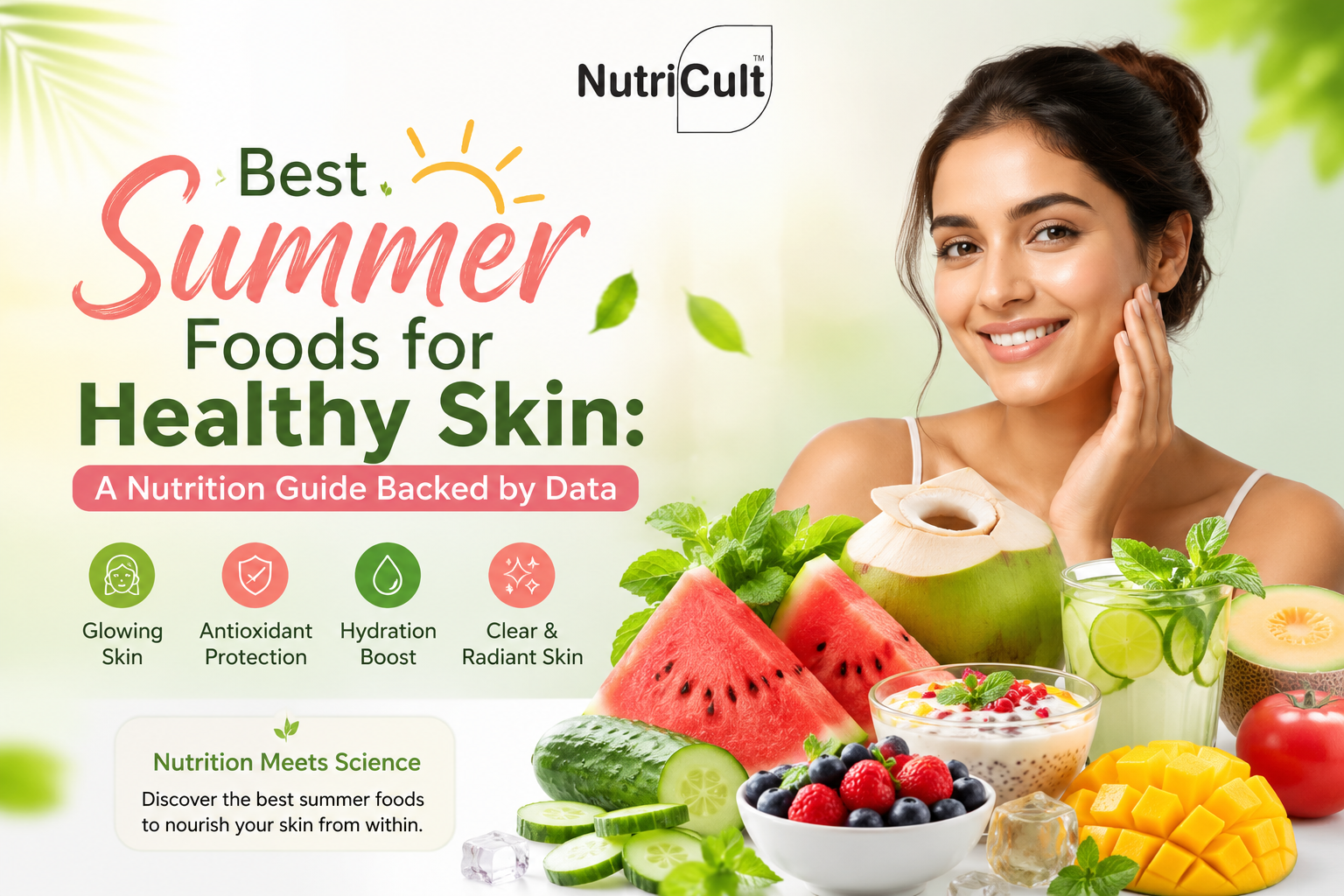
Quick AnswerThe best skin foods in summer combine three qualities: high water content, vitamin C, and carotenoid antioxidants such as lycopene and beta-carotene. Watermelon, cucumber, tomatoes, guava, berries, curd, and almonds cover all three. Together they support hydration, collagen production, and defense against UV-driven oxidative stress, based on data from USDA FoodData Central and a peer-reviewed review in the journal Nutrients (Pullar et al., 2017). |
Summer heat pulls water out of skin faster than most people realize. Sweat, sun exposure, and higher fluid loss through the skin barrier combine to leave many people with dull, dehydrated, or irritated skin between March and July across most of India. Diet plays a measurable role in how skin holds up during this stretch. This guide looks at specific foods with published nutrition data behind them, how much of each to eat, and where the evidence stops and marketing claims begin.
Why Summer Heat Affects Your Skin Differently
Skin loses water through two main routes during hot weather: increased sweating and higher transepidermal water loss, the natural evaporation of moisture through the skin's outer layer. Warmer temperatures also raise UV intensity across most of India, and UV exposure generates reactive oxygen species in skin cells that break down collagen and elastin over time.
Three dietary levers respond directly to this: fluid and electrolyte intake, antioxidant intake, and vitamin C intake for collagen support. Each food covered below was chosen because published data ties it to at least one of these three levers, not because it sounded appealing.
What Is the Best Skin Food?
There is no single best skin food, and any source claiming otherwise is oversimplifying. What the research supports is a category: water-rich fruits and vegetables paired with vitamin C and carotenoid sources, working together in a way no single ingredient can replicate. Watermelon and guava rank near the top for lycopene and vitamin C respectively. Curd and other probiotic-rich foods support the gut-skin axis, an area of active research linking digestive health to inflammatory skin conditions. The breakdown below covers each food and the data behind it.
Top Summer Foods for Healthy Skin
Watermelon
Watermelon is roughly 92% water per 100 grams, according to USDA FoodData Central, and it holds more lycopene than any other commonly eaten fresh fruit or vegetable, at approximately 4,530 micrograms per 100 grams. Lycopene is a carotenoid antioxidant, and laboratory research links it to reduced UV-driven oxidative damage in skin cells. A 100-gram serving also delivers about 8.1 mg of vitamin C. A squeeze of lime adds further vitamin C without added sugar.
Cucumber
Cucumber sits at about 95% water by weight, one of the highest ratios among common vegetables in the USDA database. A 100-gram serving carries only 15 calories, along with small amounts of vitamin C and potassium. Its practical value is straightforward: cucumber adds fluid volume to meals without adding calories, which makes daily hydration targets easier to hit during hot months.
Tomatoes
Raw red tomatoes provide about 2,573 micrograms of lycopene and 13.7 mg of vitamin C per 100 grams, based on USDA SR Legacy data. Cooking tomatoes with a small amount of oil raises lycopene bioavailability by roughly 35%, since lycopene is fat-soluble and needs dietary fat for efficient absorption. A tomato salad with a light drizzle of olive oil captures raw vitamin C alongside better lycopene uptake.
Guava
Guava is among the richest common fruit sources of vitamin C, at 228.3 mg per 100 grams according to USDA data, more than double what an orange provides for the same weight. Vitamin C acts as a cofactor for prolyl and lysyl hydroxylase, two enzymes that stabilize collagen's structure, according to a 2017 review published in the journal Nutrients. Guava also carries around 5,200 micrograms of lycopene and 5.4 grams of fiber per 100 grams, supporting digestion alongside skin nutrition.
Berries
Strawberries, blueberries, and blackberries each contain measurable amounts of anthocyanins, the pigment compounds responsible for their color and a documented source of antioxidant activity in laboratory studies. Blackberries showed the highest antioxidant capacity against several free-radical types in a comparative berry study, with strawberries close behind for singlet oxygen scavenging. A cup of mixed berries with breakfast diversifies antioxidant intake beyond vitamin C alone.
Curd and Probiotic Foods
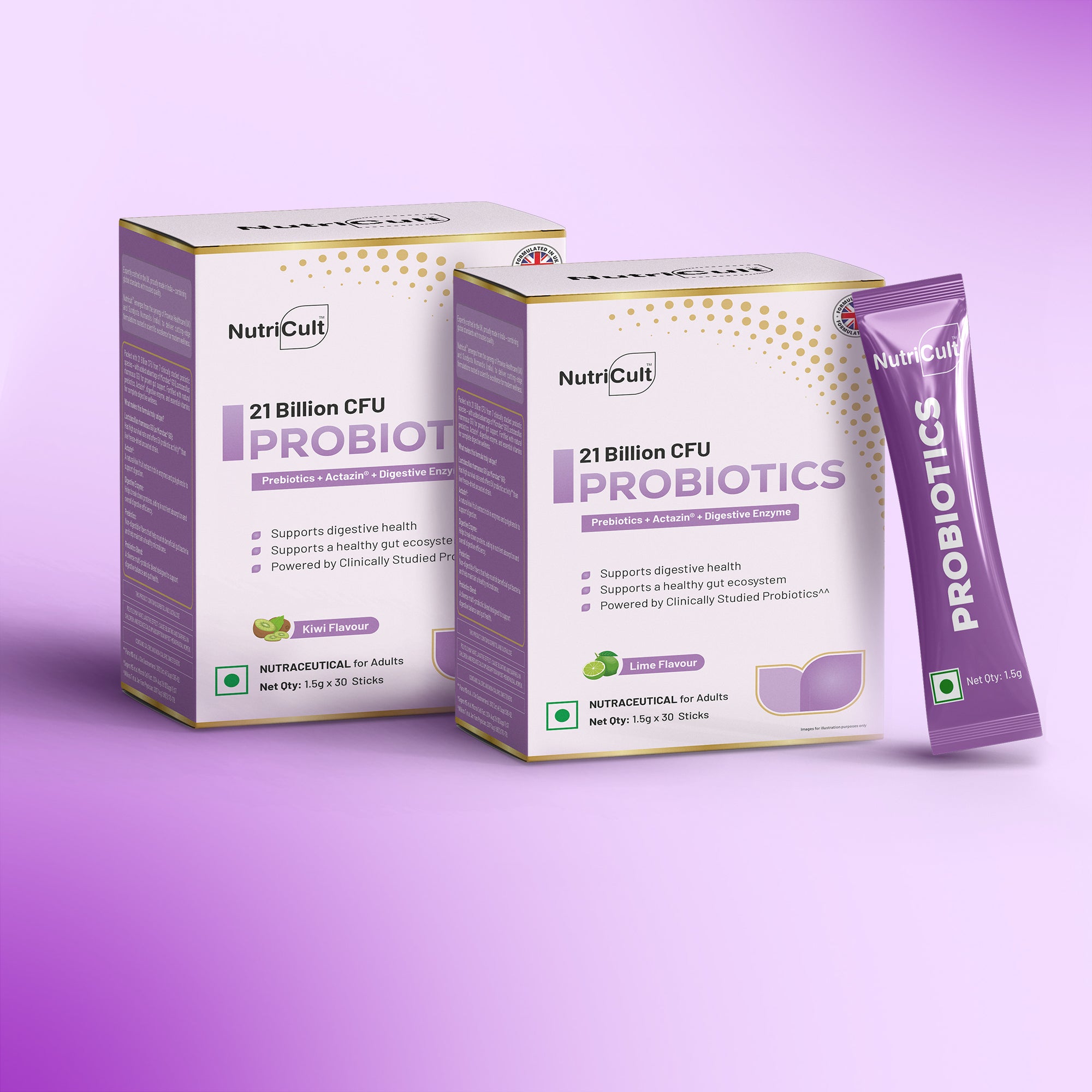
Curd, yogurt, and other fermented foods support the gut microbiome, and a growing body of research links gut health to inflammatory skin conditions such as acne and eczema through what researchers call the gut-skin axis. The mechanism is not fully mapped, and results vary between individuals, so curd works best as a supporting habit rather than a guaranteed fix. Our Probiotic Sticks deliver a measured daily probiotic dose for anyone who wants consistency beyond what a bowl of curd provides.
Almonds and Seeds
Almonds contain between 21.9 and 31 mg of alpha-tocopherol, the active form of vitamin E, per 100 grams. A 2021 randomized controlled trial published in Nutrients tracked facial wrinkles and pigmentation in postmenopausal women over 24 weeks and found a statistically significant improvement in wrinkle severity in the group that consumed almonds daily, compared with a calorie-matched control. Vitamin E regenerates vitamin C after it neutralizes free radicals in skin, which is why pairing a small handful of almonds with a vitamin C-rich fruit makes nutritional sense.
Nutrition Comparison Table
|
Food (per 100g) |
Water Content |
Vitamin C |
Standout Compound |
Primary Skin Role |
Source |
|
Watermelon |
~92% |
8.1 mg |
Lycopene, ~4,530 mcg |
UV oxidative stress defense, hydration |
USDA FDC #167765 |
|
Cucumber (with peel) |
~95% |
2.8 mg |
Silica, potassium |
Hydration, low-calorie volume |
USDA FoodData Central |
|
Tomato, raw red |
~94.5% |
13.7 mg |
Lycopene, ~2,573 mcg |
Photoprotection support |
USDA SR Legacy |
|
Guava |
81% |
228.3 mg |
Lycopene, ~5,200 mcg |
Collagen synthesis, antioxidant load |
USDA FoodData Central |
|
Almonds |
~4-6% |
negligible |
Vitamin E, ~22-26 mg |
Free-radical defense, skin barrier support |
USDA; Nutrients (2021) almond RCT |
|
Curd / plain yogurt |
~88% |
negligible |
Live probiotic cultures |
Gut-skin axis support |
General food composition data |
Sources: USDA FoodData Central; Pullar, Carr & Vissers, "The Roles of Vitamin C in Skin Health," Nutrients (2017); Rybak et al., almond facial-wrinkle RCT, Nutrients (2021).
What Is Good for Skin Beyond Food?
Food is one input among several, and no diet fully compensates for unmanaged sun exposure or chronic dehydration. Three non-food habits carry as much weight as what lands on the plate.
Daily fluid intake: ICMR-NIN's 2024 Dietary Guidelines for Indians recommend roughly 2 litres, or about 8 glasses, of total fluid per day for a healthy adult, counting water-rich foods and beverages together. Our guide on why morning hydration matters covers a simple daily routine.
- Sun protection: broad-spectrum sunscreen remains the single most effective daily defense against UV-driven collagen breakdown, and no food replaces it.
- Sleep and stress management: cortisol levels and sleep debt both affect skin barrier repair, independent of diet quality.
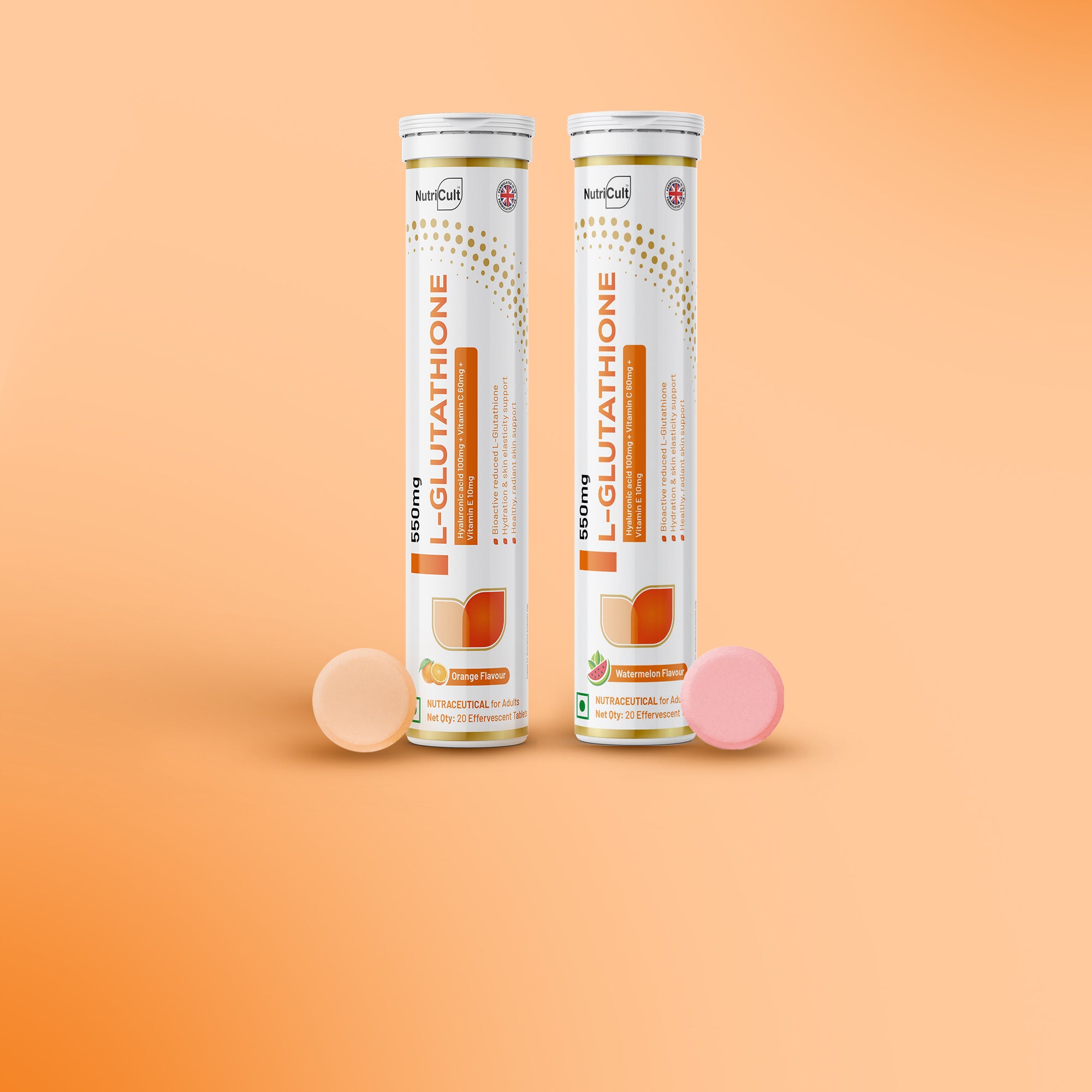
Supplementation can fill specific gaps, particularly for glutathione and vitamin C intake during months when appetite drops in the heat. Our L-Glutathione Effervescent Tablets and Glutathione Builder Capsules are formulated for people who want a measured daily dose alongside a food-first approach, and the Glow & Radiance Kit combines both for a structured routine. Neither replaces a balanced diet; both support it.
How Much of These Foods Should You Eat Daily?
A practical daily target looks like this: one cup of watermelon or a similar water-rich fruit, one medium tomato, a handful of berries or half a guava, a small serving of curd, and a small handful, roughly 20 to 23 almonds, of nuts. This combination sits well within normal caloric intake for most adults and does not require tracking exact gram weights. Consistency across the week matters more than any single meal.
For anyone building a broader skin-focused routine, our Skin Brightening collection groups food-complementary supplements by concern, alongside the food habits described above.
Caution and Side Effects
A few caveats apply. Watermelon and other high-sugar fruits should be portioned carefully by anyone managing diabetes or insulin resistance, since a cup of watermelon carries roughly 9 to 12 grams of natural sugar. Citrus and tomato acidity can trigger reflux or worsen existing acne in some individuals, and reactions vary by person. Almonds and other tree nuts are a common allergen and should be avoided entirely by anyone with a known nut allergy. Curd and dairy products may not suit people with lactose intolerance; plant-based probiotic options exist as an alternative. Anyone with a diagnosed skin condition, kidney disease, or a medical restriction on potassium or fluid intake should check with a doctor or registered dietitian before making significant dietary changes.
Frequently Asked Questions
What is the best skin food?
No single food outperforms all others for skin health. Watermelon and guava rank high for lycopene and vitamin C, curd supports the gut-skin axis, and almonds provide vitamin E. Eating a mix across these categories does more for skin than relying on one item.
What is good for skin in summer?
Water-rich fruits and vegetables such as watermelon, cucumber, and tomatoes top the list for summer, alongside adequate daily fluid intake, sunscreen, and sleep. Vitamin C sources like guava and citrus fruits support collagen production, while nuts and seeds add vitamin E for antioxidant protection.
Can diet alone fix dull or dehydrated summer skin?
Diet supports skin health but does not replace sun protection, adequate sleep, or a consistent skincare routine. Treat food as one part of a broader approach rather than a standalone fix.
How much water-rich fruit should I eat daily in summer?
A cup of watermelon, or a similar-sized serving of another water-rich fruit, alongside roughly 2 litres of total daily fluid intake as recommended by ICMR-NIN's 2024 Dietary Guidelines for Indians, is a reasonable daily target for most healthy adults.
Related Reads
Benefits of Drinking Hot Water in the Morning
B12 vs B Complex: Which One Should You Take?
32 Fat Burning Foods That Boost Metabolism Fast
Disclaimer: This article is for general nutrition information only and does not replace professional medical or dietary advice. Consult a doctor, dermatologist, or registered dietitian before making significant changes to your diet, especially if you have an existing medical condition, allergy, or are pregnant or breastfeeding.


