


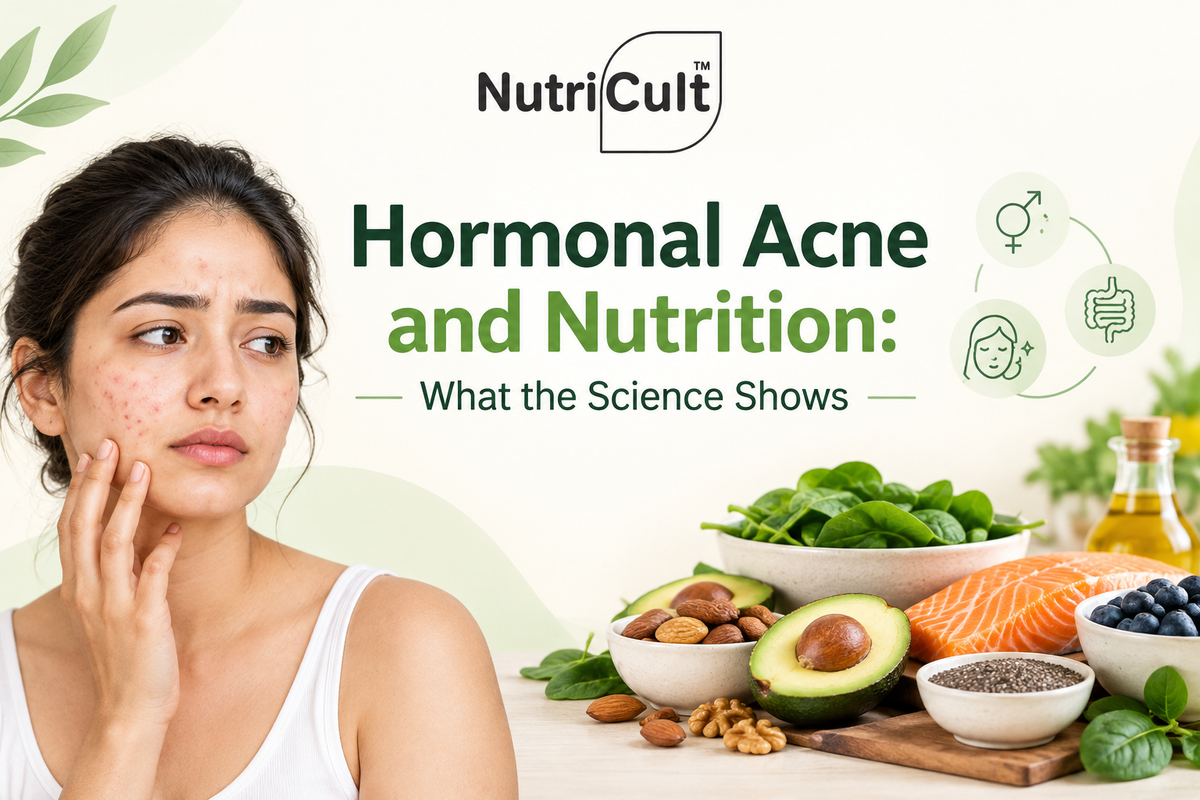
Hormonal Acne and Nutrition: Foods That May Help
Quick Answer
Diet does not cause hormonal acne on its own, and no single food clears it. Research links high-glycemic eating patterns and certain dairy products, particularly skim milk, to a modest increase in acne severity, likely through effects on insulin, IGF-1, and inflammation. A lower-glycemic diet with adequate protein, fiber, omega-3 fats, and nutrients such as zinc and vitamin D may support skin health alongside dermatologic treatment. Acne is multifactorial. Nutrition is one contributing factor among hormones, genetics, sebum production, and skincare, not the primary driver.
What Is Hormonal Acne?
People generally use "hormonal acne" to describe breakouts that cluster along the jawline, chin, and lower cheeks, often flaring around the menstrual cycle, during perimenopause, or during periods of hormonal change. The term is descriptive rather than a formal medical diagnosis. Dermatologists still classify the underlying condition as acne vulgaris, with hormonal fluctuation acting as one trigger among several.
Androgens increase sebum production and can alter how skin cells shed inside hair follicles. Both changes create conditions that favor clogged pores and inflammation. This pattern is not limited to teenagers. Adult-onset and adult-persistent acne, especially in women in their twenties, thirties, and forties, is well documented and frequently tied to hormonal shifts rather than the classic teenage causes.
Can Nutrition Affect Hormonal Acne?
Diet is not the primary cause of hormonal acne, and dermatology has moved away from the older view that food plays no role at all. Current evidence points to several dietary factors with a measurable, though moderate, relationship to acne severity.
Blood Sugar, Insulin and Acne
High-glycemic foods raise blood glucose quickly, which triggers a larger insulin response. Elevated insulin can increase insulin-like growth factor 1 (IGF-1) and influence androgen activity, both of which are involved in sebum production and follicular changes linked to acne.
A 2007 randomized controlled trial published in the American Journal of Clinical Nutrition found that young men following a low-glycemic-load diet for 12 weeks showed a greater reduction in acne lesion counts than a control group eating a higher-glycemic diet. A related 2018 short-duration randomized trial in the Journal of the Academy of Nutrition and Dietetics found that a two-week low-glycemic diet reduced IGF-1 levels in adults with moderate to severe acne. A 2022 systematic review in JAAD International, which assessed 34 studies, concluded that high glycemic index and glycemic load diets have a modest but statistically significant proacnegenic effect.
Not every review agrees on the strength of this link. A 2013 systematic review in the Journal of the American Academy of Dermatology examined the same body of research and noted that earlier evidence was inconsistent, with some observational studies in non-Western populations showing very low acne rates on traditional, low-glycemic diets, while controlled trials produced mixed results. Taken together, the evidence supports an association between high-glycemic eating and acne severity. It does not prove that glycemic intake alone causes acne, and individual response likely varies.
Inflammation and Acne-Prone Skin
Acne is fundamentally an inflammatory condition involving the skin bacterium Cutibacterium acnes, immune signaling, and cytokine activity within the follicle. Dietary patterns that influence overall inflammatory status, rather than any single "anti-inflammatory" ingredient, appear more relevant here.
Randomized trials of omega-3 fatty acid supplementation illustrate this point. A 2014 randomized, double-blind, controlled trial in Acta Dermato-Venereologica gave 45 participants with mild to moderate acne either omega-3 fatty acids, gamma-linolenic acid, or a control regimen for 10 weeks. Both active groups showed a significant reduction in inflammatory and non-inflammatory lesions, along with reduced tissue markers of inflammation. A 2024 prospective study following a Mediterranean-style diet combined with algae-derived omega-3 supplementation reported meaningful improvement in patients who started with a documented omega-3 deficiency. Eating a single food said to fight inflammation will not reverse acne. Sustained dietary patterns appear to matter more than isolated ingredients.
Nutrition, Hormones and Metabolic Health
Diet can influence metabolic markers connected to acne, including fasting insulin, IGF-1, and markers of insulin resistance. This is different from claiming that a food "balances hormones." No food or supplement directly regulates androgen levels in a way that has been proven to resolve hormonal acne. What the evidence supports is narrower: dietary patterns that support stable blood sugar and a healthy metabolic profile appear to correlate with milder acne in several trials, and this pathway is worth attention for anyone managing acne alongside conditions such as insulin resistance.
Nutrients That Matter for Acne-Prone Skin
Zinc
Zinc has anti-inflammatory and antibacterial properties relevant to acne. A 2019 systematic review in the American Journal of Clinical Dermatology found that zinc supplementation showed benefit in 10 of 14 acne studies reviewed, while noting inconsistent methodology across trials. An early double-blind trial using high-dose zinc sulfate reported improvement in roughly 58 percent of participants after 12 weeks. A 2025 comprehensive review in Nutrients concluded that oral zinc may help as an adjunct to standard acne treatment, particularly for inflammatory lesions, though large, well-controlled trials remain limited.
Food sources of zinc include legumes, pumpkin seeds, nuts, and whole grains. For a deeper look at zinc deficiency symptoms and correction strategies, see Nutricult's guide on zinc deficiency symptoms in men and women. This article focuses only on zinc's role in acne-prone skin rather than deficiency in general.
Omega-3 Fatty Acids
As covered above, EPA and DHA appear to reduce inflammatory acne lesions in controlled trials, likely by lowering pro-inflammatory eicosanoids and IGF-1. Indian vegetarian diets often fall short of these fats, since ALA from flaxseed, chia, and walnuts converts to EPA and DHA inefficiently in the body. Nutricult's article on omega-3 deficiency in India covers this conversion issue in detail.
Vitamin D
A 2022 meta-analysis in Dermatology, pooling 13 studies and over 2,400 participants, found that circulating vitamin D levels were significantly lower in people with acne compared to healthy controls, with an inverse relationship between vitamin D level and acne severity. A separate case-control study combined with a supplementation trial found that correcting vitamin D deficiency with 1,000 IU daily over two months improved inflammatory lesions in deficient patients. These findings support screening and correcting a documented deficiency rather than routine high-dose supplementation for everyone with acne.
Vitamin A
Vitamin A supports normal skin cell turnover, and its derivatives, retinoids, are a cornerstone of dermatologic acne treatment. This does not mean dietary vitamin A or supplements work the same way as prescription retinoids. Vitamin A is fat-soluble and toxic in excess, so supplementation should only follow a documented dietary gap, ideally under medical guidance.
Antioxidants and Protein Adequacy
Fruits, vegetables, and nuts provide antioxidants such as vitamin C and polyphenols that support overall skin health, though direct trial evidence specifically for acne is limited compared to the nutrients above. Adequate protein intake supports tissue repair and helps maintain the balanced, moderate-glycemic meals associated with better acne outcomes in the trials discussed earlier.
Indian Foods That Fit an Acne-Friendly Diet
|
Food |
Useful Nutrients / Property |
Why It May Fit an Acne-Friendly Diet |
Practical Indian Serving |
|
Moong dal, chana, rajma |
Protein, fiber, low glycemic index |
Slows blood glucose response and supports satiety |
1 cup cooked dal with roti or rice |
|
Sprouts (moong, matki) |
Protein, zinc, folate |
Provides nutrients relevant to skin health alongside low glycemic load |
Sprout salad with lemon and cucumber |
|
Leafy greens (palak, methi) |
Antioxidants, vitamin A precursors, fiber |
Contributes to overall dietary quality and nutrient density |
Sabzi with 1-2 tsp oil, twice weekly |
|
Amla and guava |
Vitamin C, polyphenols |
Supports antioxidant intake as part of a balanced diet |
Fresh amla or guava as a mid-morning snack |
|
Tomatoes |
Lycopene, vitamin C |
May contribute to overall skin-supportive nutrient intake |
Added to dal, sabzi, or salads |
|
Curd and buttermilk |
Probiotics, protein |
Fermented dairy has a different evidence profile than skim milk; may be a useful choice in moderation |
1 small bowl curd or 1 glass chaas |
|
Nuts and seeds (walnuts, flax, chia, pumpkin seeds) |
Omega-3 precursors, zinc, healthy fats |
Provides plant-based fat sources relevant to inflammation pathways |
1 small handful daily |
|
Millets (bajra, jowar, ragi) |
Fiber, lower glycemic index than refined grains |
Can replace refined flour to support steadier blood sugar |
Millet roti or porridge in place of maida-based options |
|
Eggs |
Protein, vitamin D, zinc |
Practical source of several acne-relevant nutrients for non-vegetarians |
1-2 eggs at breakfast |
|
Fish (rohu, sardines, mackerel) |
EPA and DHA omega-3s |
Directly relevant to the inflammatory pathway studied in acne trials |
2-3 servings per week where suitable |
No single food in this table treats or removes hormonal acne. Each one can contribute to a broader dietary pattern that the research above associates with milder acne over time.
What Should You Actually Eat If You Have Hormonal Acne?
Build Meals Around Protein and Fiber
Pairing protein and fiber at each meal slows glucose absorption and extends satiety, which supports the lower-glycemic-load pattern linked to milder acne in clinical trials. A plate built around dal, vegetables, and a moderate portion of grain accomplishes this more reliably than focusing on a single "acne food."
Choose Mostly Lower-Glycemic Carbohydrates
Swapping white rice and maida-based snacks for millets, whole wheat, brown rice, and legumes lowers the overall glycemic load of a typical Indian diet. This shift does not require eliminating rice or wheat entirely; portion size and pairing with protein and vegetables matter as much as the grain itself.
Include Colorful Vegetables and Fruits
A variety of vegetables and fruits adds fiber, antioxidants, and micronutrients without the detox claims sometimes attached to specific produce. Eating a range of colors is a reasonable, evidence-aligned target rather than a specific superfood.
Include Healthy Fats
Mustard oil, groundnut oil, and olive oil in moderate amounts, along with nuts, seeds, and fish where appropriate, support the omega-3 and overall fat quality connected to reduced inflammatory acne lesions in trials.
Do Not Eliminate Entire Food Groups Without a Reason
Restrictive elimination diets are not supported by current evidence as a general acne strategy and can create unnecessary nutritional gaps. Removing dairy or carbohydrates entirely should be based on an individual's own symptom pattern and ideally guided by a doctor or dietitian, not applied as a blanket rule.
What About Dairy, Sugar and Other Foods?
Dairy has one of the more consistent, though still debated, associations with acne in the research literature. A 2005 study of over 47,000 women in the Nurses' Health Study II, published in the Journal of the American Academy of Dermatology, found that higher milk intake during high school, particularly skim milk, was associated with a higher likelihood of physician-diagnosed teenage acne. A follow-up 2008 study in teenage boys reported the same pattern for skim milk specifically. A 2016 case-control study in the same journal similarly found that low-fat and skim milk intake, but not whole milk, was significantly higher among teenagers with acne compared to those without it. A larger 2018 meta-analysis in Nutrients, covering more than 78,000 participants across 14 studies, calculated increased odds of acne for any dairy intake, with skim milk showing the strongest association.
Why skim milk specifically shows a stronger link than whole milk is not fully settled. Proposed explanations include hormonal and bioactive compounds in milk that affect insulin and IGF-1 signaling, independent of fat content. Fermented dairy such as curd shows a different and less consistent evidence profile than liquid milk in the available research.
High-glycemic diets and sugary beverages carry similar caveats. Association is not the same as guaranteed cause and effect for every individual, and eliminating dairy or sugar will not resolve acne for everyone who tries it. Whether these changes are worth pursuing depends on a person's specific diet, symptom pattern, and any relevant medical history, which is a conversation best had with a dermatologist or dietitian rather than settled by a blanket rule.
A Simple Indian Day of Eating for Acne-Prone Skin
This is one illustrative example, not a prescribed medical diet. Calorie and nutrient needs vary by age, activity level, and health status.
Breakfast: Vegetable and egg bhurji or moong dal chilla, with a small bowl of curd.
Mid-morning: A handful of walnuts or roasted chana, plus a piece of fruit such as guava or papaya.
Lunch: Roti or millet roti, one seasonal vegetable sabzi, dal, and a side salad with lemon.
Evening snack: Sprout chaat or roasted makhana with a cup of green tea.
Dinner: Grilled fish or paneer, sauteed leafy greens, and a small portion of brown rice or quinoa.
Optional snack: A small bowl of curd with flaxseed, or a piece of dark chocolate in moderation.
Vegetarian readers can substitute paneer, tofu, or additional legumes for fish and eggs, adjusting portions to personal calorie needs.
Can Supplements Help With Hormonal Acne?
Supplements are not a substitute for dermatologic treatment when acne is moderate to severe or scarring. They make the most sense when there is a documented deficiency or a clear dietary gap, such as low vitamin D on a blood test or minimal omega-3 intake in a vegetarian diet. More is not automatically better. High-dose zinc and vitamin A can cause gastrointestinal side effects and, in the case of vitamin A, toxicity, and some supplements interact with prescription acne medications such as isotretinoin.
For readers focused on gut health as part of an overall wellness routine, Nutricult's Probiotic Sticks offer nutritional support for digestive balance, an area increasingly studied for its connection to skin health, without being positioned as an acne treatment. Similarly, Nutricult's Glutathione products are formulated to support the body's antioxidant status generally, not to treat acne specifically. Anyone considering nutritional supplements for acne-prone skin should still consult a dermatologist, particularly if they are already using prescription treatment. Nutricult's guide on the gut-skin axis explains this connection in more depth.
When Should You See a Dermatologist?
Nutrition changes are not a substitute for professional evaluation in several situations:
- Painful, deep, or cystic acne
- Acne that is causing or has caused scarring
- Persistent adult acne that does not respond to over-the-counter products
- Sudden, severe acne onset
- Acne alongside irregular periods, excess hair growth, or other symptoms that may warrant hormonal evaluation
- Acne that has not improved despite reasonable dietary and skincare changes over several months
A dermatologist can determine whether prescription treatment, hormonal evaluation, or further testing is appropriate. Nutrition can support these treatments; it does not replace them, and acne accompanied by other symptoms should not be self-diagnosed as a specific hormonal disorder based on breakouts alone.
FAQs
Can diet help hormonal acne?
Diet may modestly influence hormonal acne through effects on blood sugar, insulin, and inflammation, based on multiple clinical trials. It is not a replacement for dermatologic treatment, and results vary between individuals.
What should I eat for hormonal acne?
A pattern built around lower-glycemic carbohydrates, adequate protein and fiber, healthy fats, and a range of vegetables and fruits aligns with the current evidence. No single food or meal plan is proven to resolve hormonal acne on its own.
Does a high-sugar diet make acne worse?
Several studies link high-glycemic diets, which include sugary foods and refined carbohydrates, to increased acne severity through insulin and IGF-1 pathways. The effect size is moderate, and individual response differs.
Is dairy bad for hormonal acne?
Research shows a fairly consistent association between skim and low-fat milk intake and acne, seen across several large studies. Whole milk and fermented dairy such as curd show a weaker and less consistent link.
Can zinc help acne?
Some clinical trials show benefit from oral zinc supplementation for inflammatory acne, though study quality varies and effects are not universal. Food sources of zinc, such as legumes and seeds, are a reasonable starting point before considering supplements.
Are probiotics good for acne?
Emerging research connects gut health to skin health, though direct evidence for probiotics treating acne specifically remains limited. Probiotic-rich foods or supplements may support overall gut balance as part of a broader wellness routine.
How long does it take for dietary changes to affect acne?
Clinical trials studying diet and acne have generally run 8 to 16 weeks before measuring meaningful changes in lesion counts. Skin cell turnover takes weeks, so dietary changes should be given a similar window before judging results.
Should I take supplements for hormonal acne?
Supplementation makes the most sense when a specific deficiency, such as low vitamin D or omega-3 intake, has been identified. Supplements should not replace dermatologic treatment for moderate to severe acne, and a doctor should be consulted before starting high doses of any nutrient.
Related Reads
-
Gut-Skin Axis Explained: Why Your Gut Health Determines Your Skin Clarity
-
5 Signs Your Gut Health Is Affecting Your Skin
-
7 Tips for Healthy Skin: A Dermatology-Backed Guide
-
Zinc Deficiency Symptoms in Men and Women: What to Do
-
Omega-3 Deficiency in India: Why ALA Cannot Replace DHA and What Actually Works
Medical Disclaimer
This article is for educational purposes only and does not replace individualized medical advice, diagnosis, or treatment. Hormonal acne can have multiple underlying causes, and dietary changes may not be appropriate or sufficient for everyone. Consult a dermatologist or qualified healthcare provider before making significant changes to your diet or supplement routine, especially if you are using prescription acne medication or have an underlying medical condition.


