


The Phytate Problem for Zinc in Indian Diets
Zinc from legumes and grains, which dominate vegetarian Indian diets, absorbs at 15 to 25 percent efficiency due to phytic acid binding. Soaking and sprouting legumes reduces phytate and meaningfully improves zinc bioavailability.
Symptoms by System
Immune Function
Frequent infections, slow recovery from illness, and recurrent colds all suggest possible zinc insufficiency. Zinc is required for T-cell, natural killer cell, and neutrophil development.
Skin and Acne
Zinc inhibits acne-causing bacteria and reduces sebum production. Studies show zinc gluconate or picolinate at 30 to 45 mg elemental zinc reduces acne severity comparably to low-dose tetracycline.
Hair and Nails
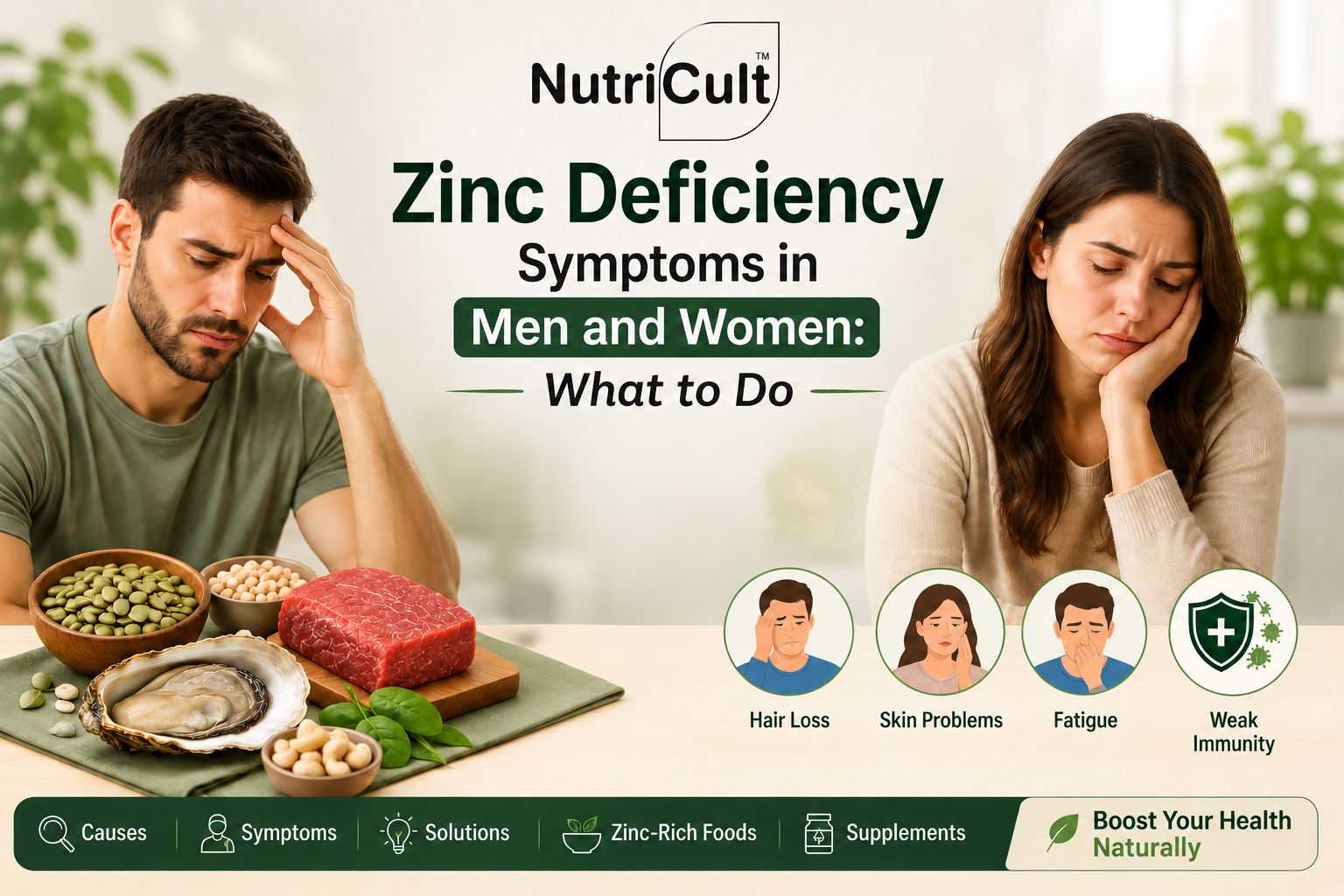
Zinc-related hair loss is diffuse: hair thins across the scalp rather than following a recession pattern. White spots on nails (leukonychia) are associated with zinc deficiency.
Male Fertility
Zinc is concentrated in prostate tissue. Deficiency reduces testosterone, impairs sperm production, and decreases fertility.
Supplement Forms and Dosing
|
Form |
Elemental Zinc % |
Notes |
|
Zinc picolinate |
~20% |
Well absorbed; commonly recommended |
|
Zinc gluconate |
~14% |
Gentle on stomach |
|
Zinc citrate |
~31% |
High elemental per capsule |
|
Zinc oxide |
~80% |
Poor absorption despite high elemental; avoid |
FAQ
Can zinc supplementation cause problems?
Above 40 mg elemental zinc daily long-term, copper absorption is impaired. Add 1 to 2 mg copper supplement if taking high-dose zinc for more than four weeks.
How long does zinc take to work for hair loss?
Three to six months of consistent supplementation for hair density improvement. Zinc corrects deficiency-related hair loss; it does not treat androgenetic alopecia.


