


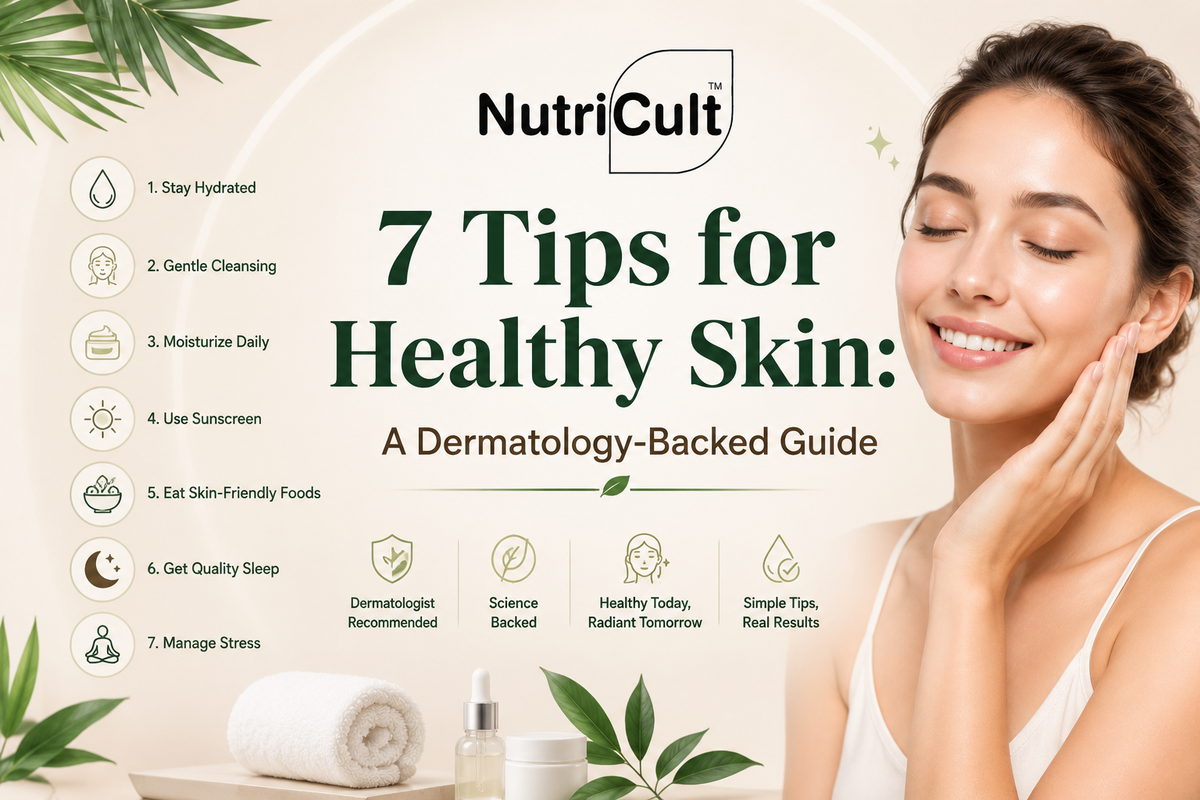
Healthy skin starts with four basics: cleanse, moisturize, protect from the sun, and support your barrier from the inside with nutrition and sleep. Everything else is a refinement of these fundamentals. Trends come and go, but dermatologists keep circling back to the same evidence-based habits, and for good reason: they work.
If your bathroom shelf looks like a science experiment gone wrong, this guide will help you simplify. Below are seven habits worth building into your routine, along with the reasoning behind each one.
1. Protect Your Skin Barrier Before Anything Else
Your skin barrier, the outermost layer of the epidermis, keeps moisture in and irritants out. When it is damaged, skin becomes red, tight, and reactive to products that once worked fine. Dermatologists in 2026 are increasingly steering patients away from long, aggressive routines packed with multiple exfoliants and "anti-aging" serums stacked together. Using several strong actives at once overwhelms the skin's ability to recover.
A simpler approach works better for most people: a gentle cleanser, a barrier-supporting moisturizer with ceramides, and consistency. Add new actives one at a time, and give your skin a week or two to adjust before introducing another.
2. Limit Exfoliation to 1 to 3 Times a Week
Exfoliation removes dead skin cells and can brighten dull skin, but more is not better. Over-exfoliating compromises the barrier and worsens sensitivity, redness, and breakouts. Physical scrubs and chemical exfoliants like AHAs and BHAs are both effective in moderation. Stacking them daily, however, is one of the most common mistakes dermatologists see in clinic.
Stick to two or three sessions a week, and always follow exfoliation with a moisturizer to help the skin recover.
3. Wear Sunscreen Every Day, Not Just in Summer
Sun protection remains the single most important step for preventing premature aging, pigmentation, and skin cancer. UV rays penetrate clouds and windows, so daily broad-spectrum SPF is non-negotiable regardless of season. For Indian skin tones, which are more prone to pigmentation and dark spots from sun exposure, consistent sunscreen use also helps prevent uneven tone over time.
Reapply every two hours if you are outdoors, and choose a formula suited to your skin type: gel-based for oily skin, cream-based for dry skin.
4. Feed Your Skin From the Inside
Topical products only do half the job. What you eat directly shapes how your skin repairs itself, retains moisture, and fights oxidative stress. Vitamin C supports collagen synthesis. Vitamin E and omega-3 fatty acids protect the skin's lipid barrier. Zinc regulates oil production and helps wounds heal faster.
Foods like citrus fruits, walnuts, fatty fish, leafy greens, and berries give your skin the raw materials it needs. If your diet has gaps, particularly in antioxidants like glutathione that support skin brightening and reduce oxidative damage, a targeted supplement can help close that gap alongside whole foods, not instead of them.
5. Do Not Underestimate Sleep and Stress
Skin repairs itself most actively during sleep, when blood flow to the skin increases and collagen production ramps up. Chronic sleep deprivation is linked to a weaker skin barrier, slower wound healing, and more visible signs of aging. Stress works similarly: elevated cortisol increases oil production and inflammation, which can trigger breakouts and flare-ups in conditions like eczema and rosacea.
Aim for seven to eight hours of sleep and build in small stress-management habits, even something as simple as a ten-minute walk, since the skin-mind connection is well documented in dermatology research.
6. Support Your Gut Health
The gut-skin axis is one of the more consistently discussed connections in modern dermatology. Poor gut health can trigger systemic inflammation that shows up on the skin as acne, eczema, or rosacea flare-ups. Probiotics have shown promise in helping with acne, dryness, and wound healing by supporting a healthier gut microbiome.
Fermented foods like curd, kimchi, and idli batter are accessible starting points. Probiotic supplements are another option if your diet does not include enough naturally fermented foods.
7. Choose Products Based on Evidence, Not Trends
Viral skincare trends move fast, and not all of them hold up under scrutiny. A minimalist, evidence-based routine, cleanse, moisturize, protect, and treat, consistently outperforms complicated ten-step routines built around whatever is trending that month. Before adopting a new product or technique, ask whether it has clinical backing or whether it is simply popular online. The two are not always the same thing.
Putting It Together
None of these seven habits work in isolation. A strong skin barrier, consistent sun protection, balanced nutrition, adequate sleep, and a healthy gut all reinforce each other. Skip one, and the others have to work harder to compensate. Build a routine around these fundamentals first, then layer in targeted treatments only once your basics are solid.
Frequently Asked Questions
How long does it take to see results from a new skincare routine?
Most people notice initial improvements in hydration and texture within two to four weeks. Deeper changes, like reduced pigmentation or fewer breakouts, typically take eight to twelve weeks of consistent use.
Can diet alone fix skin problems?
Diet plays a significant role, but it works best alongside a proper skincare routine and sun protection. Nutritional gaps can worsen skin issues, but topical care and sunscreen still matter even with a perfect diet.
Is it necessary to use separate day and night creams?
Not always. What matters more is that your daytime moisturizer includes SPF and your nighttime routine focuses on repair, such as ceramides or a gentle retinoid if your skin tolerates it.
Do supplements actually help with skin health?
Supplements can help fill nutritional gaps, particularly for antioxidants like glutathione or omega-3s, but they work best as a complement to a nutrient-rich diet rather than a replacement for it.
What is the biggest mistake people make with their skincare routine?
Using too many active ingredients at once. Stacking retinol, vitamin C, and exfoliating acids without rest periods is one of the most common causes of irritation and barrier damage.


