


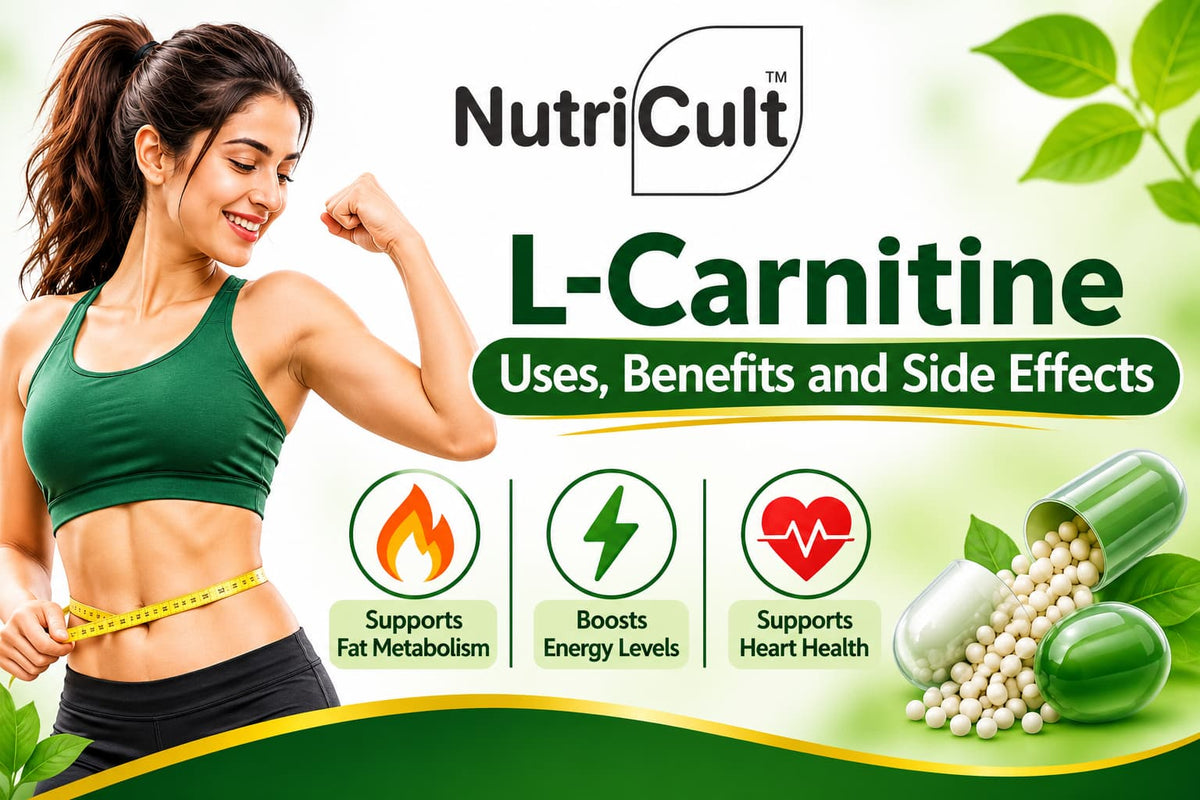
L-Carnitine Uses, Benefits and Side Effects: What Science Really Says
Quick answer: L-carnitine is a nutrient that carries fatty acids into your mitochondria so they can be burned for energy. It is mainly used to support fat metabolism and weight management, exercise recovery, and energy. Meta-analyses show modest weight loss of about 1 to 1.3 kg on average compared with placebo, mainly in overweight adults who also diet and exercise. Doses up to 2 g a day are generally well tolerated; 3 g or more can cause nausea, diarrhoea and a fishy body odour.
L-carnitine is one of the most popular "fat burner" ingredients in India. You'll find it in gym supplements, weight loss drinks and gut-health blends. But does it really melt fat? This guide gives you an evidence-based answer, plus how to take it and who should avoid it.
What Is L-Carnitine?
L-carnitine is a compound your body makes from two amino acids, lysine and methionine, mostly in the liver and kidneys. It is also found in food. According to the NIH, red meat is a good source, and poultry, fish and dairy contain smaller amounts.
Its main job is transport. L-carnitine acts like a shuttle that carries long-chain fatty acids into mitochondria, the "engines" of your cells, where fat is burned for energy. It also helps remove waste products from mitochondria.
Vegetarians, who eat little or no meat, get less carnitine from food. Healthy bodies still make enough for basic needs, but this is one reason it is a popular supplement in India.
Types of L-Carnitine
|
Form |
Commonly used for |
|
L-carnitine (base) |
General use, weight management |
|
L-carnitine L-tartrate (LCLT) |
Exercise recovery, muscle soreness |
|
Acetyl-L-carnitine (ALCAR) |
Brain health, mental energy |
|
Propionyl-L-carnitine |
Blood flow, circulation |
L-Carnitine Uses and Benefits
1. Supports weight management (modestly)
This is the most common use. A 2016 meta-analysis in Obesity Reviews found that people taking carnitine lost about 1.33 kg more than the control group, and the effect got smaller over time. A larger 2020 dose-response meta-analysis found reductions in weight (about 1.1 kg), BMI and fat mass, but mainly in overweight and obese people, and it did not change body fat percentage or waist size.
Bottom line: L-carnitine is not a magic fat burner. It may give a small extra push when combined with a calorie-controlled diet and regular exercise. To understand what really drives weight loss, read Why Am I Not Losing Weight? 12 Real Reasons and Top 5 Weight Loss Myths.
2. Exercise recovery and reduced muscle soreness
L-carnitine L-tartrate is studied for reducing muscle damage markers and soreness after intense training. This is why it is popular in gym communities.
3. Energy and fatigue
Because it helps turn fat into energy, some people use it to support stamina, especially older adults and those with low carnitine levels.
4. Heart and metabolic health
A 2020 meta-analysis in Nutrients found L-carnitine was linked to reduced waist circumference and blood pressure in studies on metabolic syndrome markers. The NIH notes that more research is needed on heart health. For an overview, see Heart Health Supplements for Indians.
5. Brain health (acetyl-L-carnitine)
Acetyl-L-carnitine crosses into the brain and is studied for memory and mental fatigue in older adults. Evidence is still mixed.
6. Male fertility
Some studies have looked at carnitine for sperm quality. Anyone with fertility concerns should work with a doctor.
L-Carnitine Weight Loss Results: Realistic Expectations
|
Expectation |
Reality |
|
"Burns fat without exercise" |
No. Effects appear mostly alongside diet and exercise |
|
"Lose 5 kg in a month" |
Average extra loss in studies is about 1 to 1.3 kg |
|
"Works for everyone" |
Benefits seen mainly in overweight and obese adults |
|
"Reduces belly fat specifically" |
Studies did not show a significant change in waist circumference |
How to Take L-Carnitine
-
Dose: most studies use 1 to 2 g per day. Start at the lower end.
-
Timing for workouts: 30 to 60 minutes before exercise.
-
Timing for general use: in the morning with breakfast.
-
With carbohydrates: some research suggests taking it with a carb-containing meal improves muscle uptake.
-
Duration: 8 to 12 weeks, alongside diet and training.
Pair it with a good diet. Our list of 32 metabolism-boosting foods is a practical starting point.

L-Carnitine Side Effects
L-carnitine is generally safe at typical doses. The NIH notes that taking 3 grams or more a day can cause nausea, vomiting, stomach cramps, diarrhoea and a fishy body odour.
Possible side effects:
- Nausea or stomach upset
- Diarrhoea
- Fishy body, breath or urine odour at high doses
- Restlessness or trouble sleeping if taken late in the day
About TMAO: gut bacteria convert some carnitine into a compound called TMAO, which has been linked in some studies to heart disease risk. The evidence is debated, but it is another reason to stay at moderate doses.
Who Should Avoid L-Carnitine (or Ask a Doctor First)
- People with thyroid conditions, especially hypothyroidism
- People with a history of seizures
- People on blood thinners such as warfarin
- People with kidney disease or on dialysis (carnitine is sometimes prescribed medically in these cases, but only under supervision)
- Pregnant or breastfeeding women
L-Carnitine and Gut Health: Why Combine Them?
Gut bacteria influence how your body handles food, energy and even carnitine itself. Some newer formulas pair L-carnitine with probiotics for a combined approach to weight management. Read our LeanGut Review to see how this approach works.
Nutricult LeanGut L-Carnitine & Probiotic Sticks combine L-carnitine with probiotics in a no-water stick format. The Gut Reset Kit pairs LeanGut with probiotic sticks. For another weight-management option, see Apple Cider Vinegar Tablets with Green Tea & Green Coffee and our article on 20 benefits of apple cider vinegar.
Frequently Asked Questions
Is L-carnitine safe for daily use?
Yes, for most healthy adults at 1 to 2 g per day. Avoid going above 3 g.
Does L-carnitine work without exercise?
The evidence shows best results when combined with diet and exercise. On its own, effects are small.
When should I take L-carnitine, morning or night?
Morning or before workouts. Avoid late evening if it affects your sleep.
Can vegetarians take L-carnitine?
Yes. Vegetarians get less carnitine from food, so a supplement can be useful. Check that the capsule shell is vegetarian.
Does L-carnitine cause hair loss?
There is no good evidence that L-carnitine causes hair loss.
This article is for information only and is not medical advice. Consult your doctor before using L-carnitine, especially if you have a thyroid condition, take medication, or are pregnant.


