


Glutathione Side Effects: What You Should Know Before Taking Tablets or Injections
Quick answer: Oral glutathione tablets are generally well tolerated. The most common side effects are mild bloating, stomach cramps, or loose stools. Injectable and IV glutathione carry far more risk. The US FDA has issued repeated safety alerts after patients developed fever, chills and sepsis-like reactions from contaminated compounded glutathione injections. Pregnant or breastfeeding women, people with asthma (for inhaled forms), and anyone on chemotherapy should talk to a doctor first.
Glutathione is often called the body's "master antioxidant". Your liver makes it from three amino acids: glutamine, cysteine and glycine. It protects cells from damage, supports detoxification in the liver, and helps the immune system.
In India, glutathione is most popular for skin brightening. That has led to a boom in tablets, effervescent drinks, creams and clinic-based IV drips. But not all forms are equally safe. This guide breaks down side effects by form, what the research says, and how to use glutathione responsibly.
Is Glutathione Safe?
For most healthy adults, oral glutathione at studied doses appears safe. In a 6-month randomised controlled trial, adults took 250 mg or 1,000 mg of oral glutathione every day. Blood glutathione levels rose at both doses, and the trial showed it is possible to raise body stores through supplements.
A systematic review of glutathione and skin also noted that it was well tolerated in oral preparations, but not in injectable ones.
The bigger safety concerns are with injections and unregulated products.
Glutathione Tablet Side Effects (Oral and Effervescent)
Side effects of oral glutathione are usually mild and short-lived:
-
Bloating or gas, especially in the first week
-
Stomach cramps or a heavy feeling
-
Loose stools at higher doses
-
Allergic reactions such as rash or itching (rare)
Effervescent tablets have one extra consideration: many contain sodium bicarbonate, which adds sodium. If you have high blood pressure or are on a low-salt diet, check the label.
Tips to reduce side effects:
- Start with a lower dose for the first week
- Take it with or after food if your stomach is sensitive
- Drink plenty of water
Glutathione Injection Side Effects (IV Drips)
IV glutathione is widely offered in aesthetic clinics for skin whitening. However, the evidence and safety picture is very different.
FDA safety alerts. In 2019, the US FDA reported seven patients who had adverse reactions after injections of compounded L-glutathione. Testing showed high levels of endotoxin, a bacterial contaminant. In August 2026, the FDA said it was aware of at least 30 patients with fever, chills, dizziness and sepsis-like symptoms after IV glutathione, some needing hospital care.
No proven benefit for skin. An Indian dermatology review concluded that there is no evidence that intravenous glutathione works for skin lightening, and noted the Philippines FDA had warned against this use.
Reported risks of injectable glutathione include:
- Fever, chills and infections from contamination
- Severe allergic reactions
- Rare but serious skin reactions such as Stevens-Johnson syndrome
- Concerns about effects on the liver, kidneys and nervous system at high doses
Oral vs Injectable Glutathione: Side-by-Side
|
Factor |
Oral tablets / effervescent |
IV / injection |
|
Common side effects |
Mild bloating, cramps |
Fever, chills, infection risk |
|
Serious risks |
Very rare |
Endotoxin reactions, severe allergy |
|
Evidence for skin |
Small RCTs show modest effect in sun-exposed areas |
No good-quality evidence |
|
Regulatory status in India |
Sold as a food supplement (FSSAI) |
Not approved for skin lightening |
|
Cost |
Lower |
Much higher per session |
Does Glutathione Actually Brighten Skin?
The honest answer is "modestly, in some people". A 2019 systematic review found that oral glutathione at 500 mg a day could brighten skin in sun-exposed areas, measured by the melanin index. It did not show differences in sun-protected areas. Results are gradual, and some studies suggest the effect fades after stopping.
For a deeper look, read Glutathione for Skin Brightening: Does It Actually Work? and Skin Brightening Supplements vs Topical Creams.
Who Should Avoid Glutathione (or Ask a Doctor First)
-
Pregnant and breastfeeding women: there is not enough safety data.
-
People with asthma: inhaled glutathione can trigger breathing problems. Oral forms are less of a concern, but check with your doctor.
-
People on chemotherapy: glutathione is an antioxidant and may interfere with some cancer treatments.
-
People with kidney or liver disease: dosing should be supervised.
-
Anyone with known allergies to ingredients in the product.
What to Avoid When Taking Glutathione
-
Smoking and heavy drinking: both deplete glutathione and cancel out benefits.
-
Skipping sunscreen: UV exposure drives pigmentation. Supplements cannot outwork daily sun damage.
-
Mega-doses: more is not better. Stick to the label dose.
-
Unbranded or imported products without an FSSAI licence: quality and actual content vary widely.
-
Combining many skin-lightening products at once without guidance.
How to Take Glutathione Safely
- Stick to studied oral doses, generally 250 to 500 mg per day for skin
- Pair it with vitamin C, which helps recycle glutathione in the body
- Be consistent for at least 8 to 12 weeks before judging results
- Choose products with an FSSAI licence and clear labelling
Our supplement timing guide covers the best time to take it, and how to read a supplement label shows what to check.
Natural Ways to Support Glutathione
You can also help your body make more glutathione through diet: sulphur-rich foods like garlic, onion, broccoli and cabbage; protein foods rich in cysteine like eggs, dal and paneer; and vitamin C from amla, guava and citrus. See Blog 9 on glutathione-rich foods, and our post on ways to reduce melanin naturally.
Nutricult's Approach
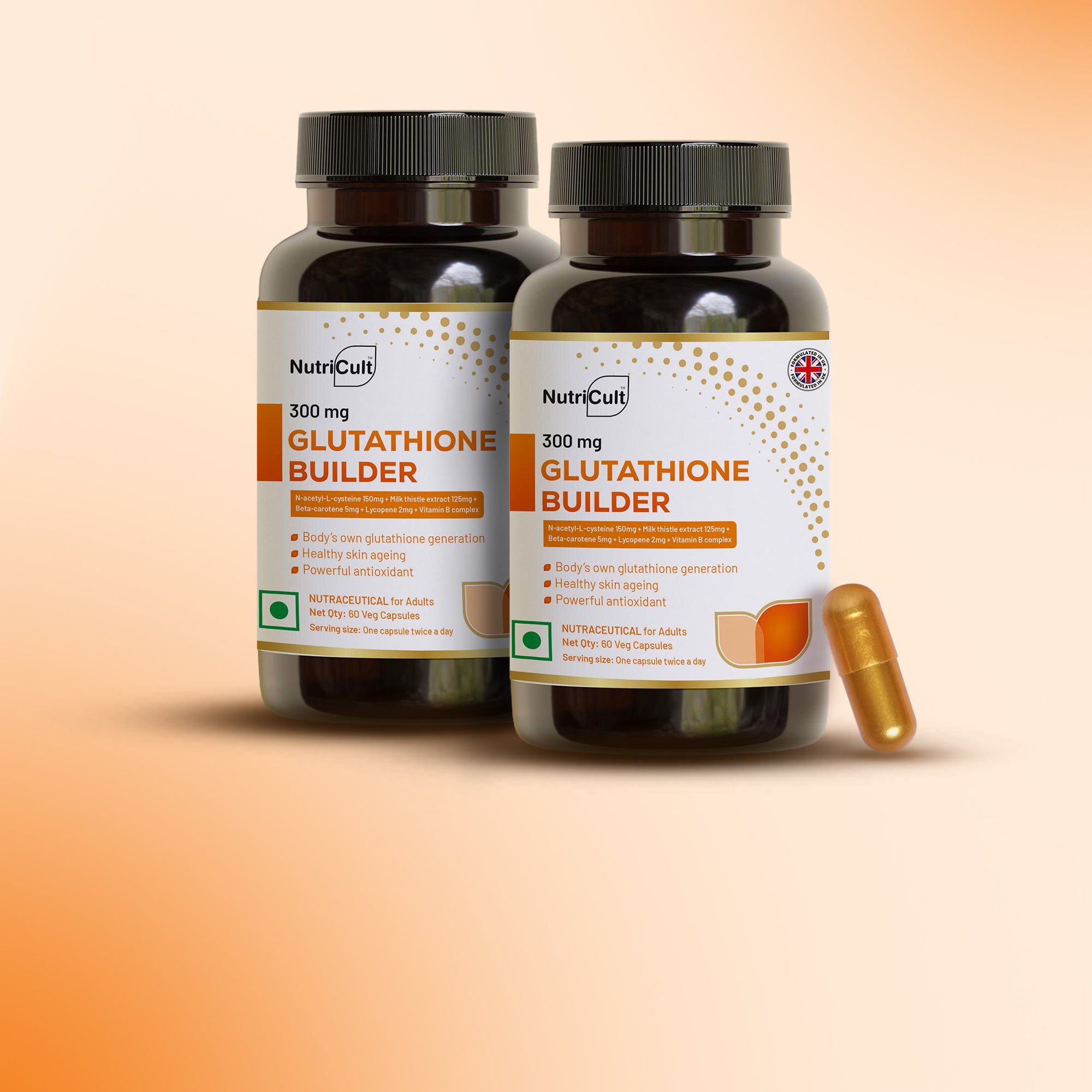
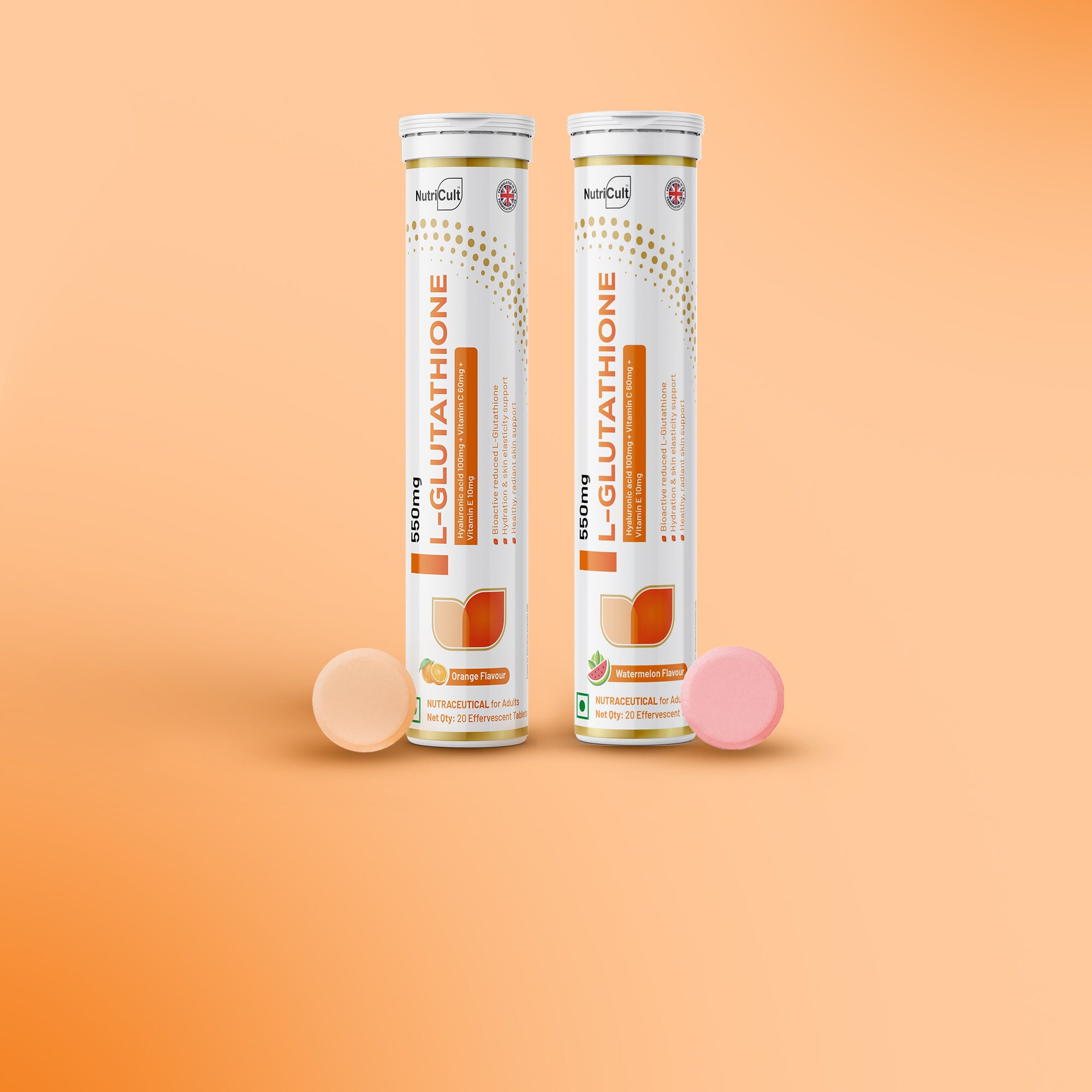
Nutricult offers two oral options. L-Glutathione Effervescent Tablets dissolve in water for an easy daily drink. Glutathione Builder Capsules supply nutrients that support your body's own glutathione production. Both can be combined in the Glow & Radiance Kit. They are food supplements, not medicines, and work best alongside sunscreen and a balanced diet.
Frequently Asked Questions
Are glutathione tablets safe for long-term use?
Studies have used oral glutathione for up to 6 months without serious side effects. For longer use, take periodic breaks and check with your doctor.
Does glutathione damage the kidneys?
There is no evidence that oral glutathione at normal doses harms healthy kidneys. Concerns mostly relate to high-dose injections. People with kidney disease should consult a doctor.
Can glutathione cause acne?
Some people report breakouts, but there is no strong evidence linking oral glutathione to acne.
What happens when you stop taking glutathione?
Nothing harmful. Some studies suggest skin-brightening effects may slowly fade after stopping.
Is glutathione injection better than tablets?
No. Injections are not proven for skin lightening and have more serious safety risks.


