


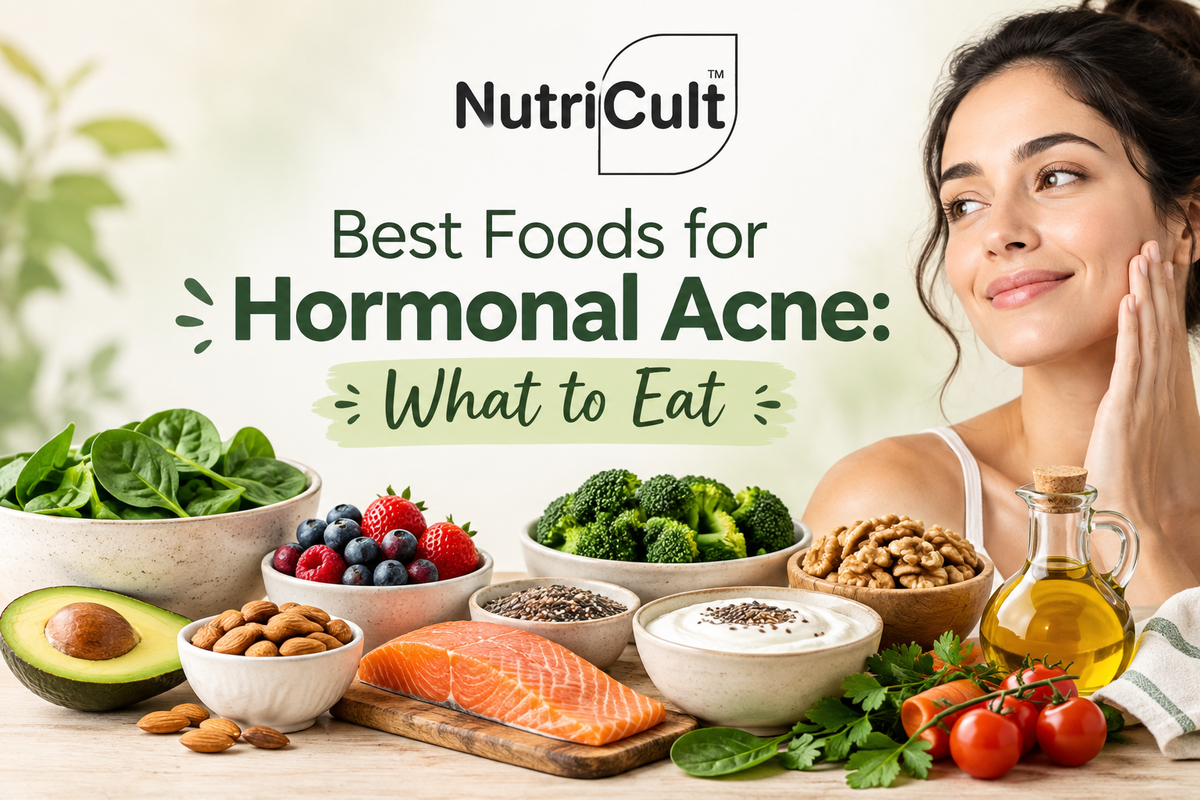
Best Foods for Hormonal Acne: What to Eat for Healthier Skin
Quick Answer
No single food cures hormonal acne. What the research supports is a broader dietary pattern: minimally processed meals built around fiber-rich carbohydrates, vegetables, fruits, legumes, adequate protein, and healthy fats. This kind of plate tends to produce a lower glycemic load and better nutrient adequacy, both of which show a modest, evidence-backed connection to acne severity. Indian staples such as dal, sabzi, whole grains, curd, nuts, and seasonal fruit fit this pattern well. Individual response varies, and food works alongside dermatologic treatment rather than replacing it.
Can Food Really Help Hormonal Acne?
Diet has a real but moderate relationship with acne, mainly through glycemic load, insulin signaling, inflammation, and overall nutrient adequacy. A lower-glycemic, higher-fiber way of eating has shown benefit in several clinical trials, while highly processed, high-sugar diets correlate with worse acne severity in observational research. None of this makes any single food a treatment. Food can support an acne-conscious lifestyle, but no food should be described as a cure for hormonal acne. For a deeper explanation of these mechanisms, see Nutricult's guide on hormonal acne and nutrition.
The Best Foods for Hormonal Acne
1.Leafy Green Vegetables
Spinach, methi, bathua, sarson, and amaranth leaves are rich in fiber, folate, carotenoids, and minerals such as iron and calcium. Their nutrient density supports overall dietary quality, which is the broader pattern linked to acne outcomes rather than any single compound in the leaf. Cooking these greens into a simple sabzi with minimal oil, a few times a week, is an easy way to build them into most Indian meal patterns.
2. Colorful Vegetables
Carrots, tomatoes, bell peppers, pumpkin, beetroot, broccoli, and cauliflower each bring a different set of vitamins and antioxidant compounds. Eating a range of colors, rather than relying on one "superfood" vegetable, is the more useful target here. These vegetables are inexpensive, widely available across India, and easy to rotate through daily sabzi or salads.
3. Lentils and Dal
Moong dal, masoor dal, toor dal, and chana dal provide plant protein, fiber, and micronutrients such as folate and magnesium. Replacing some refined-carbohydrate portions of a meal with dal-based dishes increases fiber and protein at the same time, which supports the lower glycemic load pattern associated with milder acne in clinical research. Dal is also one of the most affordable protein sources in an Indian kitchen.
4. Beans and Legumes
Rajma, chickpeas, black chana, and lobia digest more slowly than many refined-carbohydrate foods because of their fiber and protein content. This slower digestion helps moderate the blood sugar response of a meal. Legumes have not been specifically proven to treat hormonal acne, but they fit comfortably into the broader dietary pattern the research supports.
5. Whole Grains and Lower-Glycemic Carbohydrate Choices
Oats, whole wheat, barley, millets such as bajra, jowar, and ragi, and brown rice generally produce a gentler blood sugar rise than refined flour and polished rice. This does not mean rice or roti are "bad" for acne. Portion size, what a carbohydrate is eaten with, and overall meal composition matter as much as the grain itself. Swapping some refined-flour snacks for millet-based options is a realistic, low-cost change for most Indian households.
6. Omega-3-Rich Foods
Flaxseed, chia seeds, and walnuts provide plant-based ALA, while fatty fish such as sardines, mackerel, and rohu provide EPA and DHA directly. The conversion of plant ALA into EPA and DHA in the body is inefficient, so vegetarian readers relying only on flax or chia may still fall short of the omega-3 levels studied in acne trials. Nutricult's article on omega-3 deficiency in India explains this conversion gap in more detail.
7. Zinc-Rich Foods
Pumpkin seeds, sesame seeds, legumes, nuts, eggs, and seafood or meat for non-vegetarians all contribute zinc, a mineral with anti-inflammatory properties studied in acne research. Eating zinc-rich foods does not guarantee clearer skin, and food sources are a more sensible starting point than high-dose supplements for most people. For more on zinc and deficiency signs, see Nutricult's guide on zinc deficiency symptoms.
8. Vitamin A and Carotenoid-Rich Foods
Carrots, sweet potatoes, pumpkin, and leafy greens supply beta-carotene, which the body converts to vitamin A as needed. This is different from taking high-dose vitamin A supplements, which can be toxic in excess and are not recommended without medical supervision. Beta-carotene-rich vegetables are a safer, food-first way to support this nutrient.
9. Fruits With High Nutrient Density
Guava, amla, oranges, papaya, apples, and berries where available provide fiber, vitamin C, and other micronutrients alongside their natural sugars. There is no reason to avoid fruit out of concern about sugar content; the fiber in whole fruit changes how that sugar is absorbed compared with sugary drinks or sweets. A piece of seasonal fruit as a mid-morning or evening snack is a practical daily habit.
10. Nuts and Seeds
Walnuts, almonds, pumpkin seeds, chia, flax, and sesame provide healthy fats, protein, and minerals in a small, portable serving. A small handful daily fits well into most Indian diets and supports several of the nutrient categories discussed above without needing to be treated as a direct acne treatment.
11. Fermented Foods
Plain curd and other traditional fermented foods provide probiotics and protein. Research connecting fermented foods, gut microbiota, and acne is still developing, and no controlled trial has proven that eating curd or other fermented foods treats hormonal acne. These foods can still be a reasonable, low-cost addition to a balanced Indian diet.
Best Foods for Hormonal Acne: Quick Comparison Table
|
Food / Food Group |
Key Nutrients |
Why It May Fit an Acne-Conscious Diet |
Indian Examples |
|
Leafy greens |
Fiber, folate, carotenoids, minerals |
Supports overall nutrient density and dietary quality |
Palak, methi, sarson, bathua sabzi |
|
Dal |
Plant protein, fiber, folate, magnesium |
Adds protein and fiber, supporting lower glycemic load |
Moong, masoor, toor, chana dal |
|
Legumes |
Fiber, plant protein |
Slows digestion and blood sugar response |
Rajma, chickpeas, lobia |
|
Whole grains and millets |
Fiber, B vitamins |
Generally lower glycemic response than refined flour |
Bajra, jowar, ragi, oats, brown rice |
|
Omega-3 sources |
ALA, EPA, DHA |
Linked to reduced inflammatory acne lesions in trials |
Flaxseed, chia, walnuts, sardines, rohu |
|
Zinc-rich foods |
Zinc |
Studied for anti-inflammatory effects on acne |
Pumpkin seeds, sesame, legumes, eggs |
|
Colorful vegetables |
Vitamins A and C, antioxidants |
Broadens micronutrient intake |
Carrots, tomatoes, bell peppers, beetroot |
|
Fruits |
Fiber, vitamin C, micronutrients |
Contributes nutrients without needing sugar restriction |
Guava, amla, papaya, oranges |
|
Nuts and seeds |
Healthy fats, protein, minerals |
Supports fat quality and satiety |
Walnuts, almonds, chia, flax |
No item in this table should be read as a cure. Each contributes to the wider dietary pattern the evidence actually supports.
The Best Way to Build an Acne-Friendly Plate
A simple plate model works better for most people than tracking individual nutrients. Fill half the plate with vegetables, a quarter with protein such as dal, paneer, eggs, or fish, and a quarter with a whole-grain or minimally processed carbohydrate such as millet roti or brown rice. Add a small portion of healthy fat, a piece of fruit where it fits the meal, and enough water through the day. This is a general framework for building balanced meals, not a medically prescribed acne diet, and it can be adjusted for personal calorie needs, activity level, and food preferences.
Indian Meal Ideas for Hormonal Acne
- Vegetable poha with a side of eggs or curd
- Moong dal chilla with sauteed vegetables
- Oats porridge with nuts and seasonal fruit
- Dal, one vegetable sabzi, and roti
- Rajma with a side salad and a small portion of brown rice
- Chana salad with curd
- Vegetable khichdi made with dal and millets
- Grilled fish with sauteed vegetables and roti
- Paneer or tofu bhurji with vegetables and a whole-grain base
None of these meals is a guaranteed fix. They are practical starting points that fit the broader pattern discussed above.
What About Dairy?
Evidence on dairy and acne is mixed rather than universal. Some studies have found an association between certain dairy products, particularly skim and low-fat milk, and acne severity, while others show a weaker or inconsistent link, especially for fermented dairy like curd. This does not mean everyone with acne needs to eliminate dairy. Whether dairy is worth adjusting depends on individual symptoms and response, which is a more detailed topic covered in Nutricult's dedicated article on dairy and acne.
What About Sugar and High-Glycemic Foods?
Sugary drinks, sweets, refined grains, and heavily processed carbohydrate foods tend to raise blood glucose quickly, and several studies link higher glycemic load diets to greater acne severity. This does not mean all sugar causes acne or that carbohydrates need to be eliminated. Moderating portion sizes and pairing carbohydrates with protein and fiber is a more sustainable approach than cutting out entire food groups. A closer look at sugar's specific role in acne is covered in Nutricult's dedicated article on this topic.
Foods You Do Not Need to Fear
Readers generally do not need to fear the following:
- All fruit
- All carbohydrates
- Occasional sweets
- Rice
- Roti
- Dairy by default
- Culturally important festival foods
Acne management is more about overall dietary pattern over weeks and months than about any single meal or treat. Framing food choices around fear tends to backfire, both nutritionally and psychologically, which is why this article focuses on inclusion rather than restriction.
Can Supplements Replace an Acne-Friendly Diet?
No. Supplements cannot substitute for the variety and fiber that whole foods provide, and they work best when addressing a specific, identified gap, such as low vitamin D or limited dietary omega-3 intake, rather than as a general acne strategy. Correcting a deficiency is different from treating acne itself, and taking more of a nutrient than the body needs, such as high-dose zinc or vitamin A, can cause side effects without added benefit. Prescription acne treatment should never be replaced with supplements. For readers focused on gut health, Nutricult's Probiotic Sticks offer general digestive support, an area of emerging interest for skin health, though they are not positioned as an acne treatment, and Nutricult's Glutathione products are formulated to support the body's antioxidant status generally rather than to clear acne specifically.
FAQs
What are the best foods for hormonal acne?
No specific food is proven to treat hormonal acne. A dietary pattern built around vegetables, fruits, legumes, whole grains, adequate protein, and healthy fats aligns best with current research on diet and acne severity.
What should I eat if I have hormonal acne?
Aim for balanced meals with fiber-rich carbohydrates, protein, and vegetables at each sitting. This supports a lower glycemic load, which several studies associate with milder acne, without requiring you to eliminate any food group.
Which fruits are good for hormonal acne?
Guava, amla, papaya, oranges, apples, and berries where available all provide fiber and micronutrients. No fruit needs to be avoided out of concern for its natural sugar content.
Is dal good for acne?
Dal provides plant protein and fiber, both of which support a lower glycemic load and better satiety. It is a practical, affordable addition to an acne-conscious Indian diet, though it is not a specific acne treatment.
Are nuts good for acne-prone skin?
Nuts and seeds provide healthy fats, protein, and minerals such as zinc in a small serving. A daily handful fits well into a balanced diet, though eating nuts alone will not resolve acne.
Can omega-3 foods help acne?
Some clinical trials show that omega-3 fatty acids, particularly EPA and DHA, reduce inflammatory acne lesions. Flaxseed and walnuts provide a plant-based source, while fish provides EPA and DHA directly.
Should I avoid dairy if I have hormonal acne?
Not automatically. Research shows a mixed association between certain dairy products, especially skim milk, and acne, but this varies by individual and dairy type, so blanket elimination is not necessary for everyone.
Can eating less sugar help acne?
High-glycemic diets, which include sugary foods, have a modest but documented association with acne severity in clinical research. Reducing frequent high-sugar intake may help some people, though occasional sweets do not need to be eliminated entirely.
Is there a specific Indian diet for hormonal acne?
There is no single prescribed Indian diet for hormonal acne. A pattern built around dal, vegetables, whole grains or millets, curd, nuts, and seasonal fruit generally aligns with the dietary factors linked to milder acne.
Can food alone clear hormonal acne?
No. Diet may modestly support skin health alongside appropriate dermatologic treatment, but it is not a substitute for medical care, particularly for moderate to severe or persistent acne.
Related Reads
- Hormonal Acne and Nutrition: Foods That May Help
- Hormonal Acne: Causes, Symptoms and How to Manage It
-
The 15 Best Foods for Healthy Skin
-
Zinc Deficiency Symptoms in Men and Women: What to Do
-
Omega-3 Deficiency in India: Why ALA Cannot Replace DHA and What Actually Works
Medical Disclaimer
This article is for educational purposes only and does not replace individualized medical advice, diagnosis, or treatment from a qualified dermatologist or healthcare professional. Dietary changes may support overall skin health but should not replace appropriate acne treatment, especially for moderate to severe or persistent acne.


