


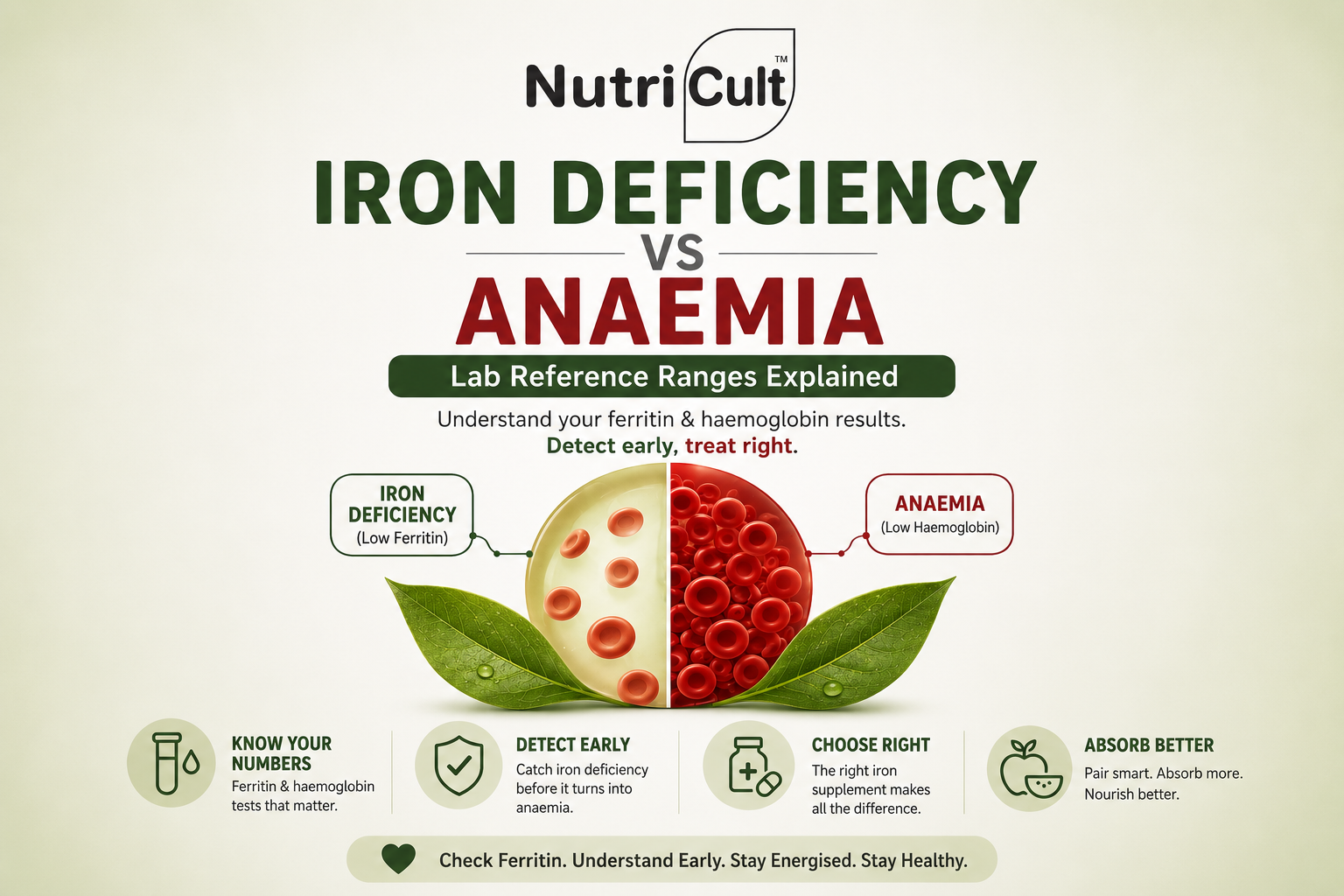
The Distinction That Changes Everything
Iron deficiency is depleted iron stores. Anaemia is the downstream result when depletion reduces haemoglobin production. You can be iron deficient without being anaemic. Identifying stage-one iron deficiency (low ferritin, normal haemoglobin) prevents anaemia from developing.
The Two Essential Tests
Haemoglobin
|
Population |
Normal Hb (g/dL) |
Anaemia Threshold |
|
Adult men |
13.5 to 17.5 |
Below 13.0 |
|
Adult women |
12.0 to 16.0 |
Below 12.0 |
|
Pregnant women |
11.0 to 14.0 |
Below 11.0 |
Serum Ferritin
|
Ferritin Level |
Interpretation |
|
Below 12 ng/mL |
Iron deficiency |
|
12 to 30 ng/mL |
Low-normal; functional impairment likely |
|
30 to 150 ng/mL |
Normal for women |
|
30 to 300 ng/mL |
Normal for men |
Why Indian Diets Absorb Iron Poorly
Non-heme iron from dal and spinach absorbs at 2 to 20 percent. Heme iron from meat absorbs at 15 to 35 percent. Phytate in wheat and rice further reduces absorption. Vitamin C doubles non-heme absorption; tea and coffee consumed with meals halve it.
Iron Supplement Forms
|
Form |
Tolerability |
Best For |
|
Ferrous sulphate |
Poor (constipation common) |
Budget option; take with food |
|
Ferrous bisglycinate |
Excellent |
Preferred for most people |
|
Ferrous gluconate |
Good |
Alternative to sulphate |
FAQ
Is beetroot or pomegranate enough to correct iron deficiency?
No. These foods contain iron but in small quantities with limited bioavailability. They support overall nutrition but cannot replace supplementation for established deficiency.
How long until iron supplements work?
Energy improves in two to four weeks. Haemoglobin normalizes in six to eight weeks. Ferritin stores take three to six months to fully replenish.


